










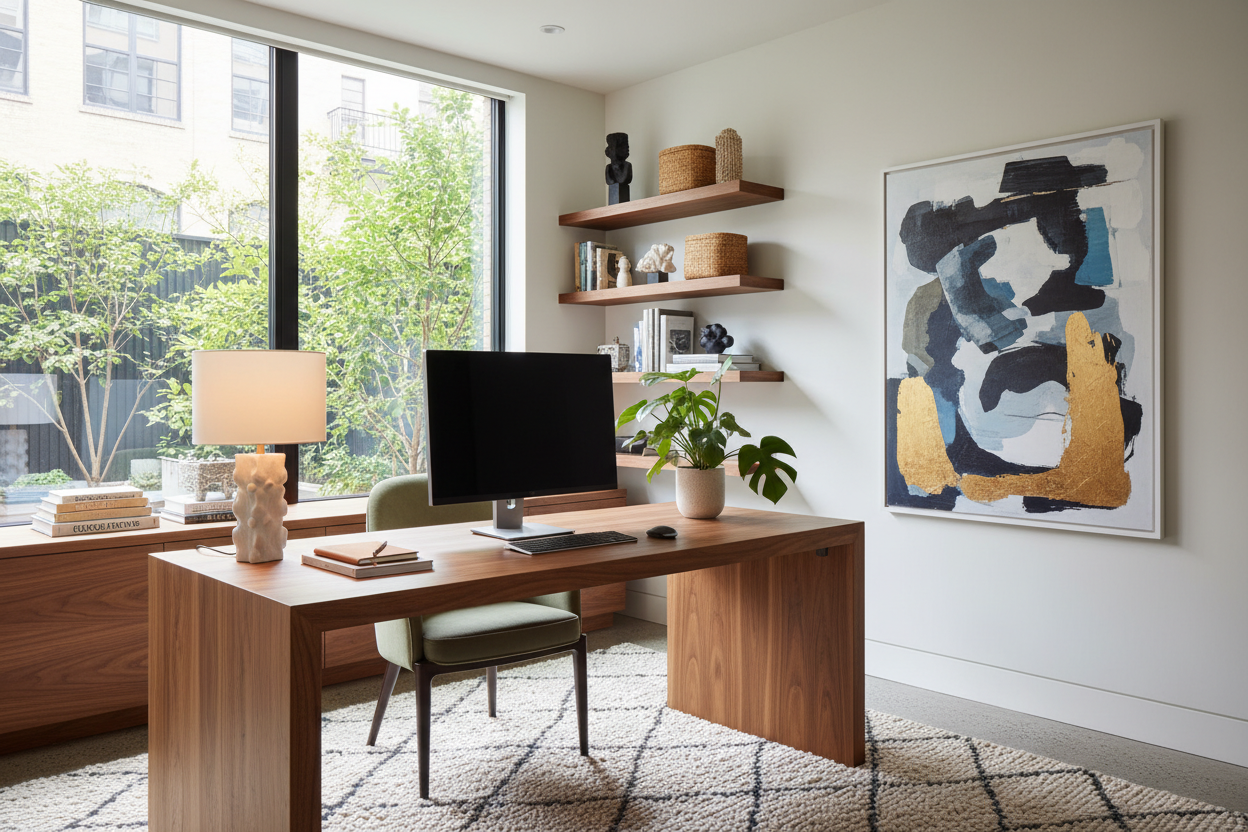
We've all been there: you buy a beautiful piece of furniture online, drag the heavy boxes inside, set it up, and suddenly your room feels half its size. Finding the right desk in home office setups is notoriously tricky. Often, people default to a massive corporate-style workstation that completely swallows the room, or they swing the opposite way, choosing a tiny console that lacks the depth needed for a monitor and keyboard.
Whether you're carving out a corner in a suburban guest room or dedicating an entire room to your daily grind, striking the balance between a homely work desk and a highly functional command center takes a bit of strategy. By the end of this guide, you will know exactly how to scale, position, and select a desk that supports your posture without ruining your interior aesthetic.
Quick Decision Guide
- Measure for breathing room: Always leave at least 36 inches of clearance behind your desk home setup to push your chair back comfortably.
- Mind the visual weight: In tight rooms, choose a home office work desk with open legs rather than heavy, solid pedestal bases to let light flow through.
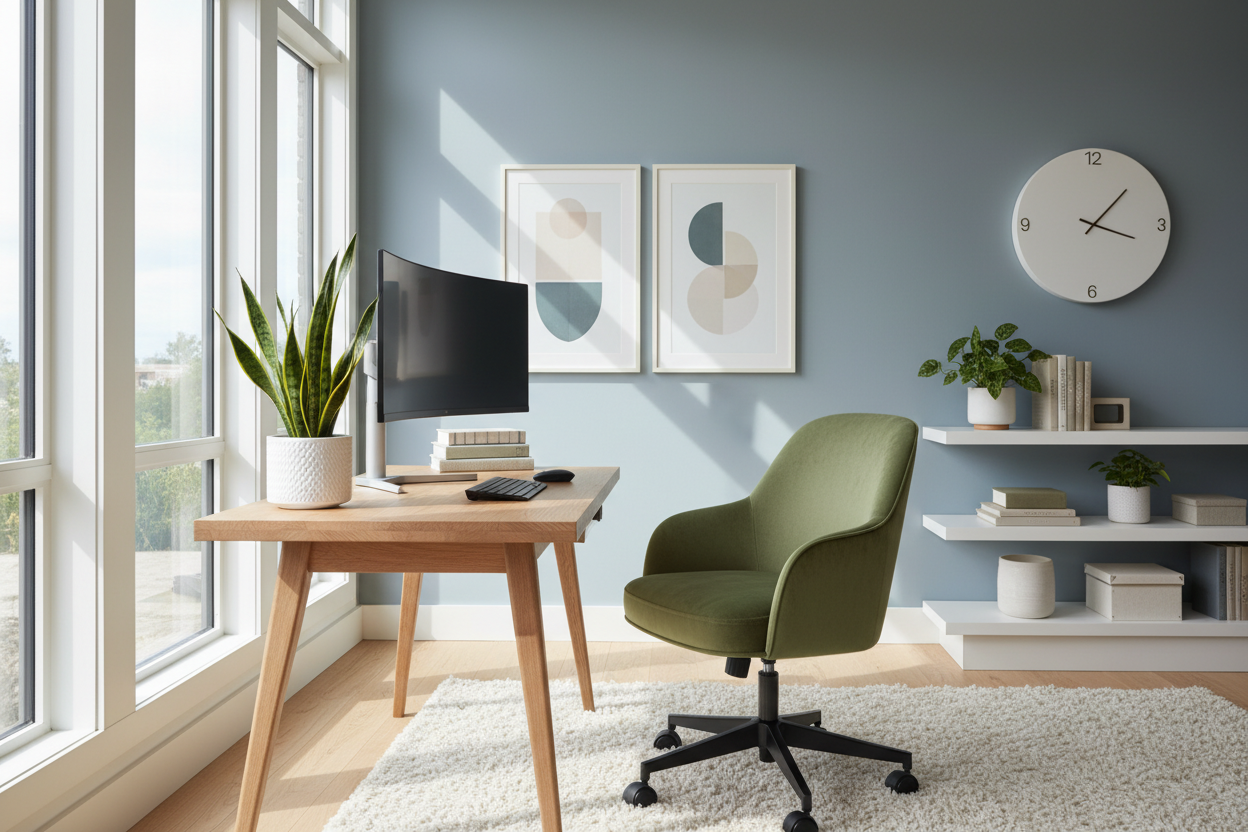
- Check the depth: A true work desk for home needs to be at least 24 inches deep if you use an external monitor; anything less forces the screen too close to your eyes.
- Prioritize surface durability: If you drink coffee or water while working, skip porous veneers and opt for solid wood with a durable polyurethane finish or high-quality laminate.
Space Planning: Nailing the Layout
The biggest mistake I see with home and office desks isn't the style—it's the placement. Shoving a desk flat against a dark wall is a fast track to feeling boxed in. If your square footage allows, try floating your nice office desk in the center of the room facing the door. This 'command position' instantly makes the space feel more intentional and less like an afterthought.
Clearances and Traffic Flow
When integrating desks and home office furniture into a shared space, like a living room or bedroom, respect the traffic flow. Keep a minimum of 30 inches between the edge of your work table for home office and the nearest piece of furniture. If you are placing a house desk near a swing door, mark the door's radius on the floor with painter's tape before buying anything to ensure it won't bash into your new furniture.
Material Matters: Aesthetics vs. Reality
Your choice of material dictates both the lifespan of your home study desk and how it anchors the room's style. A sleek glass home office table desk might look incredibly modern and light, but it will show every single fingerprint and dust particle within hours of cleaning.
Wood vs. Engineered Options
A solid walnut or oak working desk home provides a warm, organic texture that softens the harshness of monitors and tech gear. However, solid wood requires maintenance. If you want a nice desk for home office use that requires zero babying, don't dismiss modern commercial-grade laminates. Today's high-pressure laminates mimic wood grain beautifully and can survive hot coffee mugs, dropped pens, and daily wear without chipping.
Comfort and Ergonomics: Beyond the Silhouette
A nice home office desk is useless if it leaves you with a stiff neck by 3 PM. Most standard desks sit at about 29 to 30 inches high. This is perfectly fine for someone who is 5'10" or taller, but if you are shorter, you might find your shoulders creeping up to your ears.
Pairing the Desk and Chair
When selecting an office work table for home, pay attention to the apron—the piece of wood that runs right under the desktop. A thick apron can completely block a desk chair with armrests from sliding underneath. Always measure the clearance from the floor to the bottom of the desk apron to ensure your ergonomic chair can tuck away cleanly.
Designer's Honest Take
A few years ago, I designed a stunning mid-century modern study for a client and specified a gorgeous, vintage teak workstation desk for home. It had beautiful tapered legs and a rich, oiled finish. It looked spectacular in the portfolio photos.
But I learned a hard lesson about practicality. Because it was an authentic vintage writing desk, the depth was only 20 inches, and it lacked any cord management. Once the client added dual monitors, a laptop dock, and a desk lamp, the beautiful teak surface was completely hidden under a rat's nest of black cables, and the screens were awkwardly close to his face. We eventually had to drill a custom grommet hole into the vintage piece—which broke my heart—and add an articulating monitor arm just to make it usable. The takeaway? Never sacrifice cord management and proper depth just because a home work table looks pretty.
Frequently Asked Questions
What is the best depth for a desk for work?
If you use a laptop only, 20 to 22 inches is sufficient. However, if you use a desktop computer or external monitors, aim for a home office desk that is at least 24 to 30 inches deep to maintain a healthy viewing distance.
Can I use a regular dining table as a work desk for home office?
Yes, a home office table can work beautifully, especially if you need a large surface area to spread out documents. Just be aware that dining tables rarely have built-in storage or cable management, so you will need to get creative with cord clips and rolling file cabinets.
How do I make my work desk for home look less corporate?
Avoid gray melamine and chunky metal modesty panels. Instead, choose materials like natural wood, leather drawer pulls, or brass accents. Adding a warm table lamp instead of harsh task lighting also helps blend the desk home into your residential decor.

Leave a comment
This site is protected by hCaptcha and the hCaptcha Privacy Policy and Terms of Service apply.