










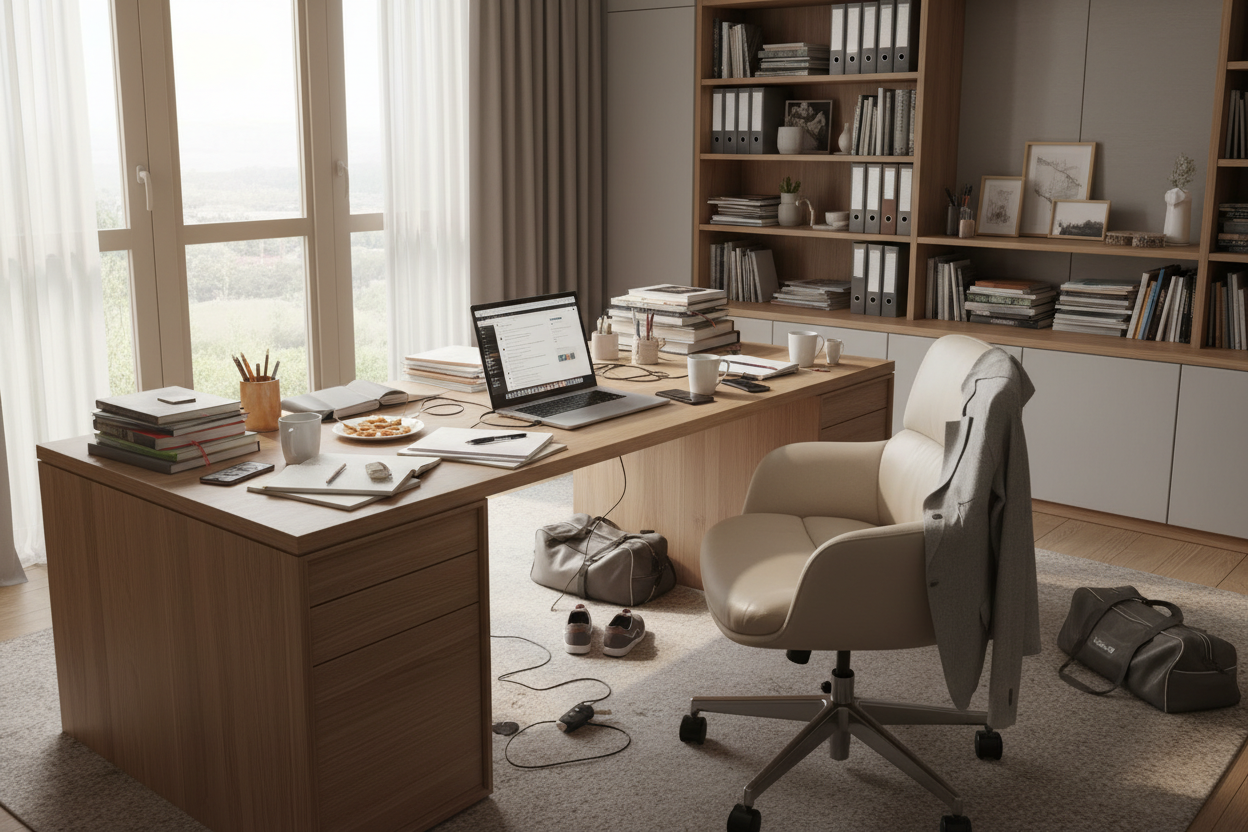
Have you ever sat down to work, only to feel instantly drained by the room itself? Often, the culprit is not the furniture you bought, but how you arranged it. Shoving a heavy desk against the nearest blank wall might seem like the easiest solution, but it is rarely the most effective. Nailing the right desk layout for office environments—whether you are working with a dedicated suburban study or a carved-out corner in a city apartment—dictates how you feel, function, and focus throughout the day.
Many homeowners make the mistake of prioritizing the aesthetic of the desk over its actual placement in the room. By the end of this guide, you will understand how to position your workspace to maximize natural light, manage awkward clearances, and create a room that actually makes you want to sit down and work.
Key Takeaways
- Avoid the 'punishment layout' of facing a blank wall; whenever possible, position your desk so you have a view of the door.
- Leave a minimum of 36 to 42 inches of clearance behind your chair to ensure comfortable movement.
- Do not float a desk in the center of the room unless you have a solid plan for floor-level cord management.
- Position your monitor perpendicular to windows to prevent harsh glare and reduce eye strain.
Space Planning & Flow
The Command Position
In interior design, we frequently borrow the concept of the 'command position' from feng shui. A successful office desk layout places you in a spot where you can see the entry door without being directly in line with it. This psychological anchor reduces subconscious anxiety because your back is not exposed to the room's entrance. If your room size forces you to face a wall, try adding a strategically placed mirror or a piece of reflective art above your monitor so you can still see behind you.
Managing Clearances and Walkways
The golden rule of any office furniture layout is respecting negative space. A desk might physically fit into a corner, but if you have to squeeze past a bookcase just to sit down, the friction will eventually drive you crazy. You need a minimum of 36 inches from the edge of the desk to the wall behind you just to push your chair back comfortably. If you have filing cabinets or a credenza behind the desk, increase that clearance to 42 or 48 inches.
Lighting and Ergonomics
Harnessing Natural Light
When planning your office table layout, natural light is your greatest asset, but it can also be your biggest enemy if mishandled. Facing a window directly can lead to intense eye strain as your eyes constantly adjust between the bright outdoors and your backlit monitor. Conversely, having a window directly behind you turns you into a dark silhouette on video calls. The optimal setup is placing the desk perpendicular to the window, allowing soft, indirect light to hit your workspace.
Style & Coordination
Balancing Visual Weight
There are dozens of desk layouts to choose from, but your choice must coordinate with the visual weight of the room. A massive, solid-wood executive desk will completely swallow a small 10x10 room, making it feel cramped. In smaller spaces, opt for a writing desk with open legs. The empty space beneath the desk allows the eye to travel further, creating the illusion of a larger room. Save the heavy, closed-sided desks for larger, open-concept spaces where they can serve as a true focal point.
Designer's Honest Take
Early in my career, I designed a stunning mid-century modern home office for a client in Chicago. I convinced them to float a beautiful, heavy walnut desk dead center in the room. The office desk layout looked incredible in the portfolio photos. But I learned a hard lesson about practicality that week. Because we did not plan for floor outlets during the renovation, thick black power cords had to snake across the vintage Persian rug to reach the nearest wall, creating an ugly tripping hazard.
Furthermore, the afternoon sunlight from the unshaded south-facing window hit the client's monitor perfectly at 2 PM every day, rendering the screen completely unreadable. I realized then that a successful workspace requires obsessing over the unglamorous details—like cord management and sun trajectories—just as much as the silhouette of the furniture. Floating a desk is beautiful, but if you cannot hide the wires, it is a daily nightmare.
Frequently Asked Questions
Should my desk face the window or the door?
Ideally, your desk should face the door from a diagonal angle (the command position) while sitting perpendicular to the window. This gives you a clear view of the room's entrance while preventing harsh window glare on your computer screen.
How much space do I need behind my desk?
You should aim for at least 36 inches of clearance between the back edge of your desk and the wall or furniture behind it. This ensures you can comfortably roll your chair back and stand up without feeling trapped.
Does an L-shaped desk save space?
It depends on the room. Tucking an L-shaped desk into a corner is highly efficient for small rooms because it utilizes dead space. However, if you float an L-shaped desk in the middle of a room, it actually demands a significantly larger footprint and dictates the flow of the entire space.


Leave a comment
This site is protected by hCaptcha and the hCaptcha Privacy Policy and Terms of Service apply.