











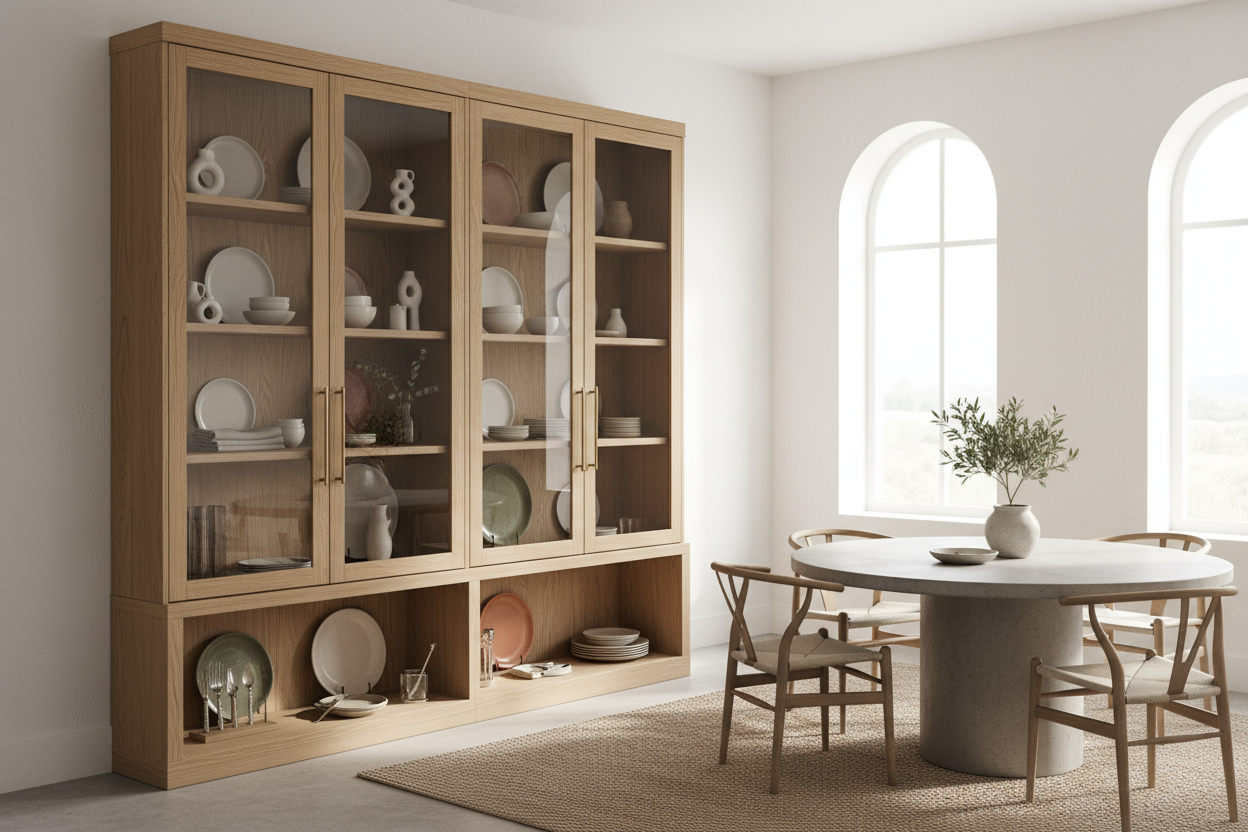
We have all seen them: those hulking, dark wood behemoths dominating a dining room, filled with dusty china no one is allowed to touch. If you have inherited a beautiful dish set or spent years collecting artisanal stoneware, you might be hesitant to buy a display cabinet for plates because of this exact image. But showcasing your dinnerware does not have to feel like a museum exhibit.
Today, we are looking at how to select and style a modern cabinet that highlights your favorite pieces while keeping your dining room feeling fresh and functional. You will walk away knowing exactly what dimensions to look for, how to balance visual weight, and how to avoid the common pitfalls of displaying ceramics.
Quick Decision Guide
- Look for tempered glass doors to protect from dust while maintaining visual lightness in the room.
- Ensure the shelves have built-in plate grooves; otherwise, you will need to purchase sturdy acrylic easels.
- Keep a minimum of 36 inches of clearance between the cabinet doors and your dining chairs to ensure easy traffic flow.
- Mix plates with everyday items like linen napkins, glassware, and books to modernize the overall aesthetic.
Selecting Materials for Longevity and Style
When choosing a plate cabinet display, the frame material dictates the entire vibe of the room. Solid oak or walnut offers incredible durability and a classic silhouette, but they carry heavy visual weight. If you have a smaller dining space, consider a metal-framed cabinet with glass on three sides. This allows ambient light to pass through, making the room feel larger while keeping the focus on your ceramics.
The Importance of Shelf Construction
Plates are surprisingly heavy. A stack of stoneware can easily bow a cheap particleboard shelf over a few years. Always check the weight capacity before purchasing. Plywood or solid wood shelves are non-negotiable here. If you prefer glass shelves for a lighter, more contemporary look, ensure they are thick, tempered glass supported by heavy-duty metal brackets.
Fitting It Into Your Floor Plan
A common mistake I see is buying a cabinet that is simply too deep for the room. A standard display piece is usually 15 to 18 inches deep. Anything deeper starts to feel like a wardrobe and eats up valuable square footage in your dining area.
Clearance Rules for Dining Rooms
You need space to actually open the doors and retrieve your dishes safely. Always leave at least 36 inches between the edge of the dining table and the front of the cabinet. If your room is tight, look for a piece with sliding doors instead of hinged ones to save space.
Curating the Perfect Plate Display
This is where the magic happens. A plate display rack cabinet should not just be a wall of identical white circles. You need to create negative space to let the eye rest.
Layering and Visual Weight
Stand your largest, most decorative plates at the back using the shelf grooves. Then, stack smaller bowls or dessert plates in front of them. Break up the ceramics with different textures. Add a stack of folded linen napkins, some ribbed highball glasses, or a trailing pothos plant on the top shelf. This approach makes the piece feel like a lived-in part of your home, rather than a sterile retail showcase.
Designer's Honest Take
Early in my career, I sourced a magnificent, vintage mahogany cabinet for a client's modern farmhouse dining room. It looked incredible on installation day. But I learned a hard lesson about lighting and dark interiors. The dark wood absorbed all the ambient light, turning the beautiful white ironstone collection inside into a shadowy, unreadable mass. We ended up having to retrofit the piece with LED strip lighting, which was costly and annoying to hide.
Now, I always recommend cabinets with built-in lighting or lighter interior finishes if you plan to display fine china. Also, a quick warning: if you opt for an open plate display rack cabinet without glass doors, you will be dusting those plates weekly. It is a high-maintenance choice I rarely recommend for busy households with kids or pets.
Frequently Asked Questions
How deep should a cabinet for plates be?
Most standard dinner plates are 10.5 to 11 inches in diameter. A cabinet depth of 14 to 16 inches is ideal, giving you enough room to lean plates at the back while placing smaller items like teacups or saucers in front.
How do I keep my displayed plates from slipping?
The best cabinets have a routed groove near the back of the shelf. If yours lacks this feature, use clear acrylic plate stands or apply a tiny bead of discrete museum wax on the bottom edge to secure them safely.
Can I put a display cabinet in the living room?
Absolutely. Storing plates in the living room works beautifully in open-concept homes. Just be sure to mix the dinnerware with books, art, and sculptural objects so it blends naturally with the living area's decor.

Leave a comment
This site is protected by hCaptcha and the hCaptcha Privacy Policy and Terms of Service apply.