










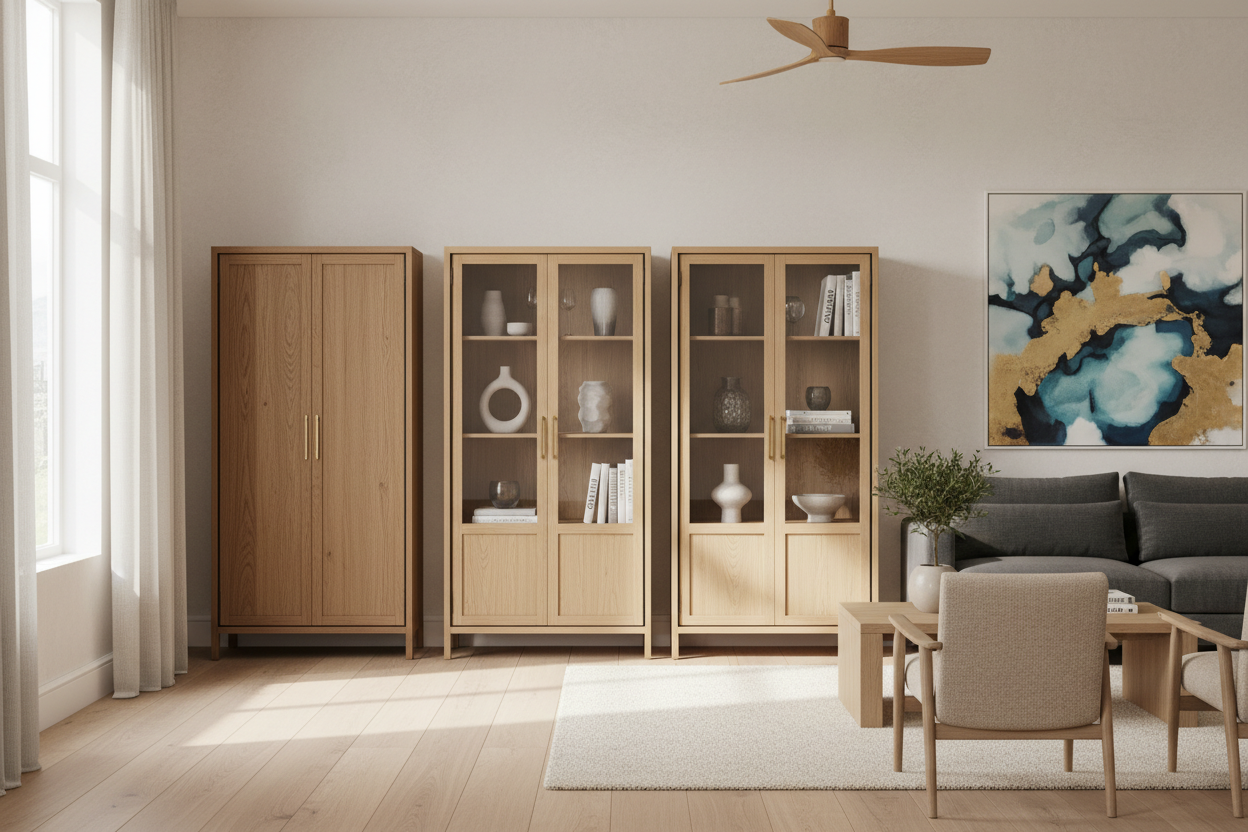
There is a fine line between a curated collection and a cluttered living room. Often, homeowners acquire beautiful pottery, family heirlooms, or travel souvenirs, only to scatter them across random surfaces. The result? A space that feels visually chaotic rather than intentional. This is exactly where display cabinets in oak prove their worth, offering a structured way to showcase your favorite pieces while hiding the mess.
Oak brings an enduring warmth that metal or painted MDF simply cannot replicate. But finding the right piece means navigating a sea of finishes, door styles, and proportions. By the end of this guide, you will know exactly how to select an oak display cabinet that grounds your room without making it feel like a dusty antique shop.
Quick Decision Guide
- Check the glass type: Always insist on tempered glass for safety, especially if the piece is going in a high-traffic area.
- Mind the depth: A depth of 14 to 16 inches is the sweet spot for displaying books and decor without eating up your walkway.
- Consider the lighting: Dark wood absorbs light. Opt for built-in lighting or place the cabinet near natural light sources to keep the interior visible.
- Anchor it down: Tall, solid wood pieces are heavy. Anti-tip hardware is non-negotiable, even if you do not have children.
Material Matters: Understanding Oak Finishes
Navigating Tones and Textures
When clients ask me about oak furniture display cabinets, they usually picture the heavy, orange-tinted wood of the 1990s. Today's options are vastly different. A light oak display cabinet offers a raw, organic feel perfect for Scandinavian or coastal interiors. If you lean toward transitional design, limed oak display cabinets feature a subtle white wash pushed into the wood grain, softening the visual weight and tying in beautifully with neutral upholstery.
Balancing Visual Weight
The Magic of Glass and Wood
Solid wood can feel incredibly heavy in a standard living room. An oak cabinet with glass doors solves this by introducing negative space. The transparency of a glass cabinet oak design allows the eye to travel through the piece, making the room feel larger. When shopping for oak cabinets with glass doors, pay attention to the mullions (the wooden dividers on the glass). Fewer mullions create a modern, unobstructed view, while traditional grids lean more farmhouse or classic. An oak glass door cabinet with a minimalist metal base can also lift the piece off the floor, further reducing its bulk.
Space Planning for Your Display Piece
Proportions and Placements
A common mistake is buying an oak and glass cabinet that is too deep for a room's natural traffic flow. Leave at least 36 inches of clearance between the front of the cabinet and any other furniture. If you live in a smaller apartment, a small oak display cabinet tucked into an unused alcove draws the eye upward, maximizing vertical space. For darker dining rooms or corners, an oak display cabinet with lights is essential. Internal LED puck lights or hidden strip lighting will prevent your curated oak display case from feeling like a black hole in the evening.
Designer's Honest Take
I love specifying an oak glass display cabinet for dining rooms, but I learned a hard lesson early in my career. I once placed a stunning, solid oak display cabinet with glass doors in a client's sun-drenched living room. It looked magnificent for the first month. However, I failed to account for the sheer amount of dust that glass shelves highlight, especially in direct sunlight. My client was frustrated, dusting it every three days. Now, I always warn clients: if you want an oak and glass display cabinet but hate chores, opt for wood shelves instead of glass. Wood hides the dust far better, while the glass doors still protect your items from the bulk of it.
Frequently Asked Questions
How do I style an oak glass display case without it looking cluttered?
Stick to the rule of thirds. Leave one-third of every shelf empty to provide visual breathing room. Group items in odd numbers, and mix textures—pair smooth ceramics with rough-hewn wood bowls or stacked linen-bound books to create depth.
Are oak display cabinets safe for a house with toddlers?
They can be, provided you take precautions. Always anchor the cabinet to the wall using heavy-duty anti-tip hardware. Additionally, ensure you are buying an oak glass display case with tempered glass; if it breaks, it will shatter into dull cubes rather than dangerous, jagged shards.
Can I mix an oak display cabinet with dark wood furniture?
Yes. Mixing wood tones creates a layered, collected-over-time aesthetic. The trick is to ensure the undertones match. Pair warm oak with warm walnut, or cool, ashy oak with espresso finishes. Add a unifying element, like a rug that pulls in both tones, to make the pairing feel intentional.

Leave a comment
This site is protected by hCaptcha and the hCaptcha Privacy Policy and Terms of Service apply.