










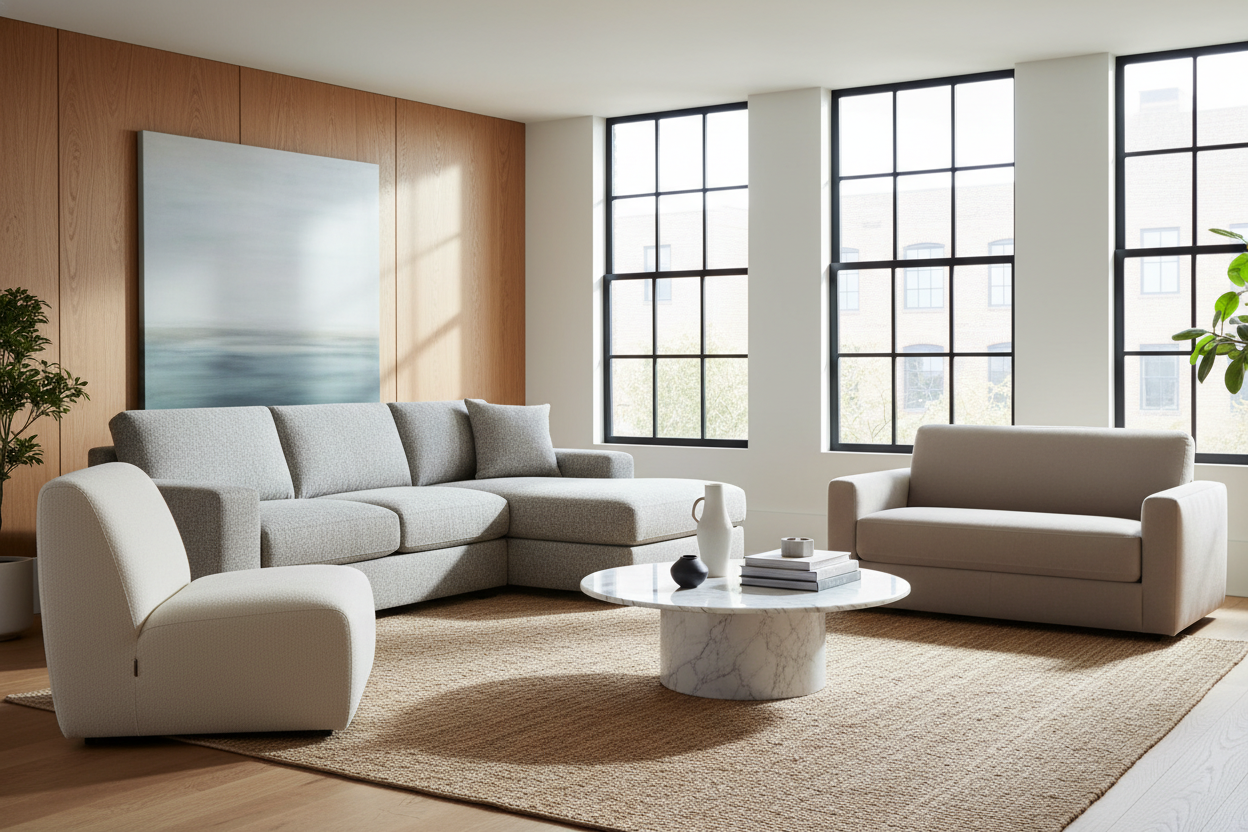
We have all encountered that awkward living room corner—the one too small for a loveseat but too spacious for a standard armchair. As an interior designer, I constantly see homeowners struggle to balance negative space with functional seating. The solution often lies in an asymmetrical piece that breaks the mold of traditional symmetry. Enter the couch one side sofa.
Often referred to in the trade as a one-arm sofa, a chaise, or a modular end piece, this silhouette offers a unique blend of architectural interest and lounging comfort. Whether you are looking to complete a sectional or create a standalone reading nook, understanding the ergonomics and spatial impact of this piece is crucial for a cohesive design scheme.
Key Features to Look For
Before committing to a purchase, review this checklist to ensure the piece meets both aesthetic and functional standards:
- Arm Orientation: distinct between "Left Arm Facing" (LAF) and "Right Arm Facing" (RAF) based on your room's traffic flow.
- Seat Depth: Look for a depth of at least 24 inches if you plan to use it as a lounge spot.
- Frame Joinery: Kiln-dried hardwood frames with corner blocking prevent warping over time.
- Upholstery Continuation: Ensure the fabric wraps fully around the armless side if you intend to use it as a standalone piece.
- Suspension System: Sinuous springs or eight-way hand-tied springs offer superior longevity compared to webbing.
Mastering the Asymmetrical Silhouette
The beauty of a one-sided sofa lies in its visual weight. Unlike a standard large one seater sofa (often called a chair-and-a-half), a one-arm sofa implies continuity. It directs the eye across the room. When placing this piece, avoid pushing it flush against a wall unless absolutely necessary. Floating it even three inches off the wall allows the silhouette to breathe and creates a shadow line that enhances the perception of space.
Material Selection and Durability
Because these pieces often serve as high-traffic lounge spots, fabric choice is paramount. For a sophisticated, tactile experience, a performance velvet or a heavy-weight linen blend works beautifully. However, pay attention to the "rub count." For a main living area, I recommend nothing less than 25,000 double rubs.
If you are hunting for a cheap 1 seater sofa or an entry-level one-arm module, be wary of bonded leather. It tends to peel within a few years. Instead, look for polyester blends with a tight weave; they mimic the look of natural fibers but offer better resistance to staining and pilling at a lower price point.
Space Planning: The Functional Placement
The most common mistake I see is ignoring the "open" side. In a modular setup, this connects to another piece. As a standalone, the open side exposes the sitter. To counter this, style the open side next to a low profile side table or a heavy ceramic planter. This "closes" the vignette psychologically, making the sitter feel secure without blocking the visual flow of the room.
My Personal Take on the Couch One Side Sofa
I learned a hard lesson about these pieces during a renovation project for a loft in Chicago. I sourced a stunning, high-end one-arm module to serve as a standalone large one seater sofa in a bay window. Visually, it was sculptural perfection.
However, I overlooked a critical detail: weight distribution. Because this piece was engineered to be part of a heavy sectional, it was surprisingly lightweight on its own. The first time the client flopped down onto it, the entire sofa slid six inches across the polished concrete floor. It felt cheap and ungrounded, despite the high price tag. We eventually had to install heavy-duty rubber grip pads and actually opened up the bottom dust cover to place sandbags inside the frame to give it the necessary heft. Now, I always check the physical weight of a module before separating it from its herd.
Conclusion
The couch one side sofa is more than just a fragmented piece of furniture; it is a design tool that introduces fluidity and modern asymmetry to a room. whether you invest in a luxury bespoke piece or find a budget-friendly option, focus on the flow of the arm and the quality of the fabric. With the right placement, it will become the most coveted seat in the house.
Frequently Asked Questions
What is the difference between a chaise and a one-arm sofa?
A chaise lounge typically has an elongated seat designed for leg support and may have a back that only extends halfway. A one-arm sofa usually has a full back and a standard seat depth, looking exactly like a regular sofa that is missing one arm.
Can I use a one-arm sofa in a small apartment?
Absolutely. In fact, they are excellent for small spaces. The open side reduces visual bulk, making the room feel airier than it would with a boxy, two-armed loveseat. It allows for easier traffic flow in tight areas.
How do I know if I need a Left or Right facing arm?
Stand directly in front of the spot where you want to place the sofa, facing it. If you want the arm to be on your right side as you look at it, you need a Right Arm Facing (RAF) sofa. If you want it on the left, order a Left Arm Facing (LAF) piece.

Leave a comment
This site is protected by hCaptcha and the hCaptcha Privacy Policy and Terms of Service apply.