










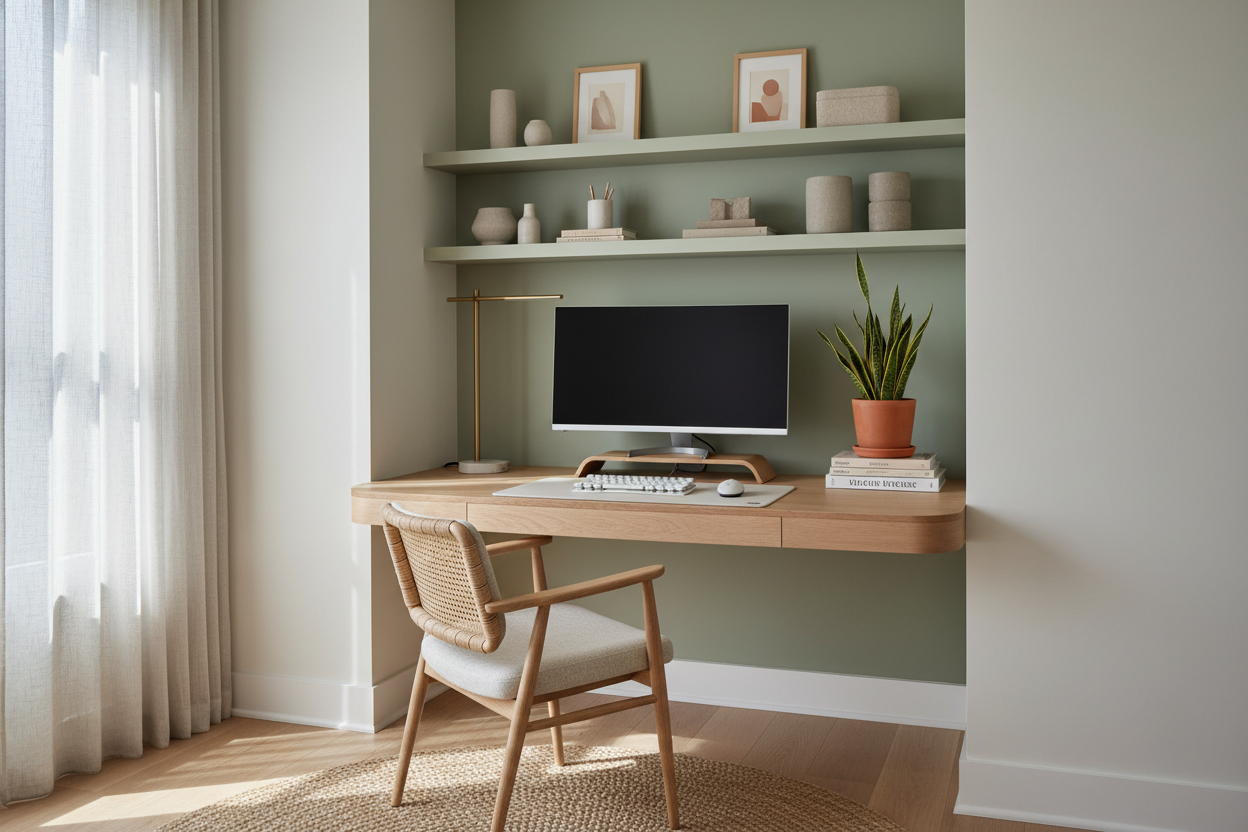
When square footage is at a premium, the challenge isn't just fitting furniture into a room; it is about creating a functional zone that doesn't dominate the visual landscape. Many homeowners assume a compact workspace implies a compromise on comfort or aesthetics. That is simply not true. With intentional planning and the right silhouette, a **small desk setup** can actually serve as a sophisticated focal point rather than a cluttered necessity.
Key Features for a Compact Workspace
- Visual Weight: Opt for legs with open frames or floating wall-mounted units to keep the floor visible and the room feeling airy.
- Material Durability: Solid hardwoods (oak, walnut) resist clamp-mount damage better than honeycomb-core particle board.
- Ergonomic Depth: Ensure a minimum depth of 24 inches to maintain a healthy focal distance from your monitor.
- Vertical Integration: Utilize wall space above the desk for shelving to reduce desktop clutter without expanding the footprint.
Mastering Space Planning and Layout
In interior design, flow is everything. When integrating a small office desk setup into a living room or bedroom, you must consider the circulation paths. Avoid placing the desk where the chair backs into a high-traffic walkway. Instead, look for alcoves or "dead zones"—such as the space beside a wardrobe or under a window.
For a seamless look, color-drenching is a powerful technique. Painting the desk, the shelving above it, and the wall behind it in the same hue creates a monochromatic block that recedes visually, making the setup feel less intrusive.
Optimizing the Small Desk PC Setup
Technological integration is often where the aesthetic falls apart. A high-end small desk pc setup requires rigorous cable management. I always advise clients to look for desks with built-in modesty panels or cable trays. If you are working with a narrow surface, mounting your monitor on an articulated arm is non-negotiable. This reclaims valuable surface area for your keyboard and notebook, instantly making the desk feel larger than it is.
Choosing the Right Materials
Texture plays a massive role in how a small piece of furniture is perceived. A glass desk can make a space feel larger because it is visually permeable, but it lacks warmth and can feel sterile. Conversely, a rich walnut veneer adds gravity and luxury. If your room is already heavy with textiles, a sleek metal or lacquer finish provides a necessary contrast. If the room is minimal, bring in wood grain to add organic warmth.
Curating Small Desk Setup Ideas for Visual Balance
Styling is about the "rule of three" and varying heights. Avoid cluttering the surface with knick-knacks. Instead, choose one functional object (like a brass task lamp), one organic element (a small succulent or trailing pothos), and one personal artifact. This triangulation draws the eye without overwhelming the limited surface area.
My Personal Take on Small Desk Setup
I learned a hard lesson about material density during a project for a client in a micro-apartment. We selected a stunning, budget-friendly desk that looked like solid oak but was actually a hollow-core composite. It looked perfect until we installed a heavy-duty dual monitor arm for their small desk pc setup.
Within two weeks, the clamp had crushed the honeycomb interior of the desk, causing the monitors to lean precariously forward. It was a disaster. Since then, I always check the "thud" test. If you knock on the desktop and it sounds hollow, do not use clamp-mount accessories. For small setups where surface space is gold, I now insist on solid wood or high-grade plywood tops if the client plans to use monitor arms. It’s a structural detail you don’t see in photos, but you definitely feel in daily use.
Conclusion
Designing a compact workspace is an exercise in restraint and precision. By selecting materials that offer both durability and beauty, and prioritizing vertical storage over horizontal sprawl, you can create a workspace that invites productivity. Your desk should be a destination, not just a surface.
Frequently Asked Questions
What is the ideal depth for a small desk?
While you can find desks as shallow as 18 inches, I strongly recommend a minimum depth of 24 inches (approx. 60cm). This allows enough distance between your eyes and the screen to prevent strain and provides ample room for a keyboard and wrist support.
How do I light a small desk without losing space?
Avoid large base lamps. Instead, use a wall-mounted sconce with a swing arm or a slim LED monitor light bar (screen bar). These provide excellent task lighting without occupying a single square inch of your desktop.
Can I use a dining chair for my desk setup?
For short bursts, yes. However, dining chairs rarely offer the lumbar support or seat height adjustability required for long-term work. For a cohesive look, choose an ergonomic office chair upholstered in fabric rather than mesh to bridge the gap between office utility and residential style.


Leave a comment
This site is protected by hCaptcha and the hCaptcha Privacy Policy and Terms of Service apply.