










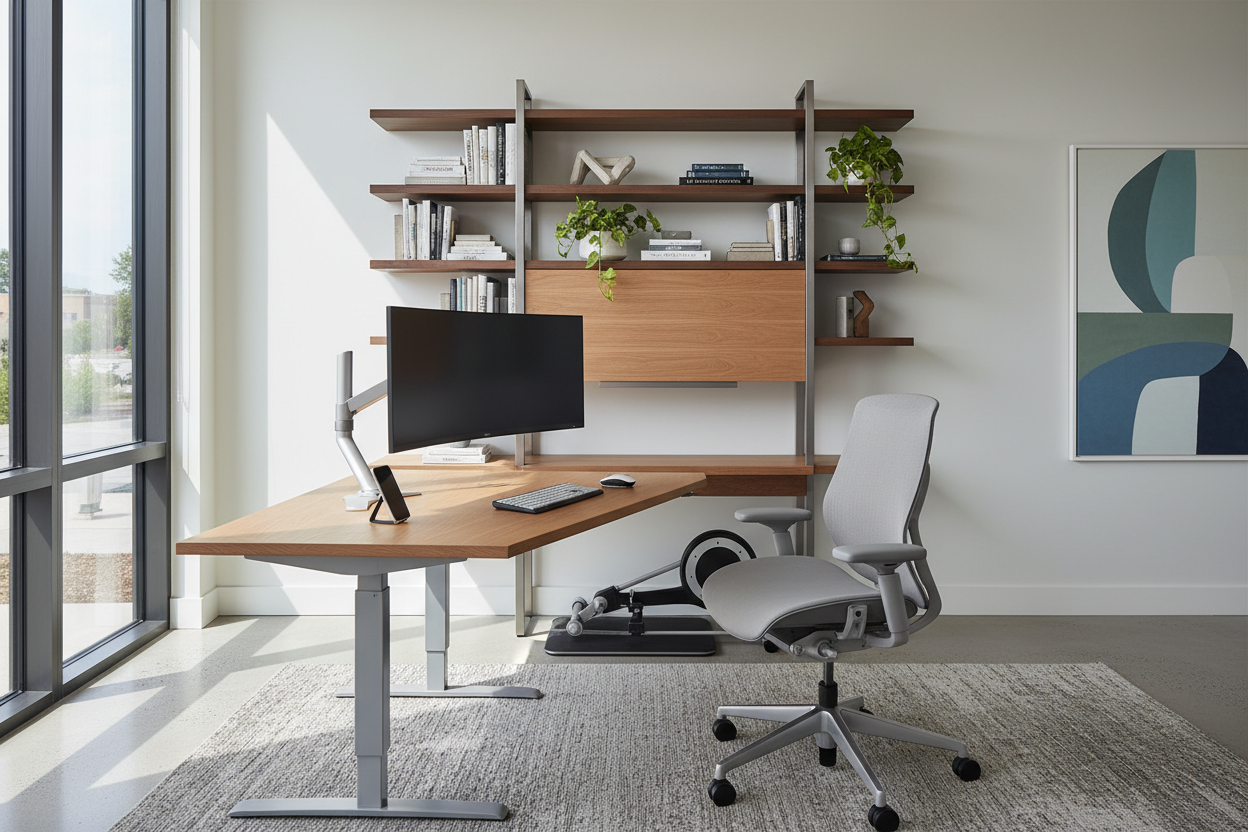
We have all experienced the frustration of a workspace that fights against us—cords tangling underfoot, bulky desks consuming precious square footage, and a visual aesthetic that feels more 'corporate cubicle' than 'curated home.' A truly clever office solves this dilemma by merging high-performance functionality with sophisticated interior design. It is not merely about buying a desk; it is about orchestrating a space that adapts to your workflow while maintaining the visual integrity of your home.
Key Features to Look For
- Integrated Tech Management: Look for desks with hidden cable channels and flush-mounted power grommets to maintain visual silence.
- Modular Adaptability: Prioritize pieces that can expand, nest, or fold away to respect the room's footprint when off-duty.
- Material Durability: Seek high-pressure laminates (HPL) or sealed hardwoods that resist heat from electronics and coffee rings.
- Ergonomic Discretion: Choose seating that offers lumbar support without the aggressive, plastic aesthetic of standard gaming chairs.
Defining the Clever Aesthetic: Materiality and Form
When curating a workspace, the dialogue between materials is paramount. A clever office avoids the sterile look of melamine by introducing tactile elements. I often advise clients to look for clever office furniture that utilizes mixed media—think matte-powder coated steel legs paired with walnut veneers. The warmth of the wood grounds the space, while the steel offers the structural rigidity needed for heavy monitors.
The Importance of Matte Finishes
One specific detail often overlooked is light reflection. High-gloss finishes might look striking in a showroom, but under the harsh glare of a ring light or midday sun, they create eye strain. A satin or matte finish absorbs light, creating a softer ambient environment that is conducive to deep work.
Space Planning and The "Invisible" Workflow
The hallmark of intelligent design is invisibility. In a multi-purpose room, your office should be able to disappear. This is where joinery and hardware quality become critical. We are looking for soft-close drawers that do not slam during a conference call and drop-front secretaries that conceal a laptop instantly.
Vertical Utilization
Do not let the floor plan dictate your storage limits. Floating shelving units with integrated LED strip lighting serve a dual purpose: they provide task lighting without occupying desk space and offer a gallery for personal artifacts, softening the utilitarian nature of the room.
Ergonomics Meets Visual Balance
There is a misconception that ergonomic furniture must look mechanical. High-end manufacturers are now producing task chairs wrapped in boucle or premium leather that hide advanced tilt mechanisms beneath the seat pan. When selecting a chair, consider its silhouette from the back, as this is often the view you see when entering the room. A lower profile often helps the room feel larger, whereas a high-back executive chair can dominate and clutter the visual field.
Lessons from My Own Projects
I learned a hard lesson about "smart" furniture during a project for a client in a pre-war Chicago apartment. We installed a stunning, custom-built desk with integrated wireless charging milled directly into the underside of the stone top. It looked seamless.
However, I failed to account for the thickness of the client's heavy-duty phone case. The charger couldn't penetrate the stone and the case. We ended up having to rout out the stone from beneath to thin it down—a messy, dusty nightmare in a finished room. Now, I always test the "clever" tech features with the client's actual devices during the sourcing phase, not after installation. Furthermore, I've found that push-to-open drawers on clever office furniture are fantastic for clean lines, but if the mechanism is cheap, your knee will accidentally pop the drawer open ten times a day. Quality hardware is non-negotiable.
Conclusion
Designing a clever office is an exercise in restraint and foresight. By investing in furniture that serves multiple functions and selecting materials that age gracefully, you create a workspace that invites productivity rather than demanding it. Treat your office furniture with the same scrutiny you would a living room sofa—it should be beautiful, durable, and effortlessly functional.
Frequently Asked Questions
Q: How do I fit a clever office into a bedroom without ruining the relaxing vibe?
A: Focus on "cloaking" the office elements. Use a secretary desk that closes fully to hide screens, and select a chair that mimics a dining or accent chair rather than a rolling task chair.
Q: Is custom joinery necessary for a clever office?
A: Not necessarily. Modular systems from high-end retailers often offer the same flexibility as custom built-ins but at a lower lead time and cost. Look for modular shelving systems that allow you to adjust desk height.
Q: What is the best lighting for a home office setup?
A: Layer your lighting. You need ambient light (ceiling), task light (articulating desk lamp), and accent light (LED strips behind monitors) to reduce contrast and eye fatigue.

Leave a comment
This site is protected by hCaptcha and the hCaptcha Privacy Policy and Terms of Service apply.