










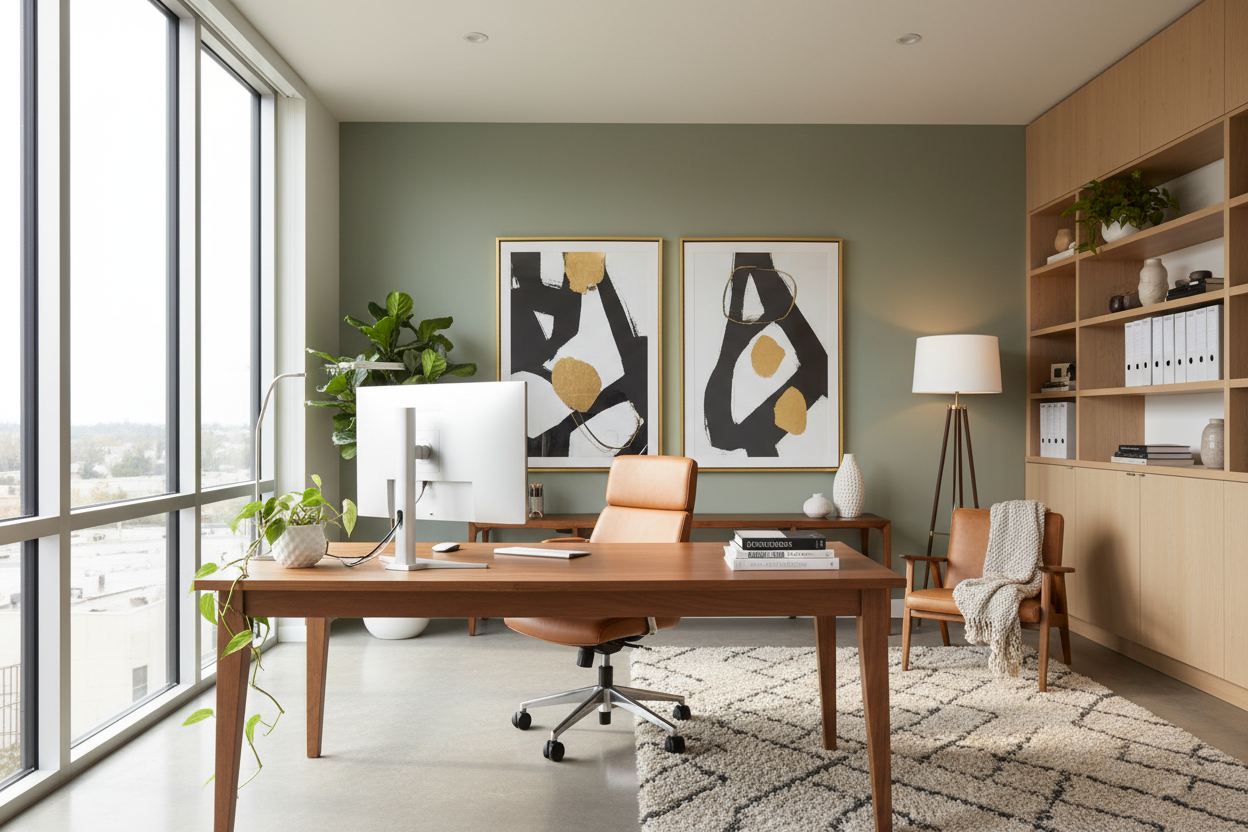
We have all experienced the fatigue that comes from staring at a beige wall or sitting in a workspace that feels more like a storage unit than a studio. The environment you work in dictates your output quality, yet so many homeowners treat their workspace as an afterthought. If you are wondering how to spruce up an office effectively, the answer lies in moving beyond simple decoration and focusing on the intersection of ergonomics, lighting, and material psychology.
Quick Decision Guide: The Essentials
- Lighting Temperature: Avoid harsh 5000K daylight bulbs; opt for 3000K-3500K for a balance of focus and warmth.
- Textural Contrast: If your desk is hard (wood/glass), your chair or rug must be soft (velvet/wool) to break the visual monotony.
- Vertical Utilization: Use floating shelves to draw the eye upward, making small rooms feel expansive.
- Biophilic Elements: Introduce living plants (snake plants or pothos) to soften architectural lines and improve air quality.
- Acoustics: Add rugs or curtains to dampen the echo often found in spare rooms turned offices.
Establishing the Layout and Focal Point
Before buying a single accessory, we must address the silhouette of the room. A common mistake is pushing the desk directly against a wall, forcing you to stare at plaster all day. This is often why people search for how to spruce up your office in the first place—the layout feels stifling.
If space permits, float the desk in the center of the room or position it perpendicular to a window. This "command position" not only offers a better visual break for your eyes but also establishes the desk as the architectural anchor of the space. Ensure you have at least 36 to 48 inches of clearance behind the chair for unrestricted movement.
Curating Materials: The Antidote to Boring
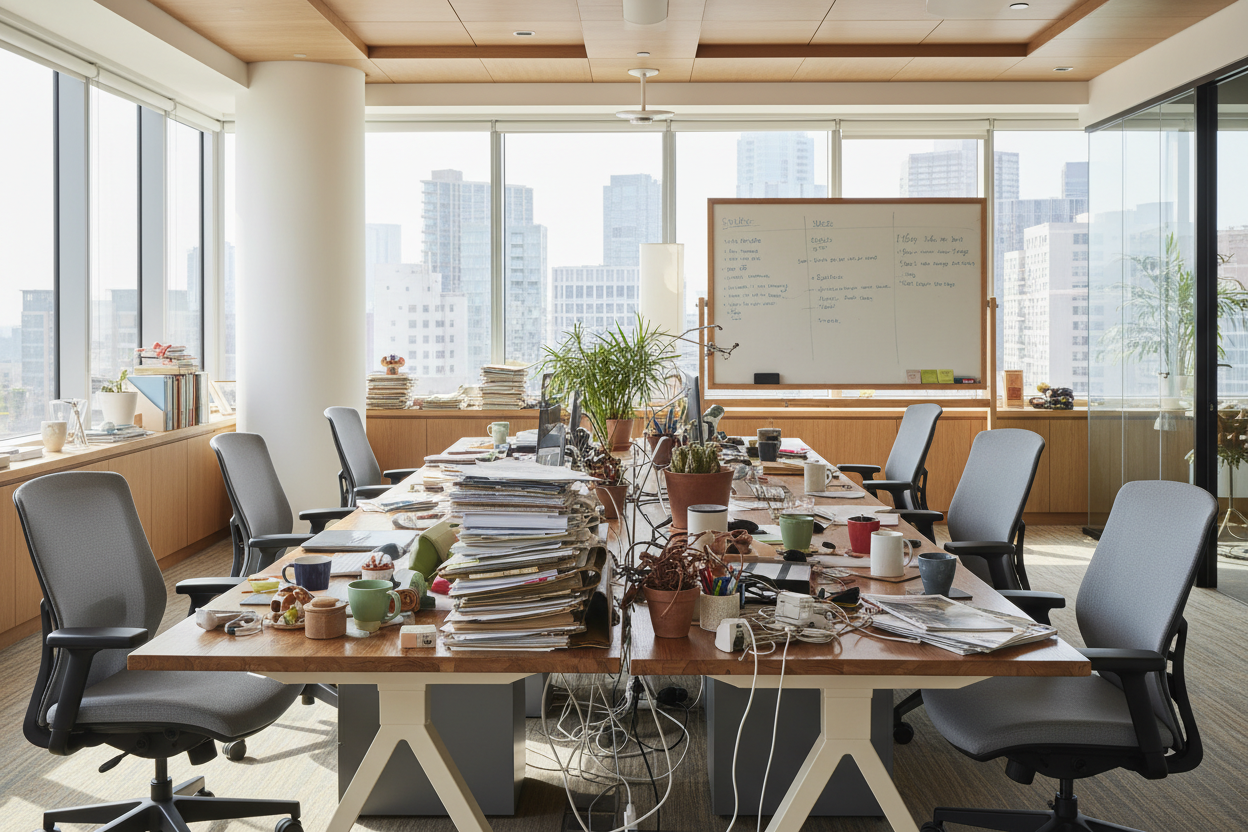
When clients ask how to make a boring office look better, the issue is almost always a lack of texture. An office full of laminate, plastic, and metal feels sterile. You need to introduce organic warmth.
The Power of Natural Wood
If you are investing in a desk, solid wood (walnut or oak) offers a tactile experience that veneer cannot match. Over time, solid wood develops a patina that adds character. If a new desk isn't in the budget, swap out plastic accessories for wood or leather desk mats. These materials ground the space and reduce the visual "noise" of technology.
Softening the Edges
Offices are full of hard lines—rectangular screens, square desks, and straight shelves. To disrupt this rigidity, introduce a round rug or a chair with curved arms. A high-quality, low-pile wool rug serves a dual purpose: it anchors the furniture arrangement and dampens the hollow sound of typing and phone calls.
Lighting: The Invisible Design Element
Overhead lighting is the enemy of a cozy, productive atmosphere. To truly spruce up the space, you need layered lighting. Start with a dedicated task lamp that features an adjustable arm—brass or matte black finishes are timeless choices. Supplement this with ambient lighting, such as a floor lamp with a linen shade in the corner. The linen diffuses the light, eliminating the harsh glare that causes eye strain.
My Personal Take on How to Spruce Up an Office
I learned a hard lesson early in my career regarding the "Zoom Background" obsession. I once designed a stunning office for a client, focusing entirely on the wall behind them so they would look professional on video calls. We installed expensive millwork and curated art.
However, I neglected the view they had to look at for eight hours a day. I realized this a month later when I visited, and they had turned the desk around. They told me, "The background looks great for my boss, but I'm staring at a blank door."
The lesson? Prioritize your view first. I now always place a piece of art or a floating shelf with personal mementos directly in the client's line of sight. Also, a practical tip on finishes: avoid high-gloss lacquer on desktops. It looks sleek in photos, but in real life, it acts as a mirror for overhead lights and picks up every single fingerprint. Stick to matte or satin finishes for sanity's sake.
Conclusion
Revitalizing your workspace doesn't require a full renovation. By adjusting your layout, layering your lighting, and introducing honest materials like wood and wool, you can shift the energy of the room from sterile to sophisticated. A well-designed office isn't just about aesthetics; it's about respecting the time you spend there.
Frequently Asked Questions
How can I spruce up a small office without cluttering it?
Focus on verticality. Use tall, open shelving units rather than bulky filing cabinets. Keep the floor visible as much as possible; choosing a desk with slender legs rather than a solid block base makes the room feel larger.
Is an ergonomic chair worth ruining the aesthetic?
Never sacrifice your spine for style. However, you don't have to choose the standard "spaceship" looking gaming chair. Look for mid-century modern inspired task chairs that conceal ergonomic features within high-quality fabric or leather upholstery.
What is the best color palette for productivity?
While blue is traditionally cited for focus, it can feel cold. I recommend "greige" (gray-beige) or warm terracottas for a home office. These earth tones are grounding and less stimulating than bright whites, allowing for sustained concentration.


Leave a comment
This site is protected by hCaptcha and the hCaptcha Privacy Policy and Terms of Service apply.