










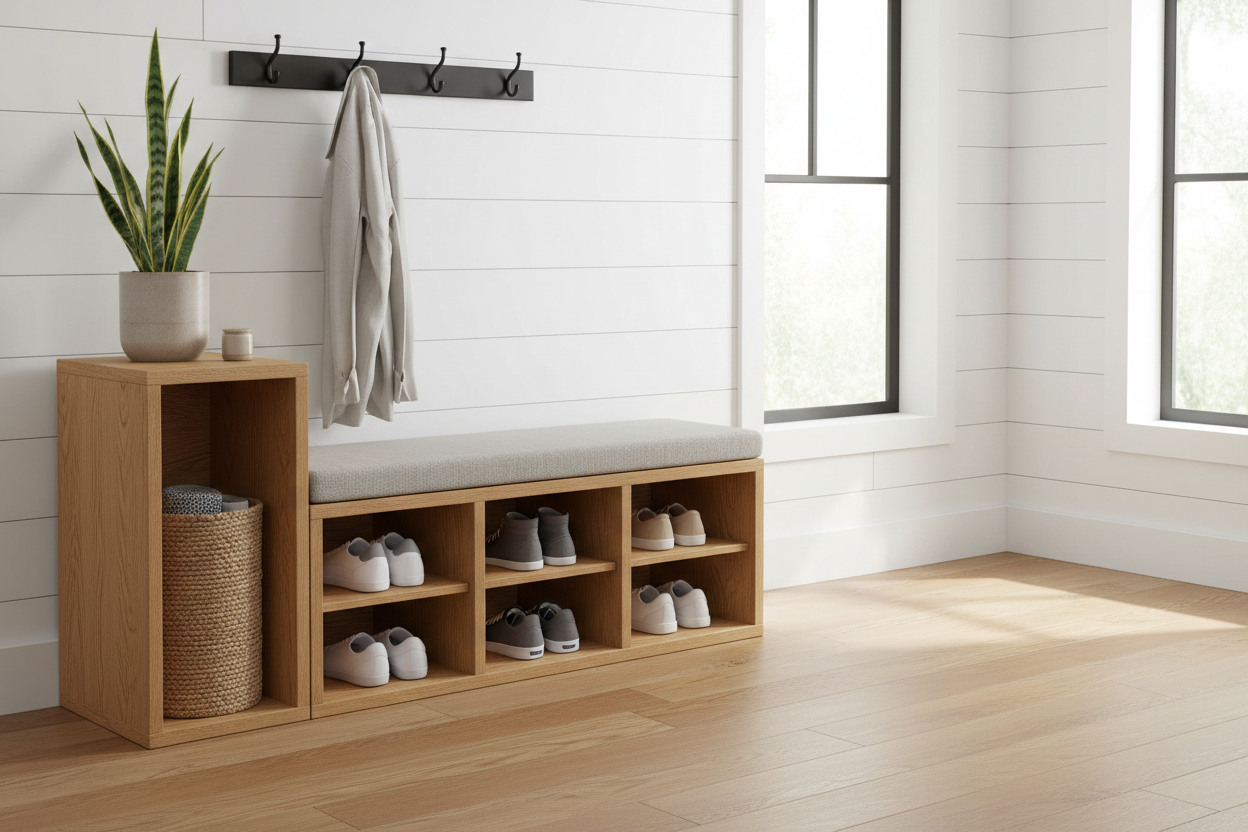
The foyer is the handshake of the home. It sets the expectation for the rest of the interior, yet it is often the most neglected space regarding functionality. We frequently see clients struggling with the "drop zone" dilemma—a chaotic pile of footwear that ruins the visual flow of an otherwise curated entry. The solution is rarely just a rack; it is a piece of furniture that anchors the space while hiding the clutter: the **entryway storage bench for shoes**.
Key Features to Look For
- Depth & Clearance: Ensure the bench depth (typically 15"-18") allows for at least 36" of walking clearance in the hallway.
- Ventilation: For enclosed storage, look for slatted doors or breathable back panels to prevent moisture buildup and odors.
- Weight Capacity: A sturdy bench should support at least 250-300 lbs to accommodate an adult sitting to tie laces.
- Boot Accommodation: Check for adjustable shelving or taller compartments if you frequently wear boots or high-tops.
Selecting the Right Material for High-Traffic Zones
When selecting a shoe storage bench entryway piece, material integrity is paramount. Unlike a bedroom accent chair, this piece will face wet umbrellas, muddy soles, and heavy bags.
For longevity, I always steer clients toward solid hardwoods like white oak or walnut over particle board. Veneers can look beautiful, but if the edge banding peels from moisture exposure, the piece is ruined. If you prefer an upholstered top, opt for high-performance fabrics like Crypton or a top-grain leather. These materials allow you to wipe away spills easily, maintaining that luxury aesthetic without the anxiety of staining.
Balancing Scale and Visual Weight
A common error in foyer design is ignoring the visual weight of the furniture. If you have a small, narrow hallway, a solid wood box sitting on the floor can make the space feel claustrophobic. In these instances, an entryway shoe rack bench with an open bottom or slender legs is preferable. This allows light to pass underneath, increasing the perceived square footage of the floor.
Conversely, in a grand foyer with high ceilings, a substantial, fully enclosed foyer bench with shoe storage acts as a necessary grounding element. It provides a focal point that draws the eye down, creating a cozy, inviting atmosphere.
Functionality: Shelves vs. Tippers vs. Lids
The mechanism of storage dictates the daily user experience. A flip-top bench (chest style) offers massive volume, but I rarely recommend them for daily shoe storage. It is simply too cumbersome to ask guests or family members to stand up, clear off the pillows, and lift a heavy lid just to retrieve sneakers.
For daily efficiency, a front-access entryway shoe bench is superior. Cubbies work well for children and casual spaces, while drop-down "tipper" drawers offer a cleaner, more sophisticated facade that hides the visual noise of mismatched footwear. If you live in a climate with harsh winters, consider a specialized entryway boot bench with a designated tall vertical section to prevent the shafts of your boots from creasing.
My Personal Take on Entryway Storage Benches
In my years of designing residential spaces, I’ve learned a specific lesson about front door bench shoe storage the hard way: Hardware matters more than you think.
I once specified a gorgeous, custom mid-century modern bench for a client in Chicago. It had sleek sliding doors to hide the shoes. It looked stunning in the photos. However, three months later, the client called me. The track for the sliding doors had become jammed with small pebbles and grit brought in from the street. The doors wouldn't slide, and the finish on the bottom track was scratched to oblivion.
Since then, I have been incredibly particular about "floor-level" mechanics. If a bench has doors, I now insist on high-quality soft-close hinges that sit slightly elevated from the base, or open shelving that can be easily vacuumed. It’s these unpolished, practical details—like grit in a sliding track—that determine whether a piece of furniture remains a joy or becomes a burden.
Conclusion
Investing in the right storage solution elevates your daily routine. By focusing on durable materials, appropriate scale, and smart accessibility, you transform a cluttered drop zone into a sophisticated welcome area. Your entryway is the first thing you see when you arrive home; make sure it greets you with order and elegance.
Frequently Asked Questions
How much space do I need for an entryway bench?
You generally need a minimum of 36 to 42 inches of clearance between the front of the bench and the opposite wall or door. This ensures the traffic flow remains unobstructed even when someone is sitting down.
Can I use a bedroom bench in the entryway?
While possible, it is often not recommended. Bedroom benches are designed for soft clothing and light use. An entryway bench requires reinforced joinery to handle the weight of daily sitting and finishes that resist moisture and dirt from shoes.
What is the best depth for a narrow hallway bench?
For tight spaces, look for a shallow depth of 12 to 14 inches. Note that at this depth, shoes may need to be stored at an angle or vertically (in a tipper drawer) rather than flat.


Leave a comment
This site is protected by hCaptcha and the hCaptcha Privacy Policy and Terms of Service apply.