










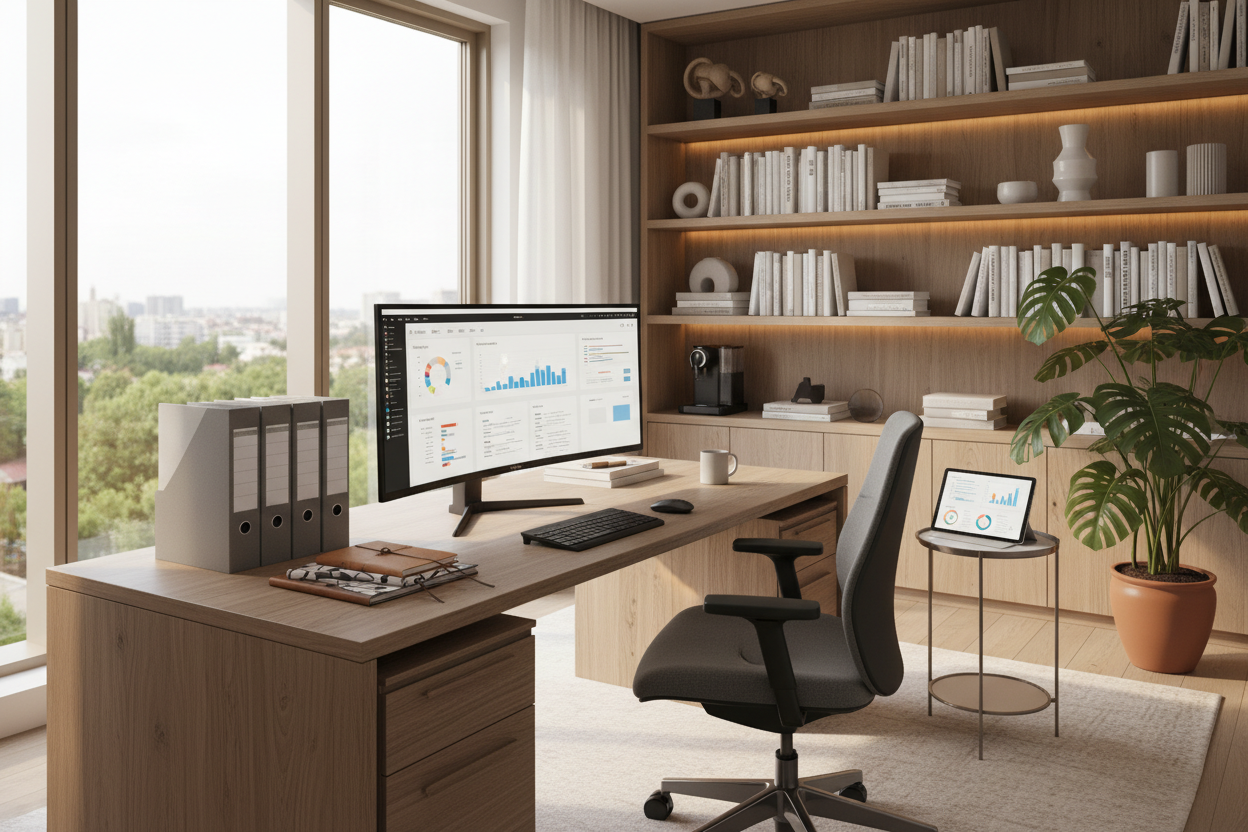
When clients ask me to design their dream home office, the conversation almost always hits a familiar roadblock: the budget. Investing in an ergonomic chair, a solid hardwood desk, and proper task lighting adds up quickly. But the dynamic changes the moment we start discussing expenses working from home. Suddenly, that premium Herman Miller chair isn't just a luxury purchase; it's a potential tax write-off.
As an interior designer with over 15 years of experience crafting residential workspaces, I spend a lot of time collaborating with my clients' CPAs to ensure the spaces we build meet specific financial criteria. While I am a designer and not a tax professional, understanding how the IRS views your workspace fundamentally changes how we plan the layout, select furniture, and allocate your design budget. Here is what you need to know before you start buying furniture for your remote setup.
Quick Decision Guide
- Status matters most: The rules for self-employed work from home tax deductions are vastly different from those for W-2 employees.
- Exclusive use is critical: To claim a work from home home office, the space must be used regularly and exclusively for business. A desk in your guest bedroom is tricky; a dedicated room is safer.
- Capitalize on ergonomics: Desks, chairs, and filing cabinets are generally safe bets when wondering what work from home expenses are tax deductible.
- Internet and utilities: If you work at home, you can typically claim a percentage of your internet and utility bills based on the square footage of your office.
Understanding the 'Exclusive Use' Design Rule
The biggest hurdle my clients face when asking, 'can I claim my office if I work from home?' is the exclusive use rule. The IRS mandates that the area you claim must be used exclusively for work. If your office doubles as a playroom or a home gym, it generally does not qualify.
Space Planning for Tax Compliance
From a design perspective, this means we have to be intentional about boundaries. If you live in an open-concept apartment, we might use a dual-sided bookcase or a decorative room divider to create a distinct, measurable zone. When calculating how much expenses can I claim for working from home, your accountant will need the exact square footage of this dedicated space compared to the total square footage of your home. Clear physical boundaries make this calculation—and any potential audits—much easier to navigate.
What Furniture and Upgrades Can You Claim?
When planning a wfh home office deduction, clients always want to know exactly what furniture qualifies. Generally, items that are necessary for your business operations can be deducted. This includes your desk, ergonomic office chair, filing systems, and specialized lighting.
Work From Home Office Tax Write Offs: The Basics
However, the line gets blurry with decor. A $3,000 vintage Persian rug or custom window treatments might make the space feel incredible, but they are harder to justify as strict business necessities compared to a standing desk. When balancing work at home tax write offs with aesthetics, I advise clients to invest heavily in the functional pieces—like a high-quality, solid wood desk with proper cord management—and save money on the purely decorative supporting elements.
W-2 Remote Employees vs. Self-Employed Workers
A heartbreaking moment in the design process is when a client asks, 'can remote employees deduct home office expenses?' and I have to tell them the current reality. Following the Tax Cuts and Jobs Act of 2017, W-2 employees can no longer claim the home office deduction on their federal taxes.
If you are a W-2 worker, there is no federal home office deduction for remote employee status. However, if you are a freelancer, independent contractor, or have a side hustle (sole trader expenses working from home), you can absolutely leverage these deductions. Additionally, some states have their own rules—for instance, California work from home tax deductions may offer relief for W-2 employees at the state level, so always check with your local tax preparer.
Lessons from My Own Studio Projects
I learned the hard way how complex work from home expenses tax return filing can be. Early in my career, I converted a detached garage into my design studio. I spent a small fortune running new electrical lines, adding insulation, and installing custom cabinetry to hold heavy stone and fabric samples.
I assumed I could write off the entire renovation in year one. My CPA quickly corrected me. While the furniture and immediate supplies were straightforward deductions, the structural changes to the building had to be depreciated over nearly 40 years. It completely shifted my cash flow for the year. The lesson? Always consult your accountant before making permanent structural changes to your home, even if it's strictly for business. Sometimes, buying a high-end freestanding storage unit is a better immediate tax strategy than building custom architectural built-ins.
Frequently Asked Questions
Are working from home expenses tax deductible for W-2 employees?
On a federal level, no. Since 2018, W-2 employees cannot claim the home office deduction. However, some states allow it on state income taxes, and your employer may offer tax-free reimbursements for office setups.
If I work from home can I deduct my internet?
If you are self-employed, yes. You can claim internet on taxes work from home by deducting the percentage of the bill that directly correlates to your business use. If you use the internet 50% for work and 50% for personal streaming, you can only deduct half.
What can I claim on tax when working from home as a freelancer?
Self-employed individuals can claim a portion of their rent or mortgage interest, utilities, homeowners insurance, and internet. You can also claim direct expenses like office furniture, computers, software, and office supplies.
How do I calculate the work from home utilities deduction?
You typically calculate the square footage of your dedicated office space as a percentage of your home's total square footage. If your office is 10% of your home, you can generally deduct 10% of your eligible utility bills.



Leave a comment
This site is protected by hCaptcha and the hCaptcha Privacy Policy and Terms of Service apply.