










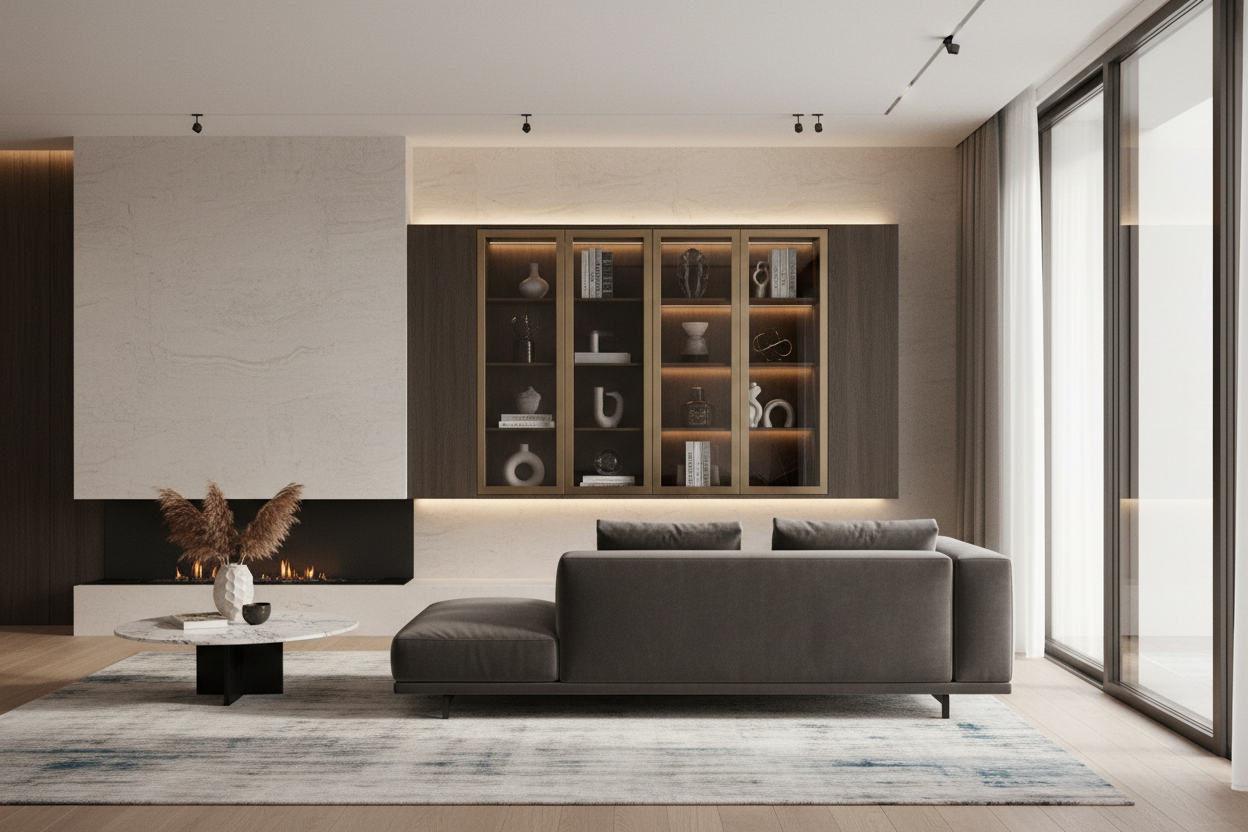
We've all been there: you buy a beautiful, towering bookcase to show off your favorite objects, but the moment you place it in your living room, the space instantly feels cramped and heavy. Traditional floor-resting furniture carries massive visual weight. If you're dealing with a tight floor plan or simply want a cleaner, more modern aesthetic, a floating display cabinet is often the missing puzzle piece.
By lifting your storage off the floor, you trick the eye into perceiving a larger room while keeping your curated pieces front and center. But installing wall-mounted furniture comes with structural and stylistic rules you can't ignore. Here is exactly what you need to know before drilling into your drywall.
Key Takeaways
- Exposing the floor underneath a cabinet creates a powerful illusion of square footage, ideal for small apartments and narrow hallways.
- Mounting hardware dictates longevity; always use a French cleat system anchored directly into wooden wall studs.
- Glass-front doors protect delicate collectibles from dust while maintaining a light, airy visual footprint.
- Integrated lighting turns a basic storage box into a sophisticated focal point, especially for evening ambiance.
Maximizing Visual Space
The Magic of Negative Space
In interior design, what you don't fill is just as important as what you do. Leaving 12 to 18 inches of empty space beneath your cabinet allows light to pass through the room uninterrupted. This negative space keeps the room feeling open. It is a particularly useful trick in narrow dining rooms where a traditional buffet would block traffic flow.
Clearance and Placement Rules
Scale and proportion matter immensely when hanging heavy furniture. As a general rule, mount your floating unit so the center of the display area sits at natural eye level—roughly 57 to 60 inches from the floor. If you are hanging it above a sofa or a credenza, leave a minimum of 15 to 20 inches of clearance between the bottom of the cabinet and the top of the furniture below it so the pieces don't feel visually squeezed together.
Choosing the Right Materials
Solid Wood vs. Engineered Alternatives
While solid white oak or walnut offers unmatched beauty, it is incredibly heavy. For floating pieces, high-quality engineered wood with a premium real-wood veneer is often the smarter choice. It provides the exact same aesthetic but cuts the weight down significantly, reducing the stress on your wall framing.
Hardware is Everything
Do not trust standard drywall anchors with a display cabinet, no matter what the packaging claims. Once you add the weight of the cabinet, glass doors, and your ceramic vases or hardcover books, you are dealing with serious load bearing. Look for cabinets that utilize a metal French cleat system, which distributes the weight evenly across multiple wall studs.
Designer's Honest Take
During a condo renovation in downtown Toronto a few years ago, I sourced a stunning, custom-built matte black floating unit for a client's living room. It looked incredible on paper. But when installation day came, we realized the condo used standard metal studs, which couldn't safely support the torque of a 100-pound loaded cabinet using standard lag bolts. We had to cut open the drywall, install solid wood blocking behind the wall, patch, and repaint before we could even hang the piece.
My biggest warning to clients now? A floating piece is a commitment. Unlike a freestanding bookcase that you can slide across the room when you get bored, wall-mounted furniture requires patching and painting if you ever decide to rearrange your layout. It also requires rigorous dusting—because it sits at eye level, every speck of dust on a dark wood or glass shelf is immediately visible.
Frequently Asked Questions
How much weight can a floating display cabinet hold?
When properly anchored into at least two wooden wall studs using heavy-duty lag screws or a French cleat, a standard cabinet can hold between 50 and 150 pounds. Always check the manufacturer's specific load rating and factor in the weight of the cabinet itself before adding your items.
How high should I hang my floating cabinet?
If the cabinet is a standalone piece on an empty wall, aim for the vertical center of the cabinet to be about 57 to 60 inches from the floor (average eye level). If it is mounted above other furniture, ensure at least 15 inches of vertical breathing room between pieces.
Is it safe to install a heavy floating cabinet on metal studs?
It is possible, but it requires specialized hardware like heavy-duty toggle bolts, and the weight capacity will be significantly lower than with wood studs. For heavy displays, I strongly recommend opening the wall to install wood blocking between the metal studs for secure anchoring.

Leave a comment
This site is protected by hCaptcha and the hCaptcha Privacy Policy and Terms of Service apply.