










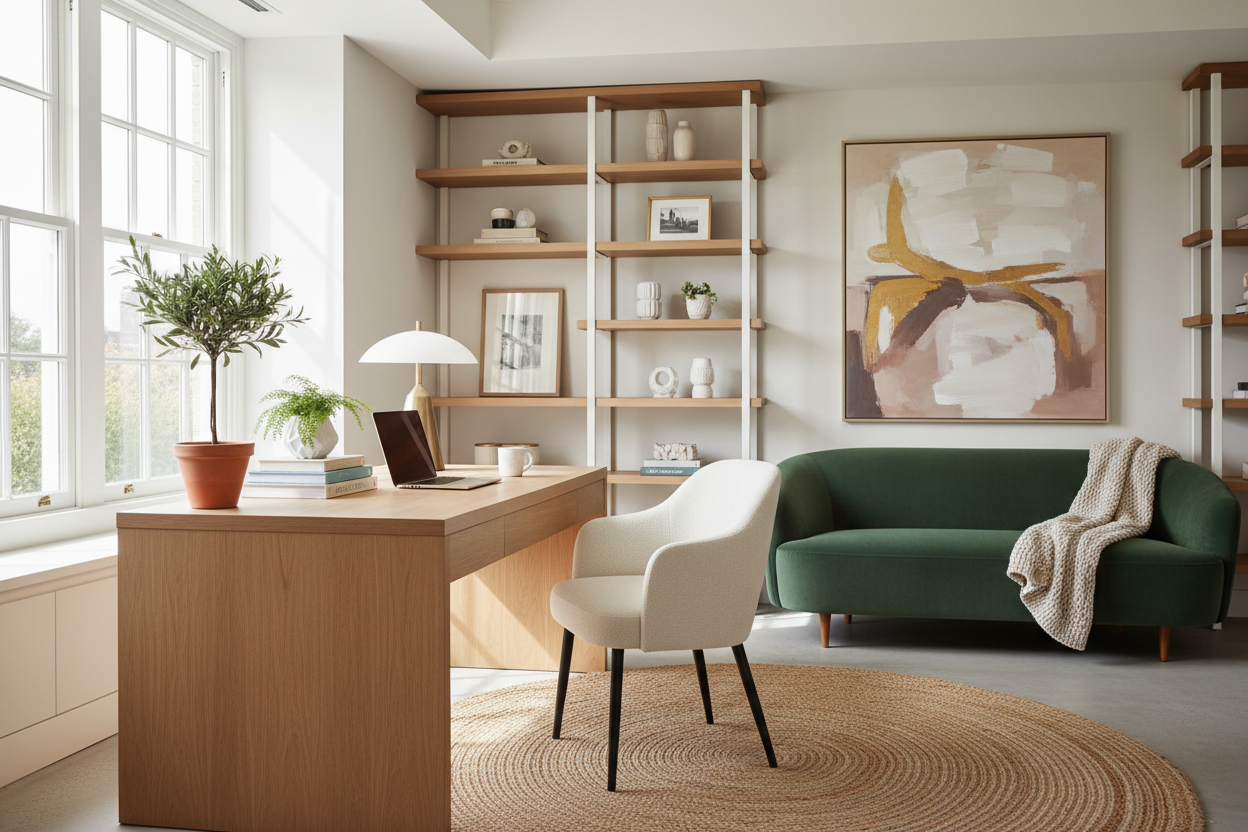
Most of us have experienced the reality of the remote work pivot: a laptop shoved onto a dining table or a spare bedroom that feels more like a storage unit than a workspace. If your current setup leaves you feeling uninspired, you are not alone. Finding the right woman home office ideas is about creating a dedicated environment that supports your productivity while reflecting your personal aesthetic. In this guide, we will break down how to design a workspace that is as functional as it is beautiful.
Quick Decision Guide
- Prioritize natural light: Position your desk perpendicular to windows to reduce glare while keeping your face illuminated for video calls.
- Mix materials for warmth: Combine warm wood tones with metal accents to keep the room from feeling too corporate.
- Invest in the chair: Do not sacrifice spinal support for a purely decorative accent chair. Ergonomics dictate comfort and focus.
- Utilize vertical space: Floating shelves draw the eye upward and provide storage without consuming valuable floor square footage.
Defining the Layout and Flow
Desk Placement and Clearances
The foundation of effective woman office design starts with spatial planning. A common mistake is pushing the desk flat against a wall, which can feel restrictive. If space allows, float your desk in the center of the room facing the door. This creates a commanding focal point and a more welcoming atmosphere. Ensure you leave at least 36 inches of clearance behind the desk to comfortably roll your chair in and out.
Lighting as a Design Element
Lighting dictates the mood of your workspace. Layer your lighting by combining ambient overhead fixtures, task lighting on the desk, and accent lighting on bookshelves. A sculptural brass task lamp adds immediate sophistication while serving a highly practical purpose.
Curating Your Professional Aesthetic
Finding Inspiration and Managing Clutter
Scrolling through women's home office inspiration online often yields highly styled, minimalist rooms that lack practical storage. The key is balancing negative space with functional pieces. Incorporate closed storage, like a credenza or a stylish filing cabinet, to hide cords, paperwork, and clutter. This allows your open shelving to display curated art, books, and plants without looking messy.
Texture and Visual Weight
Corporate offices feel cold because they rely heavily on laminate and metal. To soften a ladies home office, introduce varied textures. A vintage Persian rug anchors the space and absorbs sound, while linen drapery adds vertical softness. Choose a desk with a lighter visual weight—perhaps one with tapered legs rather than a heavy, blocky base—especially if you are working with a smaller room.
Designer's Honest Take
Over my 15 years designing residential interiors, I have made my share of mistakes when styling workspaces. Early in my career, I bought a stunning, blush-pink velvet accent chair for my own office. It looked incredible in photos and tied the room's color palette together perfectly. However, after three months of sitting in it for eight hours a day, my lower back was in agony.
I learned the hard way that a dining or accent chair is never a substitute for an ergonomic desk chair. I also purchased a gorgeous polished brass desk lamp that looked incredibly chic but got dangerously hot to the touch after being on for an hour. Always prioritize daily livability over a magazine-ready vignette. Today, I only source desk chairs with adjustable lumbar support, even if it means spending a bit more time hunting for one with a beautiful silhouette.
Frequently Asked Questions
How do I make a small home office feel bigger?
Maximize vertical space with floor-to-ceiling shelving and use a cohesive, light color palette. Choosing a desk with open legs rather than solid sides allows light to pass through, reducing the furniture's visual footprint.
What is the best desk size for a dual-monitor setup?
If you use two monitors, you need a desk that is at least 55 inches wide and 24 to 30 inches deep. Anything shallower will force the screens too close to your eyes, causing strain.
How can I hide ugly computer cords?
Use a cable management tray mounted under the back edge of your desk. You can also route cords down the back of a desk leg using zip ties or cord covers that match the color of your furniture.

Leave a comment
This site is protected by hCaptcha and the hCaptcha Privacy Policy and Terms of Service apply.