










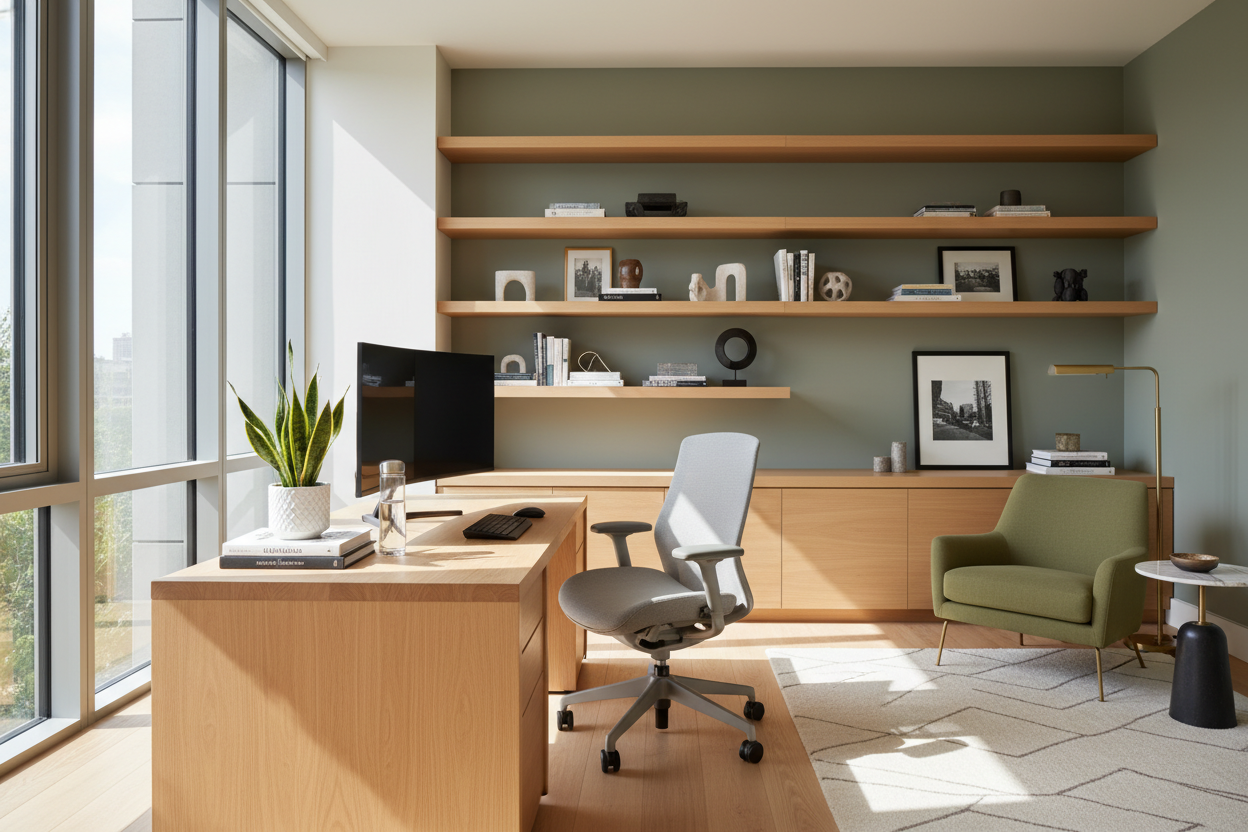
There is a distinct difference between a workspace that looks good in a catalog and one that actually supports your workflow. We have all experienced the fatigue of a poorly lit room or the frustration of a desk that wobbles under the weight of a heavy monitor. Finding good office ideas isn't just about selecting a trendy color palette; it is about solving the friction points between your daily tasks and your physical environment.
Quick Decision Guide: The Essentials
- Ergonomics First: Prioritize a chair with lumbar support and adjustable armrests over pure aesthetics. Your back will thank you.
- Lighting Layers: Never rely solely on overhead lights. Combine ambient, task, and accent lighting to reduce eye strain.
- Surface Area: Ensure your desk depth is at least 24-30 inches to maintain a comfortable viewing distance from screens.
- Material Durability: For high-traffic surfaces, opt for hardwoods or high-pressure laminates over soft veneers that scratch easily.
The Architecture of Great Office Design
When I consult with clients, we start with the floor plan before we ever look at fabric swatches. Great office design relies on the concept of 'command position.' Ideally, your desk should face the door but not be directly in line with it. This creates a psychological sense of security and authority.
Space planning is critical. You need a minimum of 36 inches behind your desk to push your chair back comfortably. If you are floating a desk in the center of the room, consider how you will manage cables. Nothing ruins a sophisticated silhouette faster than a tangled nest of wires visible from the entryway.
Curating Office Design Decor and Materials
The tactile experience of your office matters as much as the visual one. When selecting materials, think about longevity and touch. A glass desk might look sleek, but it is cold on the forearms and amplifies sound. Solid wood, on the other hand, adds warmth and absorbs sound, contributing to better acoustics.
regarding office design decor, aim for 'visual quiet.' Clutter competes for your attention. Use closed storage for paperwork and open shelving for curated objects that inspire you—perhaps a sculptural vase or architectural reference books. This balance is the secret to sophisticated office design decoration; it allows the eye to rest rather than constantly scanning messy piles.
Lighting: The Unsung Hero
Lighting dictates the mood. A 3000K to 4000K color temperature is ideal for alertness without the clinical harshness of daylight bulbs. Position your task light on the opposite side of your writing hand to avoid casting shadows across your documents.
My Personal Take on Good Office Ideas
Lessons from My Own Projects
I once designed a home office for a client where we fell in love with a stunning, reclaimed rough-hewn timber desk. It was the focal point of the room and looked incredible. However, two weeks after installation, I got a call. The surface was so textured that my client couldn't write on a piece of paper without the pen punching through or the lines going wobbly. We had to rush-order a custom leather desk blotter to fix it.
It was a humbling reminder that function cannot be sacrificed for form. Now, whenever I source surfaces, I run my hand across them to test for 'writing smoothness' and check how easily a coffee cup sits without wobbling. I also check the underside of desks—many cheaper options have rough, unfinished edges that snag bespoke trousers or stockings. It is these unpolished details that define the true quality of a workspace.
Conclusion
Creating a refined workspace requires looking beyond the trends and focusing on how the room serves you. By investing in quality materials, prioritizing ergonomic layouts, and layering your lighting, you elevate your daily grind into a professional ritual. Your office should be the one place where your best work feels inevitable.
Frequently Asked Questions
How do I make a small office feel larger?
Utilize vertical space with floor-to-ceiling shelving to draw the eye upward. Mirrors can also double the visual depth of a room, but place them carefully so you aren't staring at your own reflection while trying to focus.
Is a standing desk worth the investment for design continuity?
Absolutely, but choose carefully. Many standing desks look industrial. Look for models with enclosed motors and wood-veneer tops that blend with residential furniture, maintaining the elegance of your office design and decoration.
What is the best rug size for a home office?
The rug should be large enough that your chair remains on it even when pushed back. If the casters constantly roll over the edge of the rug, it creates an annoying bump and ruins the flow of the workspace.


Leave a comment
This site is protected by hCaptcha and the hCaptcha Privacy Policy and Terms of Service apply.