










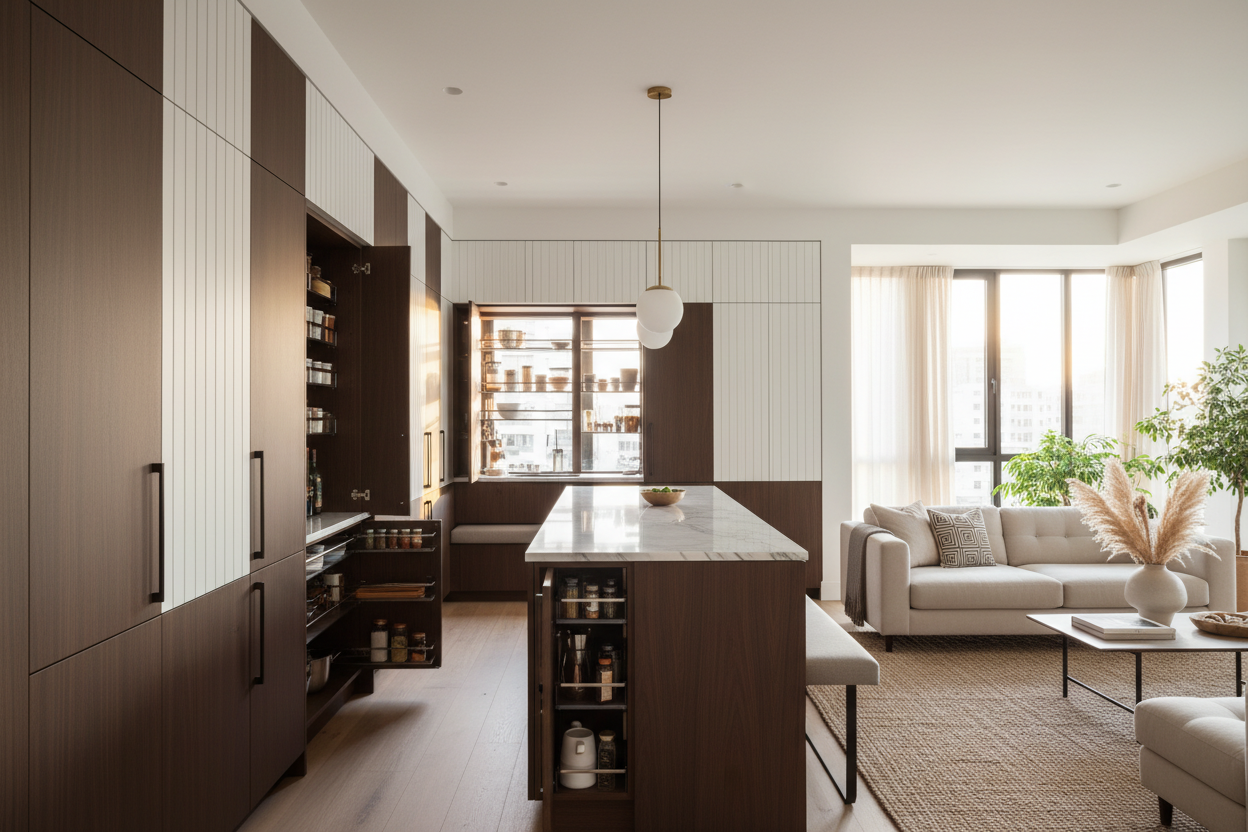
I spent three months staring at a 22-inch gap between my fridge and the wall. It was a graveyard for stray kibble, flattened mailers, and the occasional rogue grape. Standard 24-inch units were a non-starter because I actually like being able to walk through my kitchen, and the common 18-inch options left a weird three-inch 'dust alley' that looked like a mistake.
Finding a 20 inch wide cabinet was the unicorn moment my rental desperately needed. It is the exact 'Goldilocks' size that fills a narrow void without making the room feel like a claustrophobic hallway. If you are dealing with a layout that feels three inches off from being functional, this specific footprint is usually the answer.
- Measure the door swing: A 20-inch door needs 20 inches of clearance to open fully; do not forget the oven handle.
- Depth matters: A 20 inch deep cabinet with doors hides the visual chaos better than shallow open shelving.
- Check your baseboards: Standard cabinets sit flush, but chunky baseboards will push them out, creating a gap at the back.
- Hardware is a cheap fix: Swap the plastic knobs for heavy brass or matte black to make a budget unit look like a custom build.
The Awkward Gap Between the Fridge and the Wall
Most kitchens are designed for standard 24-inch or 30-inch appliances, but older builds or DIY renovations often leave these bizarre leftovers. My gap was 22 inches wide. A 24-inch base cabinet would have protruded into the walkway, effectively turning my kitchen into a one-person-only zone. I tried a rolling cart for a week, but it just looked messy and collected grime.
The 20 inch cabinet is the secret weapon for these scenarios. It leaves just enough breathing room—about an inch on either side—to ensure you aren't scratching your fridge panels during installation, but it fills enough of the void to look intentional. It turned a useless dead zone into a dedicated station for my coffee gear and heavy cookbooks.
Why I Skipped Standard 18-Inch Boxes
Big-box retailers love the 18-inch mark. It is a standard increment. But in a 22-inch space, an 18-inch unit looks like you bought the wrong furniture. It leaves a 4-inch gap that is too small for a trash can but large enough to be a permanent home for dust bunnies. I also realized that open shelving in this narrow spot made the whole wall look cluttered.
I needed a kitchen storage cabinet with doors and shelves to hide my mismatched Tupperware. Choosing a 20 wide cabinet with doors meant I could shove the messy stuff inside and keep the kitchen looking streamlined. That extra two inches of width over the standard 18-inch model might sound negligible, but it is the difference between fitting two stacks of dinner plates side-by-side or having to overlap them.
What Can You Actually Fit Inside a 20-Inch Footprint?
Capacity is where the 20 inch wide storage cabinet surprised me. Because it’s wider than a standard 'slim' pantry but narrower than a full-size unit, it hits a sweet spot for bulkier items. I found that a 20 inch deep pantry cabinet easily swallowed my oversized cereal boxes and my 6-quart slow cooker, which usually lives on the floor of my coat closet.
When you are organizing your kitchen pantry storage, those extra inches mean you can actually fit two rows of standard mason jars or three rows of canned goods. I use mine for the 'heavy' groceries—flour, sugar, and the five-pound bag of rice. If you get a 20 inch deep cabinet with drawers, it becomes even more efficient for things like linens or those random kitchen gadgets you only use twice a year.
Sneaking It In: The Depth and Door Clearance Warning
Before you hit buy, we need to talk about the 20 inch deep base cabinet reality. Most standard kitchen counters are 24 inches deep. If you buy a 20 inch depth cabinet, it will sit four inches back from your existing counters. This can actually be a blessing in a narrow kitchen because it creates more floor space, but it looks weird if you don't align the front faces properly.
My biggest mistake? I didn't account for the outlet. I pushed my 20 inch base cabinet against the wall only to realize the plug for my toaster was directly behind the back panel. I had to use a hole saw to cut an access point. Also, check your 20 base cabinet door clearance. If you have a 20 inch wide cabinet with drawers, make sure they can slide out without hitting the trim on your dishwasher or the handle of your oven.
Tricks to Make It Look Expensive
A freestanding 20 wide storage cabinet can look a bit 'temporary' if you aren't careful. To give it that built-in architectural feel, I replaced the stock legs with a simple 1x4 toe kick that I painted to match the cabinet. It hides the floor gap and makes the unit look like it was installed by a pro. I also suggest looking for a black cabinet with glass doors if you want to break up a long run of solid wood or white laminate.
If you are using a 20 inch wide tall cabinet, anchor it to the wall. Seriously. These narrow, tall units are top-heavy, especially once you load the top shelves with heavy glass jars. A simple L-bracket into a stud takes five minutes and prevents a disaster. For a final touch, swap out the generic pulls for something with some weight—solid brass or hand-forged iron—to instantly distract from the fact that you bought the unit online at midnight.
Is a 20-inch cabinet wide enough for a pantry?
Yes, absolutely. While it won't hold a massive family's worth of bulk supplies, it is the perfect size for a secondary pantry. It fits standard cereal boxes face-out and allows for organized rows of canned goods without losing items in the 'dark zone' at the back of a wider shelf.
What is the difference between a 20-inch base cabinet and a 20-inch wall cabinet?
Base cabinets are 34.5 inches tall and designed to sit on the floor, usually featuring a toe kick. Wall cabinets are shallower (often 12-15 inches deep) and lack the reinforced base. Do not try to use a wall cabinet on the floor; it won't handle the weight and you'll be constantly bending over to ground level.
Can I fit a microwave on a 20-inch wide cabinet?
Most compact and mid-sized microwaves are between 17 and 19 inches wide. They will fit on a 20 inch wide kitchen cabinet, but you must check the depth. If your microwave is 18 inches deep and you have a 20 inch deep cabinet, you only have two inches of clearance for the power cord—it will be tight.



Leave a comment
This site is protected by hCaptcha and the hCaptcha Privacy Policy and Terms of Service apply.