










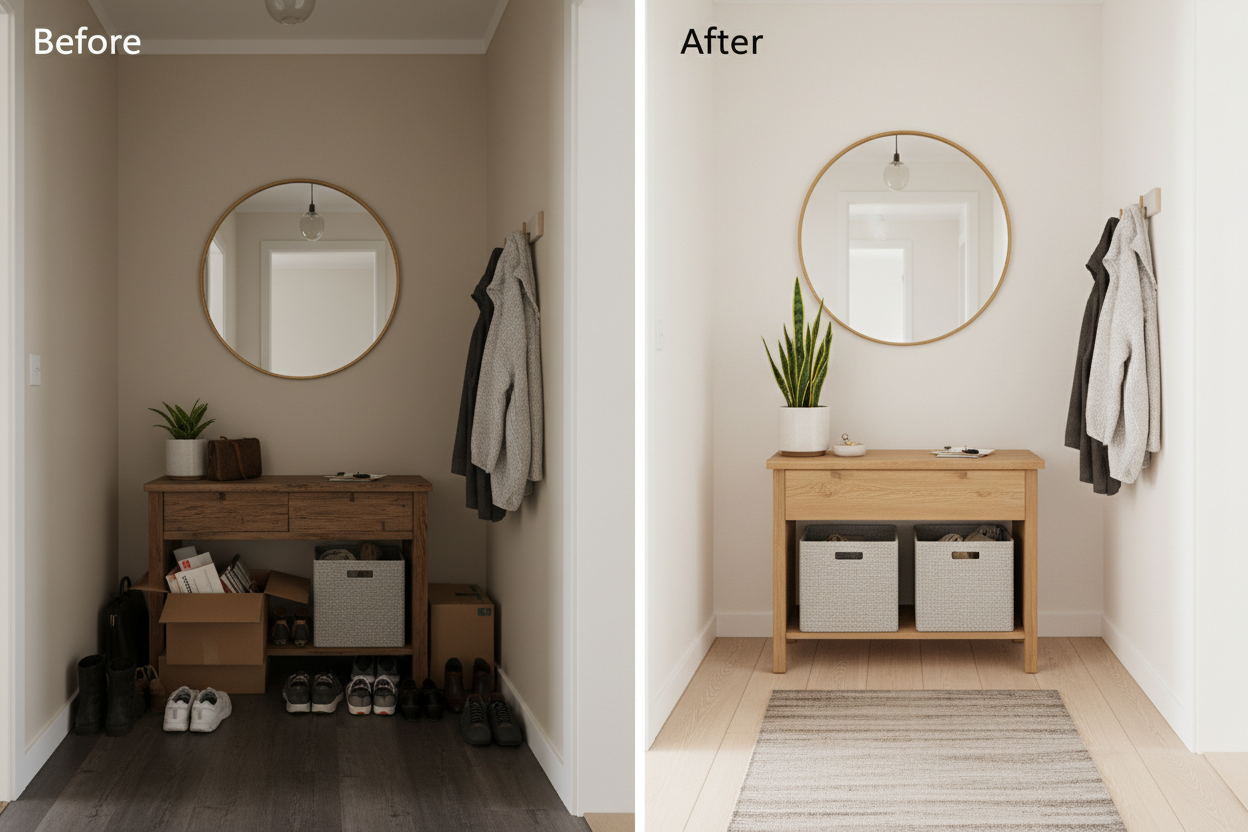
Living in a small apartment taught me that every inch matters. When I moved into my current place, I had a hallway that was barely three feet wide—too narrow for a standard console table, but desperately needing something to catch keys, mail, and the daily clutter that accumulates near the front door. That's when I discovered the magic of narrow storage tables, and honestly, they've changed how I think about small spaces entirely.
A narrow storage table is exactly what it sounds like: a slim-profile table designed to fit in tight spaces while still offering storage solutions. These pieces typically measure between 8 to 12 inches deep, compared to standard console tables that can be 15 to 18 inches. The difference might seem small on paper, but in a cramped entryway or hallway, those few inches determine whether you can walk comfortably or feel like you're navigating an obstacle course.
Why Depth Matters More Than You Think
The beauty of a narrow console with storage isn't just about saving floor space. These tables create functional zones in areas you might have written off as unusable. I've seen them work wonders behind sofas in small living rooms, tucked into awkward nooks under staircases, and even serving as makeshift desks in studio apartments where a full office setup isn't possible.
What makes these pieces particularly clever is how designers have adapted storage features to work within limited dimensions. Instead of deep drawers that would extend too far into your walking path, many narrow storage tables feature vertical storage—think tall cabinets, multiple shallow drawers stacked on top of each other, or open shelving that makes the most of height rather than depth.
Different Styles for Different Needs
The market has really caught up with demand for space-saving furniture. You'll find narrow console tables with storage in virtually every style imaginable. Industrial designs with metal frames and reclaimed wood offer that modern loft aesthetic while staying under 10 inches deep. Traditional pieces with turned legs and antique finishes prove that you don't have to sacrifice style for space efficiency.
For my hallway, I ended up choosing a mid-century modern piece with two small drawers and a lower shelf. The drawers hold all those small items that used to scatter across every surface—charging cables, sunglasses, dog leashes—while the lower shelf became home to a basket for shoes and another for reusable shopping bags. The whole setup takes up less than a foot of floor space but eliminated about 80% of the clutter that used to greet me at the door.
Materials and Construction Considerations
When shopping for a narrow storage table, the construction quality becomes even more critical than with standard furniture. Because these pieces are slim, they can feel flimsy if not well-made. Look for solid wood or high-quality engineered wood rather than particle board. The joinery matters too—dovetail drawer construction and mortise-and-tenon joints will hold up much better over time than pieces held together primarily with screws and glue.
Metal frames can be excellent for narrow consoles because they provide stability without bulk. I've noticed that many higher-end options use powder-coated steel legs that are surprisingly slender yet strong enough to support the tabletop and storage components without wobbling.
Storage Solutions That Actually Work
Not all storage is created equal, especially when you're working with limited depth. The most practical narrow console with storage options I've encountered include a mix of concealed and open storage. Drawers are perfect for hiding clutter and keeping dust off items you don't use daily. Open shelves or baskets work well for things you grab frequently—I keep my keys in a small dish on top and umbrellas in a basket below.
Some designs incorporate hooks on the sides or back, which is genius for small spaces. These can hold bags, scarves, or even lightweight jackets without requiring any additional floor space. Cable management features are another thoughtful addition, particularly if you're using your narrow table as a charging station or compact workspace.
Placement Strategies Beyond the Entryway
While hallways and entryways are the obvious homes for narrow storage tables, I've discovered they're incredibly versatile. A friend uses one as a room divider in her studio apartment, creating a visual separation between her sleeping and living areas while providing storage for books and decorative objects. The narrow profile means it doesn't block light or make the space feel chopped up.
In bedrooms, these tables can serve as alternatives to bulky nightstands or dressers. Placed against a wall between two windows, they provide surface space and storage without interfering with curtains or blocking natural light. I've even seen them used in bathrooms (where codes permit furniture) to hold towels and toiletries in a more stylish way than traditional bathroom cabinets.
Measuring Your Space Correctly
Before buying any narrow console with storage, measure your space carefully—and I mean really carefully. Measure the width of your hallway or intended space, then subtract at least 30 inches to ensure comfortable passage. That remaining number is your maximum table depth. Don't forget to account for baseboards, which can stick out an inch or two from the wall.
Height is another consideration that's easy to overlook. Standard console tables range from 28 to 32 inches tall, but in a narrow hallway, a taller piece might feel imposing. Conversely, if you're placing the table behind a sofa, you'll want it to be roughly the same height as the sofa back or slightly lower.
Price Points and Value
You can find narrow storage tables at virtually every price point. Budget options starting around $80-150 are widely available from mass-market retailers, though these often sacrifice quality and durability. Mid-range pieces ($200-500) typically offer better construction, more thoughtful design, and materials that will age well. High-end options can easily exceed $1,000, especially for solid wood pieces or designer names.
In my experience, the mid-range sweet spot offers the best value. You get quality construction that will last for years without paying for brand prestige. That said, if you're renting or expect to move frequently, a less expensive option might make sense since narrow furniture from one space doesn't always work in the next.
Making It Work With Your Decor
The slim profile of these tables means they're less visually dominant than standard furniture, which is both an advantage and a challenge. They won't overwhelm a small space, but they also need thoughtful styling to avoid looking like an afterthought. I've found that keeping the top relatively minimal works best—a lamp, a small plant, and maybe one decorative object create visual interest without clutter.
Mirrors are particularly effective above narrow storage tables. They reflect light and create the illusion of more space, which is exactly what you want in a tight area. The vertical emphasis of a mirror above a narrow table draws the eye upward, making ceilings feel higher and rooms feel larger.


Leave a comment
This site is protected by hCaptcha and the hCaptcha Privacy Policy and Terms of Service apply.