










I spent three months staring at my 65-inch OLED mounted on a vast, beige expanse of drywall. It looked like a lonely black rectangle in a gallery that forgot to hang the art. I had the tech, but the room felt like a dorm room with a high budget. That is the moment I realized a design tv console wall feature isn't just for luxury penthouses; it is a necessity if you want your living room to feel like an actual adult lives there.
The goal isn't to build a shrine to Netflix. It is about grounding the tech so it doesn't dominate the room's soul. Here is the reality: a TV on a blank wall is a distraction, but a TV integrated into a textured backdrop is a vibe.
- Texture Over Color: A flat accent wall is fine, but wood slats or lime wash add depth that paint alone can't touch.
- Scale is Non-Negotiable: Your console should be at least 20-30% wider than your screen.
- Hide the Spaghetti: If I see one dangling HDMI cable, the whole 'feature' look is dead on arrival.
- Lighting Matters: Backlighting the screen reduces eye strain and makes the wall feel three-dimensional.
The 'Floating Screen on a White Wall' Problem
We have all been there. You buy a beautiful piece of furniture, center it, and then realize the drywall behind it looks incredibly unfinished. It is what I call the 'floating screen' syndrome. The eye doesn't know where to land because there is no visual boundary between the tech and the architecture of the room. This is Why I Replaced My Clunky Console With a TV Cabinet on the Wall in my previous place—I needed something that felt like it belonged to the room rather than just sitting on top of it.
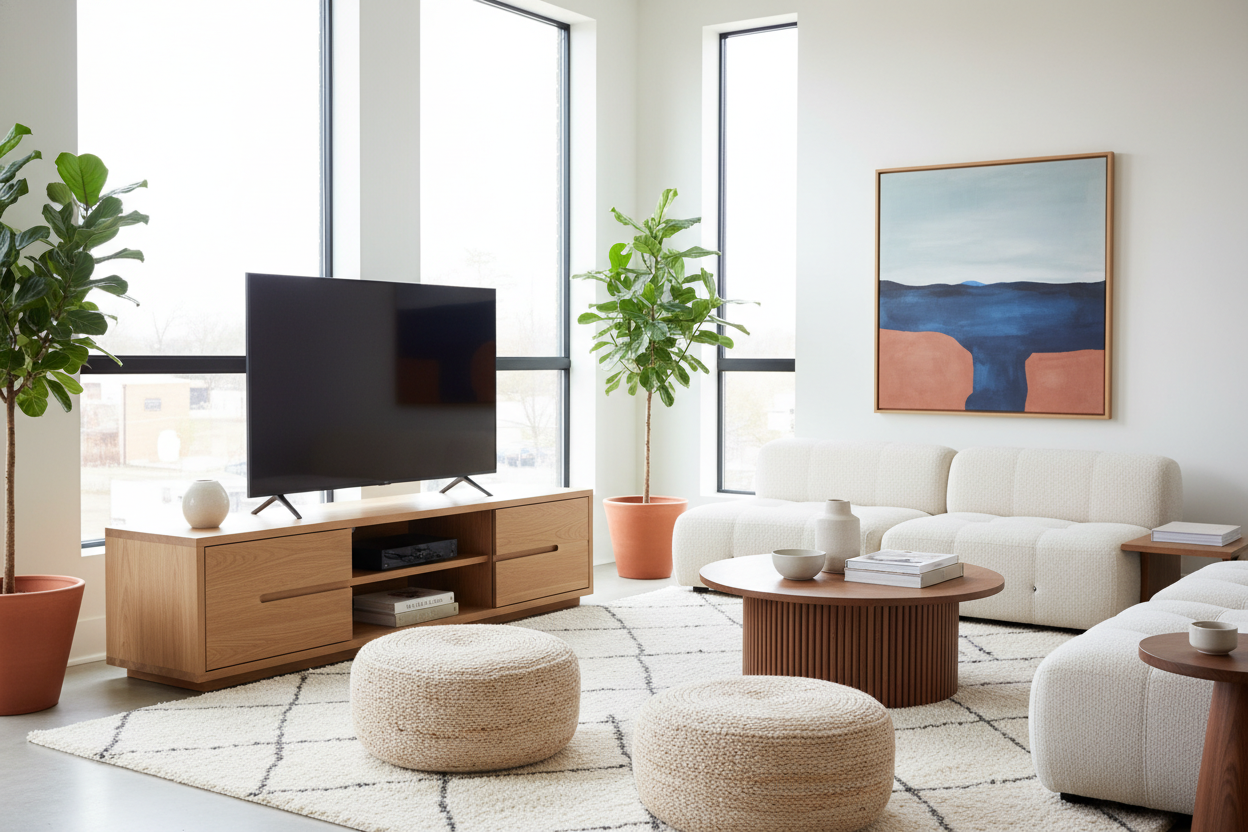
When you leave that space blank, the TV becomes a giant black hole when it is off. By designing a feature wall, you create a dedicated zone that makes the screen look intentional, like a piece of framed art rather than a last-minute appliance purchase.
3 Rules for Nailing a Feature Wall and TV Console Combo
Before you run to the hardware store for wood glue and 2x4s, you need a plan. Rule one: pick your anchor first. You should browse quality Tv Stands before you commit to a wall texture. The furniture dictates the height and the 'weight' of the feature wall. If you have a low-profile, mid-century unit, your wall treatment should probably have vertical lines to draw the eye upward.
Rule two: Contrast is your friend. If your console is light oak, go for a moody charcoal or a deep forest green backdrop. Rule three: Don't let the feature wall end too early. If the wall treatment is narrower than the console, it looks like a stripe. It needs to either span the full wall or be significantly wider than the furniture to frame it properly.
Material Ideas for Your TV Console and Feature Wall Design
If you want a modern, architectural look, vertical wood slats are the current gold standard. They add immediate warmth and hide imperfections in the drywall. I love pairing these slats with a Floating Tv Stand Wall Mounted Media Console Entertainment Center. Lifting the furniture off the floor makes the whole tv console and feature wall design feel airy and high-end, especially in smaller apartments where floor space is at a premium.
For those who want something more tactile but less 'woody,' consider a limewash paint or a subtle grasscloth wallpaper. These materials catch the light beautifully when you have a lamp on. The goal is to create a feature wall and tv console pairing that looks layered. I’ve seen people use oversized porcelain slabs for a marble look, which is stunning, but for a DIY budget, a moody paint-drenched wall with matching floating shelves is a massive win.
Getting the Proportions Right for a Feature Wall With TV Console
Proportion is where most people mess up. If your TV is 55 inches, your console should be at least 70 inches. If you are creating a feature wall with tv console elements, the 'feature' part needs to be the hero. A common trick I use is the 1:1.5 ratio—the backdrop should extend at least 15-20 inches beyond the edges of the TV to prevent it from feeling cramped.
If you have a massive wall to fill, a Modern Tv Console Cabinet Media Console Adjustable Length With Drawers And Legs is a lifesaver. It allows you to expand the furniture to match the width of your wall treatment. I once tried to center a standard 50-inch cabinet on a 12-foot accent wall, and it looked like a postage stamp on a billboard. You need that horizontal length to ground the verticality of a feature wall.
My Biggest Mistake
I once decided to do a 'dark and moody' feature wall by painting a navy blue rectangle exactly the size of my TV. When the TV was off, it looked fine. When it was on, the contrast was so jarring it gave me a headache within twenty minutes. I eventually scrapped it and went with a full-wall textured grey plaster. The lesson? Texture absorbs light; flat dark paint just creates a glare-fest. Always test your finishes with the TV on before you commit to the whole wall.
FAQ
How high should I mount the TV on a feature wall?
Eye level is king. For most setups, the center of the screen should be about 42 inches from the floor. Do not be the person who puts their TV near the ceiling; your neck will thank you later.
Can I do a feature wall in a rental?
Absolutely. Use peel-and-stick wood planks or large-scale framed canvases to create the 'zone' without losing your security deposit. Even a tall, wide bookshelf behind the console can act as a temporary feature wall.
What is the best way to hide cables on a slatted wall?
Run the cables behind the slats. Most slat systems have a small gap between the wood and the felt backing that is perfect for hiding thin wires. For thicker power cords, you can install a recessed media box behind the TV.


Leave a comment
This site is protected by hCaptcha and the hCaptcha Privacy Policy and Terms of Service apply.