










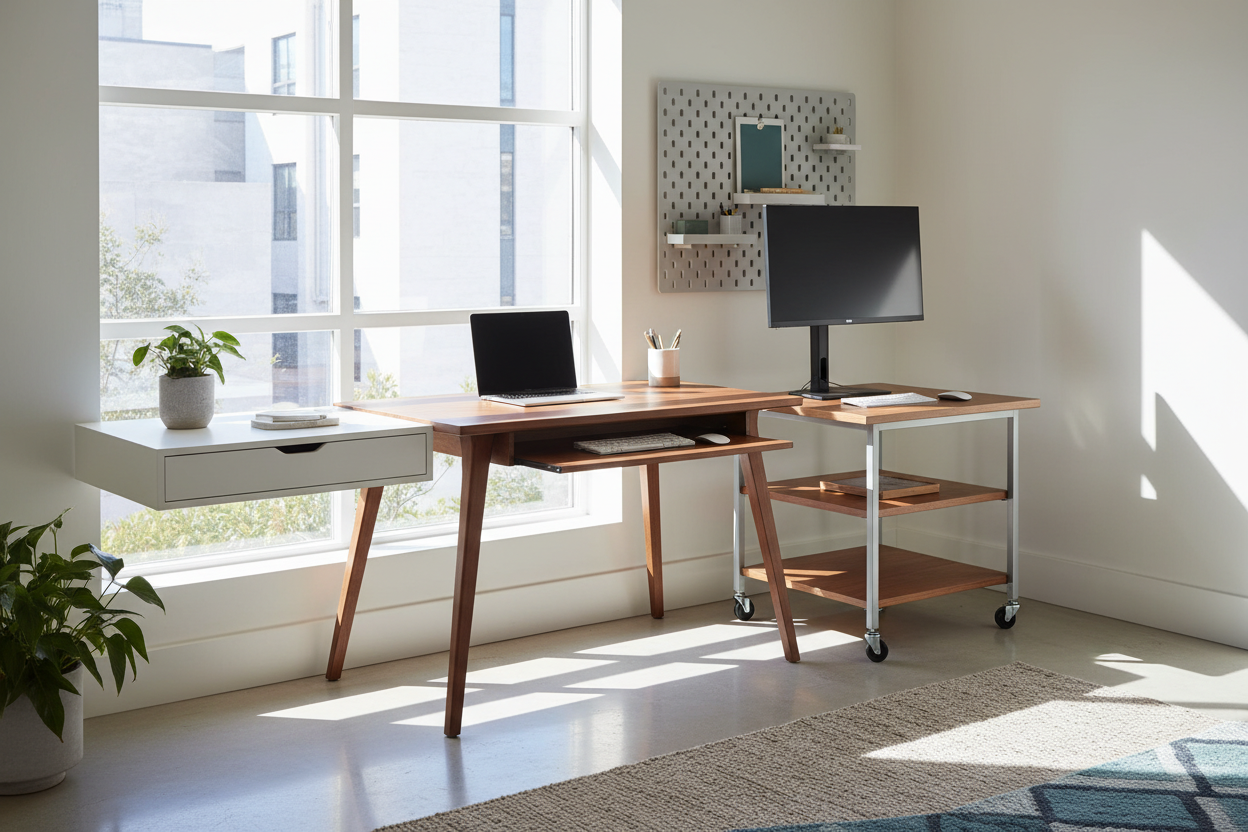
We have all been there: you sit down with your laptop, a cup of coffee, and a notebook, only to realize your workstation is completely maxed out. When your daily workspace feels cramped, your focus inevitably suffers. If you are wondering how to extend desk space without tossing out your current furniture and starting over, you are in the right place.
As an interior designer who has configured hundreds of North American home offices—from sprawling suburban studies to tiny apartment alcoves—I know exactly what happens when a desk too small dictates how you work. Clutter builds up, posture deteriorates, and the room's aesthetic suffers. In this guide, I will show you practical, structurally sound ways to reclaim your surface area and improve your daily ergonomics.
Quick Decision Guide
- Go vertical first: Monitor arms and clamp-on shelving free up the primary work zone by utilizing negative space above the desktop.
- Add a keyboard tray: Moving your peripherals below the desktop instantly reclaims 20 to 30 percent of your usable surface area.
- Match visual weight: When adding side extensions, choose materials that complement your desk's finish to prevent a cluttered, dorm-room aesthetic.
- Check your core material: Before clamping heavy extensions, verify if your desk is solid wood or engineered; hollow-core materials cannot support heavy cantilevered weight.
Space Planning: Rethinking Your Layout
Utilizing Vertical Negative Space
The most common mistake I see in small home offices is ignoring the vertical plane. If you want to know how to increase desk space efficiently, look up. Swapping a standard monitor stand for a heavy-duty clamp-on monitor arm immediately clears the footprint beneath your screen. This allows you to slide notebooks, keyboards, or reference materials underneath when not in use. To maximize small desk space further, consider installing floating shelves directly above the monitor line to house decorative items, lighting, or office supplies that usually crowd your primary work zone.
Hardware Solutions and Add-Ons
Clamp-On Extensions and Trays
If you are trying to figure out how to make a small desk bigger without drilling holes, clamp-on desk extenders are incredibly effective. These range from simple side platforms for your mouse to full-width drop-down leaves. However, proportion is key. A massive extension on a delicate mid-century modern writing desk will throw off the room's visual balance. When looking at how to expand desk space with these attachments, choose slim profiles in matte black or a wood veneer that closely mimics your existing surface.
The L-Shape Illusion
Sometimes the best way to solve the issue of how to make desk bigger is to bring in a coordinating secondary piece. Placing a file cabinet or a sturdy side table of the exact same height perpendicular to your desk creates an instant L-shape configuration. This gives you a dedicated drop zone for printers and paperwork while keeping your main desk clear for focused tasks. It is a highly effective method for how to extend a small desk in an open-concept living room where a massive executive desk would overwhelm the footprint.
Designer's Honest Take
Over the years, I have experimented with countless workspace hacks, and I have definitely made mistakes along the way. Early in my career, I tried to maximize a client's compact workstation by attaching a heavy dual-monitor arm and a clamp-on side tray to a hollow-core engineered wood desk. I learned the hard way that while these add-ons look great in theory, the concentrated pressure cracked the veneer within two weeks.
If you are adding cantilevered weight to extend your desk, you absolutely must check the build quality first. Solid wood, plywood, or thick MDF can handle the torque of clamp-on accessories. If you have a budget honeycomb-core desk, skip the clamps entirely and opt for freestanding floor storage or wall-mounted shelves instead.
Frequently Asked Questions
Is it safe to add a heavy desk extender?
It depends entirely on your desk's material. Solid wood, plywood, and high-density MDF can safely support clamp-on extenders. Glass tops and hollow-core honeycomb desks will shatter or crush under the localized pressure of a tight C-clamp.
How much clearance do I need for an under-desk keyboard tray?
You should ensure you have at least 24 inches of width and 12 inches of depth clear of any crossbars or drawers beneath the desk. Also, check your ergonomic height; your knees need at least 2 to 3 inches of clearance below the tray to sit comfortably.
What is the cheapest way to add surface area?
The most cost-effective method is repurposing a piece of furniture you already own. Sliding a sturdy bookshelf, a rolling bar cart, or a low dresser next to your desk provides immediate auxiliary surface space for printers, books, and coffee cups without requiring a new purchase.

Leave a comment
This site is protected by hCaptcha and the hCaptcha Privacy Policy and Terms of Service apply.