










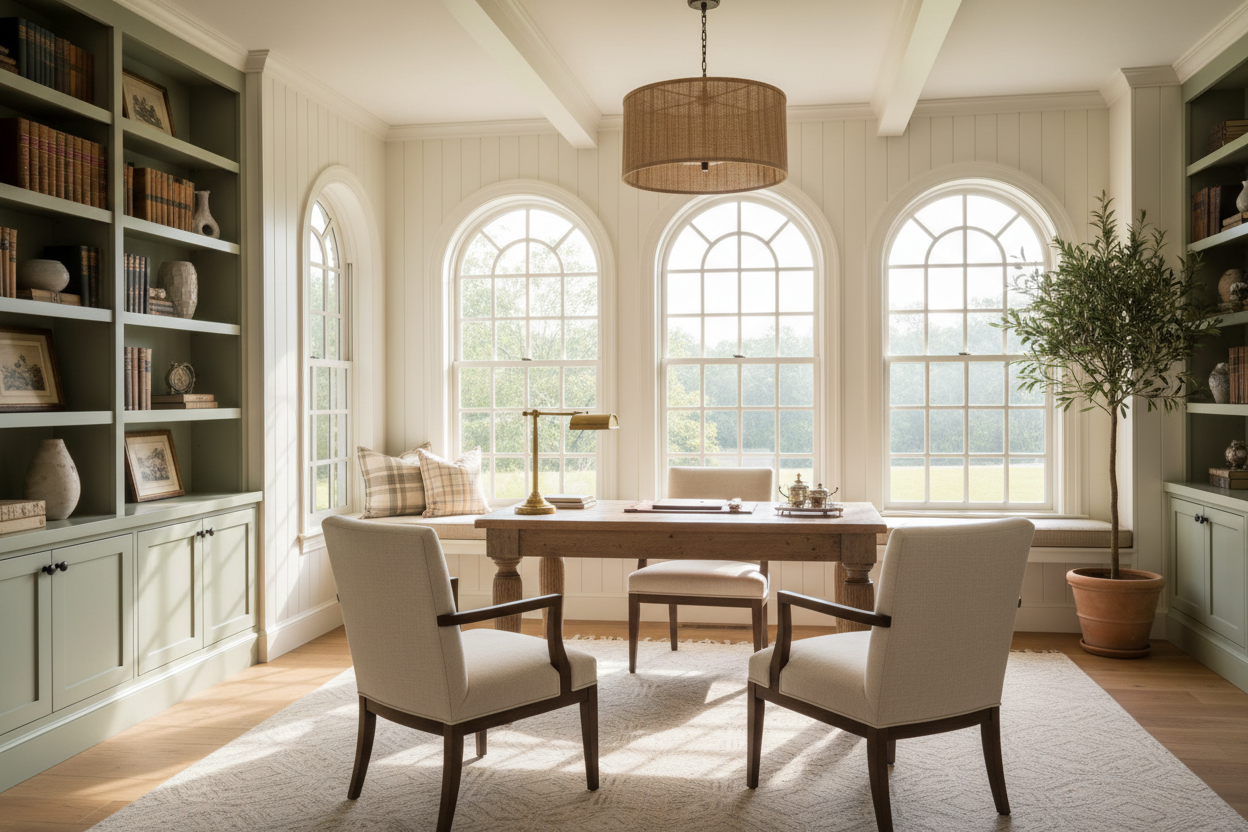
We have all seen the aspirational photos: a vintage writing desk nestled by a window, overlooking a garden, looking utterly serene. But the reality of setting up a functional workspace in an older home often involves wrestling with awkward floor plans, glaring sunlight, and a distinct lack of electrical outlets. Creating a cottage office that actually works requires walking a fine line between rustic charm and modern utility.
If you lean too far into the aesthetic, you end up with a beautiful room that leaves you with severe back pain by 3 PM. Lean too far into function, and you ruin the historic character of your home. In this guide, I will walk you through how to blend performance with personality, ensuring your workspace supports your posture just as well as it supports your style.
Quick Decision Guide
- Prioritize a smooth writing and mousing surface; heavily distressed vintage tables often require a custom glass or leather topper to be functional.
- Leave a minimum of 36 inches of clearance between the edge of your desk and the wall or bookshelf behind you for comfortable chair movement.
- Embrace vertical architectural details like beadboard or picture frame molding to add historic character without taking up floor space.
- Layer your lighting; rely on a brass or ceramic task lamp for focused work, rather than harsh overhead recessed lights that kill the cozy mood.
Space Planning and Layout
Working with Quirky Footprints
Many older homes feature sloped ceilings, dormer windows, or narrow alcoves. When planning a cottage home office, do not force a standard corporate layout into a charmingly irregular room. If you have a dormer window, consider building a custom window seat for reading briefs or taking casual calls, and float a writing desk in the center of the room. Floating the desk gives the silhouette room to breathe and prevents you from staring at a blank wall all day.
Managing Visual Weight
Because cottage rooms are often smaller, the visual weight of your furniture matters immensely. A massive, solid mahogany executive desk will instantly swallow the room. Instead, look for pieces with open legs—like a classic spindle-leg table or a campaign desk. The negative space underneath the desk allows the eye to travel across the floor, making the room feel significantly larger.
Material Selection and Coordination
Balancing Woods and Metals
The best cottage office ideas rely on a mix of textures rather than a matching furniture set. Pair a warm, honey-toned oak desk with a matte black metal task lamp and a linen-upholstered chair. Avoid high-gloss veneers or engineered woods that mimic perfection; the cottage aesthetic thrives on slight imperfections and patinas. Solid wood, particularly quarter-sawn oak or walnut, ages beautifully and can handle the daily wear and tear of a busy work-from-home schedule.
Comfort and Ergonomics
The Seating Compromise
This is where most of my clients struggle. They want a beautiful, slipcovered chair that looks like it belongs in an English countryside manor, but they need the lumbar support of a high-tech mesh chair. If you work long hours, invest in a proper ergonomic chair, but choose one in a soft, neutral fabric rather than stark black mesh. Alternatively, use a highly supportive, upholstered dining armchair with a firm foam density, and add a lumbar throw pillow covered in a vintage block-print textile.
Designer's Honest Take
Early in my career, I designed a stunning workspace for a client using a reclaimed pine farmhouse table as the primary desk. It looked incredible in the portfolio photos. However, I learned the hard way that heavily textured, rustic wood is an absolute nightmare for actual work. The uneven surface meant my client could not write on a single sheet of paper without poking holes through it, and her computer mouse simply would not track across the deep grain.
We had to retroactively order a custom-cut, thick leather desk pad to create a functional work zone. It was an expensive fix that taught me a valuable lesson: never sacrifice the tactile functionality of a work surface for the sake of a rustic aesthetic. Always run your hand across a desk before buying it—if it feels like it could give you a splinter, it belongs in the dining room, not the office.
Frequently Asked Questions
What colors work best for a cottage home office?
Earthy, muted tones work best. Think sage greens, warm terracottas, dusty blues, and creamy whites. These colors reflect natural light beautifully and provide a calming backdrop for focused work, avoiding the clinical feel of stark, pure white.
Can I use a dining table as a desk?
Yes, but be mindful of the height. Standard dining tables are usually 30 inches high, which can be slightly too tall for comfortable typing depending on your chair. Make sure your chair can adjust high enough to keep your elbows at a 90-degree angle, and use a footrest if your feet no longer touch the floor.
How do I hide computer cords in an antique desk?
Antique pieces rarely have built-in cable management. I recommend using a brass cable grommet if you are willing to drill into the wood. If not, use adhesive cord clips routed down the back of the desk legs, and place a woven seagrass basket under the desk to elegantly conceal your power strip and modem.

Leave a comment
This site is protected by hCaptcha and the hCaptcha Privacy Policy and Terms of Service apply.