










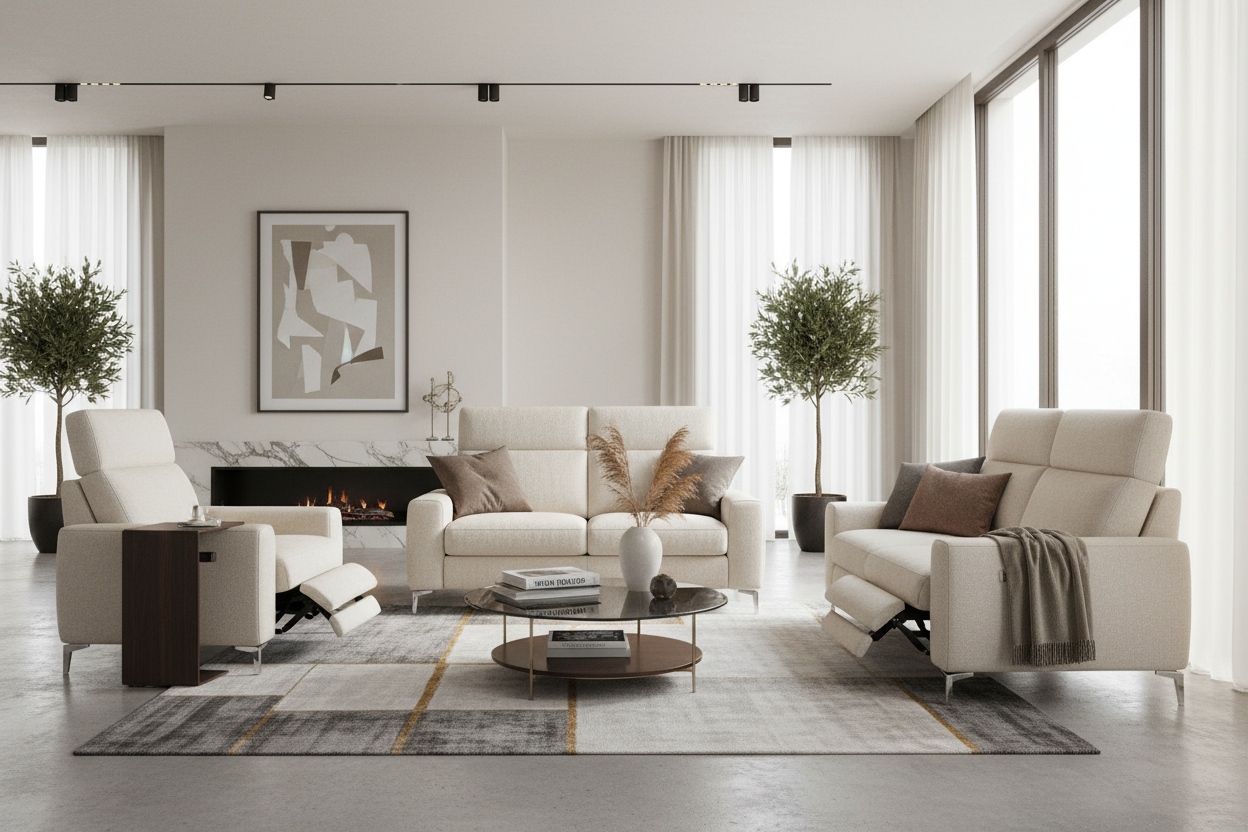
For years, interior designers faced a binary choice: specify a piece that looked stunning but felt stiff, or succumb to the client's demand for comfort and bring in a bulky, unattractive motion piece. Fortunately, the furniture industry has evolved. We no longer have to compromise the visual integrity of a living room to achieve relaxation. The modern fashionable reclining sofa has shed its overstuffed reputation, adopting sleek silhouettes and hidden mechanisms that rival stationary high-end upholstery.
Key Features to Look For
If you are scanning the market for a piece that balances ergonomics with aesthetics, keep these critical specifications in mind to ensure you are making a wise investment:
- Hidden Mechanisms: Look for internal controls or discrete touch sensors rather than external levers.
- Leg Design: High-leg styles create a sense of openness and reduce visual weight compared to solid bases.
- Wall Clearance: Ensure the mechanism is a "zero-wall" or "wall-hugger" design if you plan to place it against a perimeter.
- Upholstery Grade: Opt for top-grain leather or heavy-weight performance linen to prevent fabric "puddling" after repeated movement.
Choosing the Right Silhouette
The primary enemy of a chic living space is visual heaviness. Traditional recliners often dominate a room due to their puffy armrests and high backs. To secure a stylish recliner couch, focus on tailored lines. I always advise clients to look for track arms or slightly tapered arms. These shapes act as a frame, keeping the sofa looking structured even when it is not in use.
Furthermore, pay attention to the headrest. A chic recliner sofa often utilizes an articulating headrest that folds down flat when the sofa is upright. This preserves the low-profile look that is essential for modern and transitional interiors, ensuring the piece doesn't obstruct sightlines across the room.
Material Selection and Durability
When specifying a high-quality reclining sofa, the mechanics are only half the battle; the cover material dictates the longevity. Motion furniture endures more stress than stationary pieces. The friction caused by the reclining action requires a material with high tensile strength.
Leather vs. Fabric
For a sophisticated library or formal sitting room, aniline or semi-aniline leather is the gold standard. It develops a patina over time and handles the friction of movement well. However, for family rooms, do not overlook performance velvets or crypton fabrics. They offer a softer, more inviting texture while resisting the stretching that often plagues cheaper fabrics on reclining mechanisms.
Space Planning and Layout
Integrating motion furniture requires precise space planning. Unlike a standard sofa, you must account for the "footprint in motion." A common error is placing a coffee table too close to the seat. You need at least 18 to 24 inches of clearance to allow the footrest to extend fully without collision. Additionally, consider the flow of traffic; a reclining sofa should never be placed where the extended footrest blocks a main walkway.
Lessons from My Own Projects
I want to share a specific challenge I encountered during a penthouse renovation in Chicago that changed how I buy motion furniture. I specified a stunning, Italian-made electric reclining sectional for the center of an open-concept room. It was beautiful—until we plugged it in.
Because the sofa was "floating" in the middle of the room, the black power cord snaking across the light oak floor to the nearest wall outlet was an absolute eyesore. It ruined the clean aesthetic immediately. We ended up having to cut into the floor to install a recessed outlet directly under the sofa frame.
The takeaway: If you are buying a power recliner, you must plan your electrical layout first. If you cannot install floor outlets, you are better off choosing a manual mechanism or a model that offers a rechargeable battery pack option (which many high-end brands now provide). It’s a small logistical detail that makes or breaks the luxury feel.
Conclusion
Gone are the days when comfort meant sacrificing style. By focusing on tailored silhouettes, high-performance materials, and smart layout planning, you can integrate a reclining piece that feels just as curated as the rest of your home. It simply requires a discerning eye and attention to the mechanical details.
Frequently Asked Questions
How much space do I need behind a reclining sofa?
This depends on the mechanism. Standard recliners need 8-12 inches, but "wall-hugger" designs can function with as little as 3-5 inches of clearance, making them ideal for tighter spaces.
Can I use a rug under a reclining sofa?
Absolutely. However, ensure the rug extends fully under the front legs. If the sofa has a metal base mechanism that sits close to the floor, ensure the pile height of the rug doesn't interfere with the footrest extension.
Are power recliners better than manual ones?
Power recliners offer infinite stopping positions, allowing for better ergonomic customization. However, manual recliners are generally lighter, have fewer components that can break, and don't require proximity to a power outlet.


Leave a comment
This site is protected by hCaptcha and the hCaptcha Privacy Policy and Terms of Service apply.