










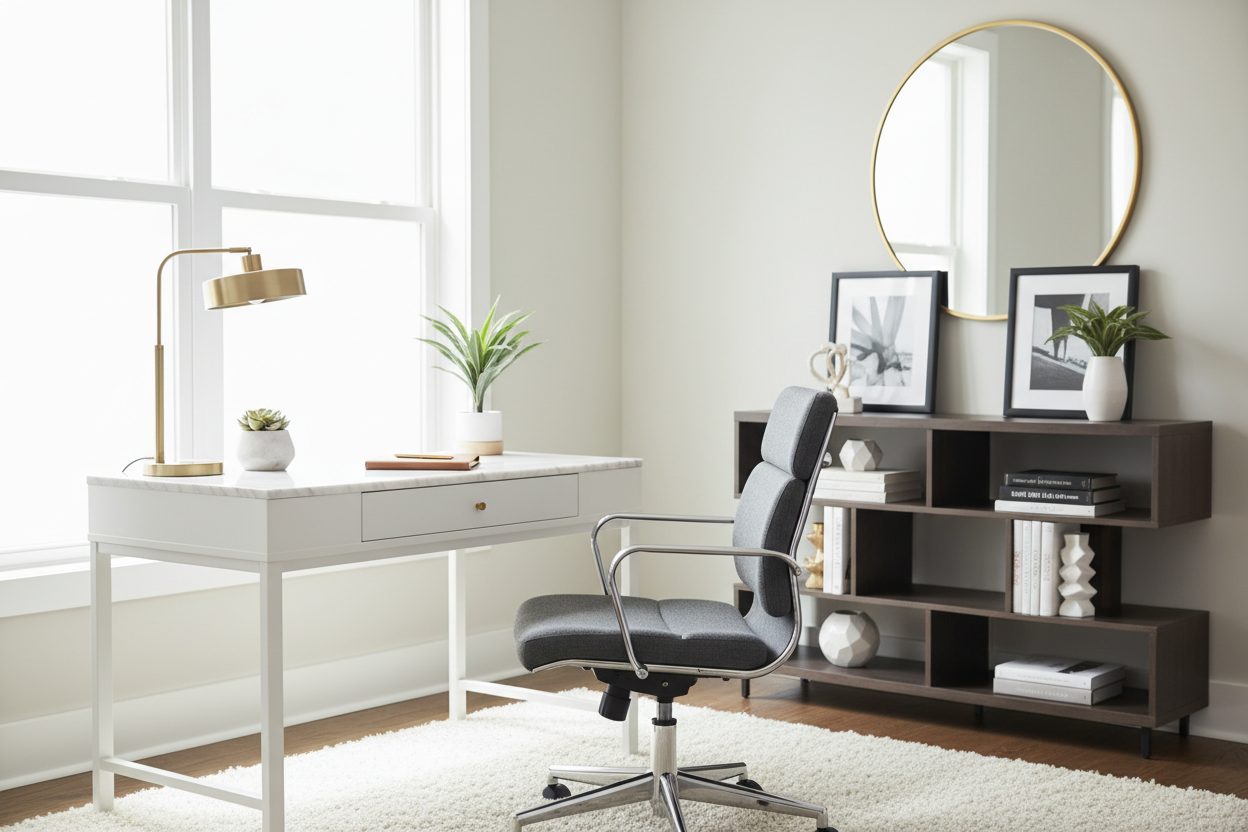
One of the most persistent myths I encounter in the design studio is the idea that a limited budget necessitates a compromise on style. Clients often assume that creating a workspace with gravitas requires bespoke joinery or designer labels. The reality is quite different. With a discerning eye for silhouette and material finish, affordable home office furniture can anchor a room just as effectively as high-end pieces. The secret lies not in the price tag, but in the curation.
Key Features to Look For
Before committing to a purchase, scan for these specific indicators of value and longevity. This checklist is what I use to separate "fast furniture" from lasting budget finds:
- Edge Banding Quality: Ensure the laminate edges are seamless and thick; peeling edges are the first giveaway of lower quality.
- Hardware Weight: Heavier drawer pulls and hinges usually indicate better internal construction.
- Leg Composition: Look for powder-coated metal or solid wood legs rather than plastic or hollow tubing.
- Weight Capacity: Check the specs. A desk should support at least 100 lbs to avoid bowing under monitors over time.
- Fabric Durability: For chairs, look for tight weaves or commercial-grade faux leathers that resist cracking.
Mastering Materiality: The Look of Luxury
When sourcing inexpensive office furniture for the home, the finish is everything. Avoid high-gloss synthetic finishes, which tend to highlight fingerprints and dust, immediately cheapening the aesthetic. Instead, opt for matte or satin finishes.
Wood Alternatives
Solid wood is expensive, but high-pressure laminate (HPL) with a textured grain can mimic the warmth of timber successfully. When selecting a desk, look for "thermofused" laminates. These are heat-bonded to the core, making them far more resistant to the water rings from your morning coffee than standard glued veneers.
Metal and Glass
If you are worried about faux wood looking inauthentic, pivot to industrial materials. A tempered glass desk with a matte black metal frame often looks more sophisticated than a fake oak desk. Metal and glass offer a clean, architectural line that feels intentional rather than budget-constrained.
The Silhouette: Managing Visual Weight
A common issue with cheap office furniture for home setups is bulk. Inexpensive pieces often use thicker, lower-density particle board to maintain structural integrity, resulting in a chunky, unrefined look. To counter this, focus on negative space.
Choose desks with "parsons" style legs or open frame structures. This allows light to pass through the furniture, making the room feel larger and the furniture less imposing. For seating, a mid-century modern profile usually offers a cleaner line than an overstuffed executive chair, providing ergonomic support without dominating the room's visual bandwidth.
Ergonomics and The "Sinking" Factor
While we want the space to look curated, functionality is non-negotiable. Home office furniture cheap in price often cuts corners on foam density. When buying a budget chair, press your thumb firmly into the seat cushion. If you hit the plywood base instantly, walk away. Look for "high-resilience" or molded foam. It provides the firm resistance needed for an eight-hour workday and prevents the fabric from puddling or wrinkling after a month of use.
My Personal Take on Affordable Home Office Furniture
I want to share a specific lesson from a project I did for a start-up founder working out of a small apartment. We bought a very budget-friendly, flat-pack laminate desk to save money for a high-end ergonomic chair. Visually, it was perfect, but physically, it had a fatal flaw: the "monitor wobble."
Because budget desks often lack heavy cross-bracing, every time she typed vigorously, her dual monitors would shake. It drove her crazy. I realized that lightweight furniture needs external anchoring. We ended up pushing the desk flush against the wall and using small, discreet L-brackets to secure the desktop to the wall studs. It instantly felt like built-in cabinetry. Another detail I noticed on that piece: the drawer runners were dry. A quick application of silicone lubricant (which costs about $5) made the drawers glide silently, completely changing the tactile experience of the desk. Sometimes, the difference between "cheap" and "quality" is just a screwdriver and some lube.
Conclusion
Designing a workspace is about creating an environment that fosters focus and creativity. By selecting pieces with the right finishes, sturdy silhouettes, and paying attention to the tactile details, you can build a home office that feels substantial and inspiring. Trust your eye, check the construction details, and remember that a little DIY refinement goes a long way.
Frequently Asked Questions
How can I make inexpensive office furniture look more expensive?
The easiest hack is swapping out the hardware. Replace standard plastic or lightweight alloy drawer pulls with heavy brass, matte black, or leather handles. This small investment shifts the focal point and elevates the entire piece.
Is it safe to buy a cheap office chair for daily use?
Yes, but be selective. Focus on the mechanism rather than the plushness. A mesh-back chair often offers better ergonomic support and durability at a lower price point than cheap bonded leather, which traps heat and peels easily.
What is the best layout for small home offices with budget furniture?
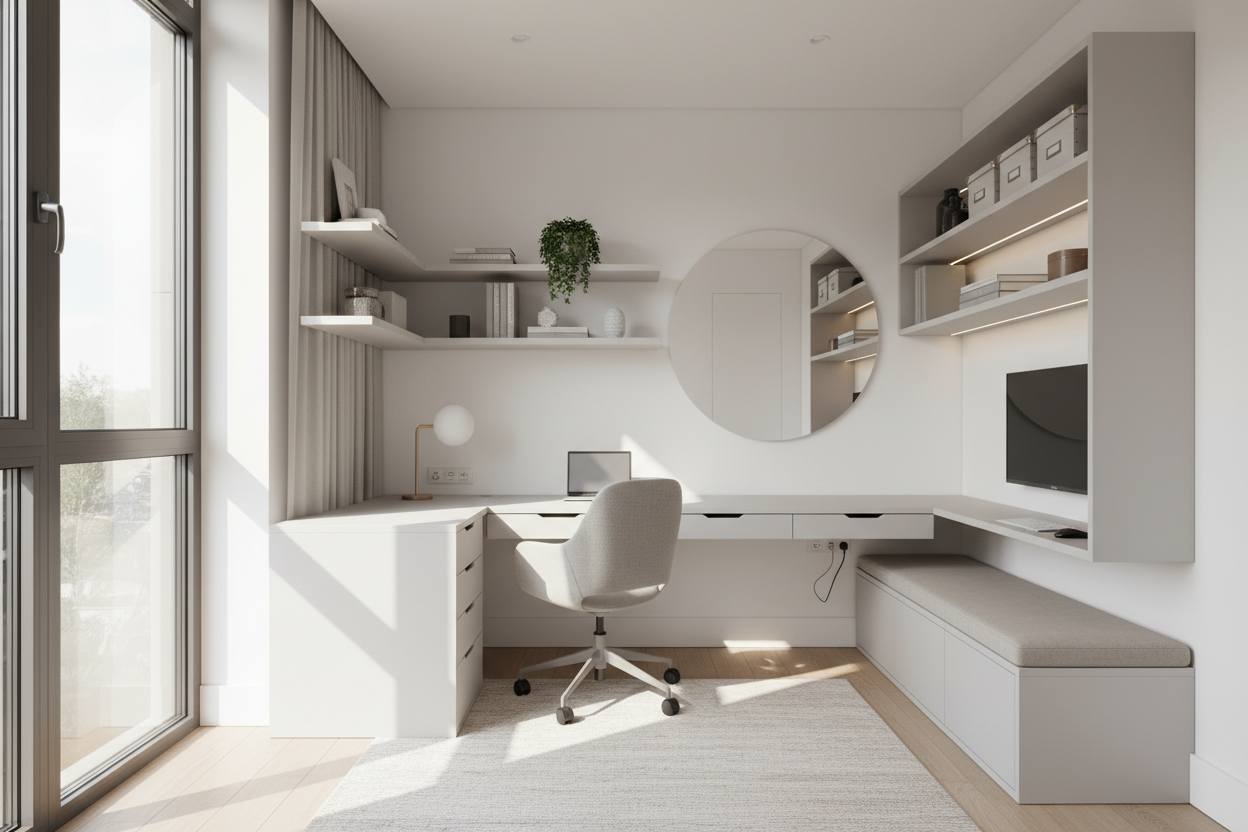
Float the desk if possible, or place it perpendicular to a window. Avoid pushing everything into corners, which highlights the lack of scale in smaller furniture. Using an area rug to anchor the desk can also distract from the flooring and frame the furniture intentionally.

Leave a comment
This site is protected by hCaptcha and the hCaptcha Privacy Policy and Terms of Service apply.