










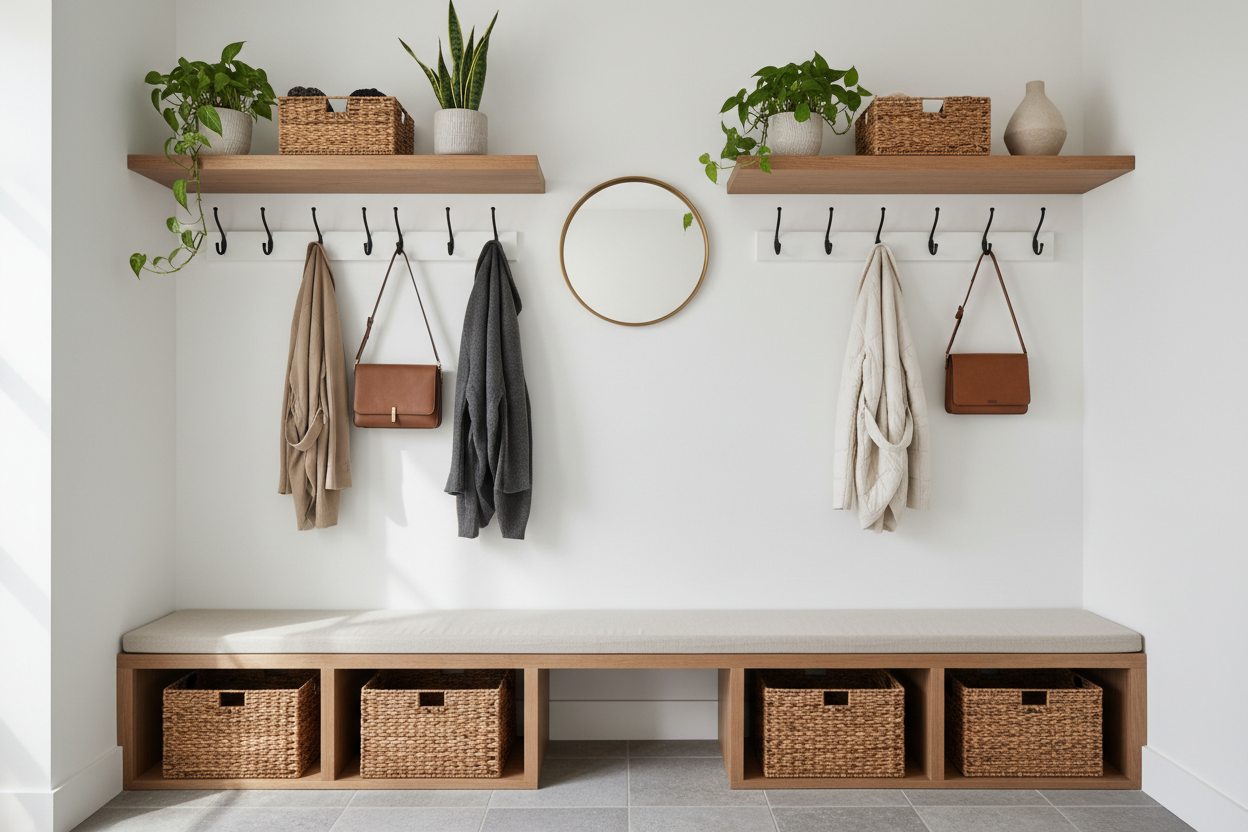
The foyer is the handshake of your home; it sets the tone before a guest even steps fully inside. Yet, it is often the most neglected zone, falling victim to the chaos of daily life—mail piles, discarded shoes, and keys that never seem to have a home. As a designer, I see this not as a clutter problem, but as a failure of spatial planning. Implementing effective entryway wall organization is the antidote to this visual noise, transforming a chaotic drop zone into a curated vignette that functions seamlessly.
Quick Decision Guide: Choosing Your Organizer
Before drilling into your drywall, consider these critical factors to ensure your selection offers both longevity and style. This checklist helps narrow down the overwhelming options:
- Weight Capacity: Check the rating per hook. Heavy winter coats require a hanging entryway organizer anchored into studs, not just drywall anchors.
- Protrusion Depth: In narrow corridors, ensure the entryway wall mounted organizer doesn't protrude more than 4-6 inches to avoid impeding traffic flow.
- Material Integrity: Solid wood or powder-coated steel resists wear better than MDF, which can chip when keys are tossed onto it daily.
- Configurability: Decide if you need a fixed unit or a modular entryway storage wall system that grows with your family's needs.
Assessing Vertical Real Estate
In interior design, we often talk about 'visual weight.' A floor-standing coat rack consumes valuable square footage and visual space. By shifting to a wall mounted entryway storage solution, you liberate floor space, making the room feel airier and larger. This is particularly crucial when selecting a small entryway wall organizer for apartments or narrow hallways.
When planning your layout, look for the 'dead zones'—the space behind the door or the narrow strip of wall between the doorframe and the corner. A vertical entryway organizer wall mount can utilize this height without encroaching on the walkway.
Materiality and Aesthetics
The finish of your front door wall organizer should converse with the rest of your home's narrative. For a Scandi-minimalist or Japandi aesthetic, a wood entryway organizer in white oak or ash adds warmth without heaviness. Look for joinery details; visible finger joints or dovetails often indicate higher quality construction than stapled veneer.
Conversely, a modern entryway wall organizer often utilizes matte black metal or brass. If you choose metal, ensure it has a high-quality powder coat. I often advise clients to look for 'knurled' texture on hooks—it prevents coats and scarves from sliding off, a subtle ergonomic detail that makes a massive difference in daily use.
Functionality: Hooks, Shelves, and Cubbies
A truly functional piece is a hybrid. An entryway wall organizer with hooks is standard, but the addition of a shelf or cubby elevates the utility. This creates a dedicated landing pad for sunglasses and wallets. When sourcing an entryway shelf organizer, pay attention to the lip of the shelf. A slight raised edge or 'gallery rail' prevents round items (like lip balm or pens) from rolling off.
The Installation Factor
Regardless of how beautiful the piece is, its success relies on installation. Entryway hanging storage must be secure. I always recommend using a French cleat system if the unit allows for it. This distributes the weight across a wider area of the wall compared to standard keyhole mounts, preventing the dreaded 'sag' over time.
Lessons from My Own Projects
I recall a specific renovation for a client in a pre-war brownstone. We selected a stunning, high-end hanging entryway wall organizer made of walnut. It looked perfect on the mood board. However, once installed, we realized a critical ergonomic flaw: the hooks were spaced only three inches apart.
While it looked sleek when empty, the moment the family hung their winter parkas, the unit became useless. The coats overlapped so heavily that you couldn't reach the items on the integrated shelf above. It was a 'pretty' failure. We had to swap it for a unit with 6-inch hook spacing. Another unpolished truth: avoid high-gloss finishes on the shelf portion. Within three weeks, the tossing of keys had left visible micro-scratches on the glossy lacquer. Since then, I strictly specify matte or textured finishes for any horizontal surface in a high-traffic drop zone.
Conclusion
Investing in the right entryway wall mount system is about reclaiming your peace of mind. It turns the act of leaving and returning home into a smooth, organized ritual rather than a frantic search for keys. Measure your space, respect the materials, and choose a piece that serves your lifestyle.
Frequently Asked Questions
What is the ideal height to hang an entryway wall organizer?
For general use, the standard height is 60 inches from the floor to the center of the unit. However, if the entryway hanging storage is primarily for children, consider a secondary lower rail at 36-42 inches, or adjust the main unit to be accessible for your household's average height.
Can I use a wall mounted organizer for heavy backpacks?
Yes, but hardware is key. A standard entryway wall organizer with hooks can fail under the weight of a 20lb bag if anchored only in drywall. You must locate the wall studs or use heavy-duty toggle bolts designed to hold 50lbs+ to ensure structural integrity.
How do I style a shelf organizer without it looking cluttered?
Follow the rule of three. Place a small plant (organic element), a catch-all tray (functional element), and a small piece of art or a mirror (vertical element). This keeps the entryway shelf organizer looking intentional rather than messy.


Leave a comment
This site is protected by hCaptcha and the hCaptcha Privacy Policy and Terms of Service apply.