










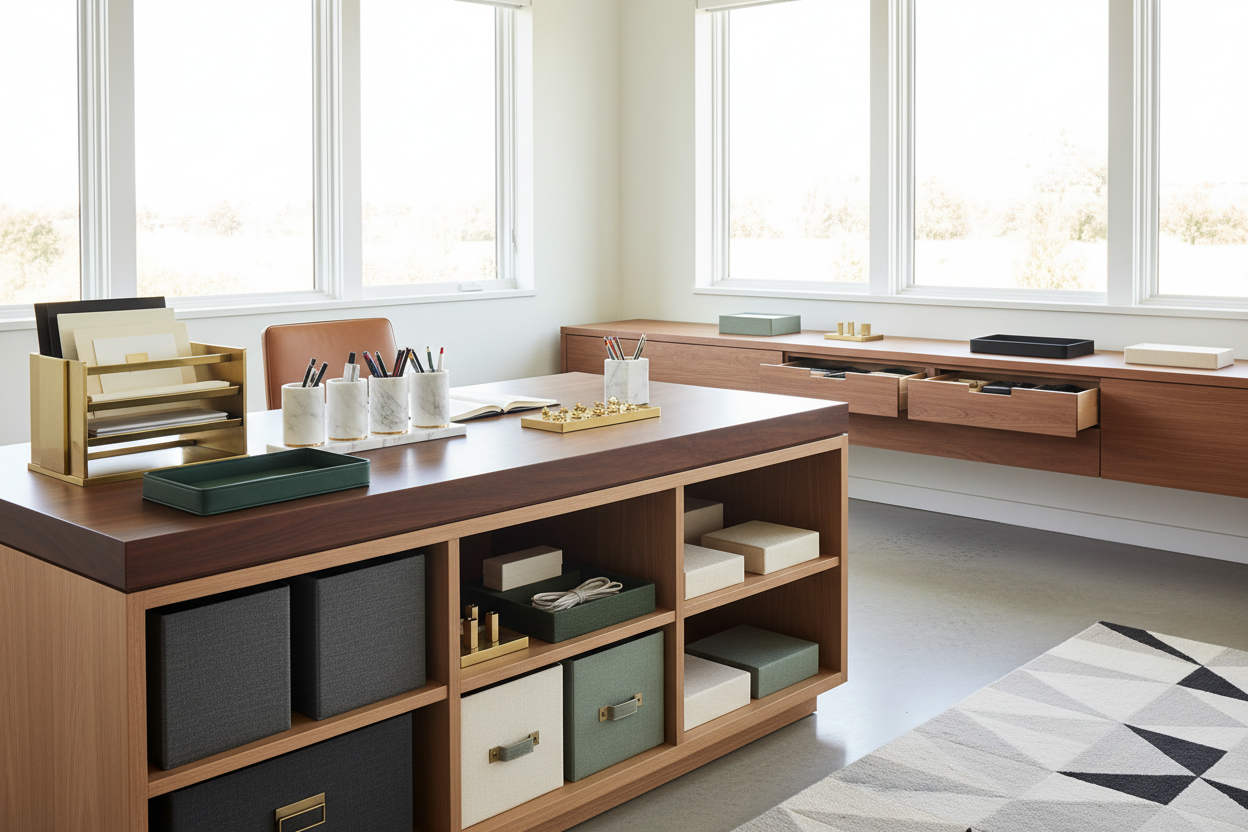
There is nothing quite as disruptive to a cohesive interior design scheme as visual clutter. You can invest in a mahogany executive desk and an ergonomic Eames chair, but if your surface is littered with loose paperclips, tangled cables, and mismatched pens, the design intent fails. The challenge of storing office supplies is not just about tidiness; it is about curating a workflow that respects the aesthetics of your home. As we blur the lines between living spaces and workspaces, the utilitarian nature of a stapler or a notepad must be elevated to match the surrounding decor.
Quick Decision Guide: The Essentials of Organization
- Frequency of Use: Categorize items into 'Daily Reach' (desktop), 'Weekly Access' (top drawer), and 'Archive' (closet/credenza).
- Material Consistency: Choose organizers that complement your desk's finish—leather for warmth, acrylic for modern minimalism, or wood for traditional weight.
- Visual Weight: Avoid opaque, bulky containers on small desks. Opt for low-profile trays or transparent vessels to maintain an airy silhouette.
- Modularity: Select stackable or modular systems that can adapt as your inventory of supplies changes over time.
The Philosophy of Zoning: How to Organize Office Supplies
In high-end residential design, we talk about 'zones of activity.' When figuring out how to organize office supplies, you must map your physical movement. The 'Primary Zone' is within arm's reach. Here, we place only the essentials. I often recommend a single, high-quality valet tray or a structured desk blotter with integrated compartments. This prevents the 'sprawl' effect.
The 'Secondary Zone' usually involves drawers or nearby shelving. This is where organized office supplies live—the extra staples, the backup batteries, the hole punch. The goal is to separate the tools you use to create from the tools you use to maintain.
Selecting the Right Materials: Texture and Tone
Plastic bins are the enemy of a sophisticated home office. When curating ideas for organizing office supplies, look for materials that age well. Solid wood organizers with dovetail joints add a sense of permanence and craftsmanship. Alternatively, full-grain leather desktop sets provide a tactile experience that softens the hard edges of technology.
The Acrylic Debate
Acrylic is popular for office supplies organization ideas because it disappears visually. However, as a specialist, I advise caution. Low-quality acrylic yellows over time and scratches easily. If you choose this route, ensure it is high-grade, cast acrylic with substantial thickness to refract light beautifully rather than looking cheap.
How to Store Office Supplies Without a Desk
Not every home office has a traditional desk with drawers. This is a common dilemma in urban apartments. If you are wondering how to store office supplies without a desk, you must leverage verticality and freestanding furniture.
A mobile pedestal or a rolling cart can be chic if chosen correctly. Look for powder-coated steel in matte finishes or wood veneers that match your bookshelves. Another sophisticated approach is the 'closet office' or using a credenza behind your seating area. By utilizing decorative boxes (linen-wrapped or woven textures), you can keep items on open shelves without creating visual noise. This is the secret to organizing office supplies at home where the office is part of the living room.
Refining the Details: How to Organize Home Office Supplies
The interior of a drawer is just as important as the exterior. When organize home office supplies, use drawer dividers with a felt or velvet lining. This serves a dual purpose: it prevents items from sliding around with a distracting rattle every time you open the drawer, and it protects the finish of your fine writing instruments. It creates a sense of luxury in the mundane act of grabbing a pen.
My Personal Take on Storing Office Supplies
I learned a valuable lesson early in my career while designing a study for a client who insisted on a glass-top desk. We couldn't hide anything. I initially specified these beautiful, deep leather bins for the floor, thinking they would handle the overflow.
It was a mistake. Within two weeks, those deep bins became black holes. The client couldn't find a USB drive without dumping the whole bin out. I realized that depth is often the enemy of organization. I swapped them for shallow, stackable lacquer trays. The difference was immediate—everything was visible, accessible, and the 'layering' looked intentional rather than accidental. Now, when I advise on how to organize office supplies at home, I almost always steer clients toward shallow storage. If you have to dig for it, the system has failed.
Conclusion
Transforming your workspace isn't just about buying bins; it's about respecting your tools and your environment. By selecting the right materials and zoning your space effectively, you turn the necessity of storage into a design feature. A well-organized space clears the mind, allowing the architecture of the room—and your work—to take center stage.
Frequently Asked Questions
How do I maintain an organized system long-term?
The key is the 'one-in, one-out' rule and a weekly reset. Dedicate five minutes every Friday to return items to their designated zones. If a container is constantly overflowing, it’s a sign you need to purge unnecessary items, not buy a bigger container.
What is the best way to store small items like paperclips and pins?
Avoid loose storage in large drawers. Use magnetic bowls or small, lidded ceramic jars. Lidded vessels are superior because they reduce visual noise and prevent accidental spills, keeping the desktop looking serene.
Can I mix and match storage styles?
Yes, but keep a common thread. If you mix materials (like wood and metal), ensure the color palette is cohesive. For example, walnut wood pairs beautifully with matte black metal. Too many disparate textures will make the space feel cluttered rather than curated.


Leave a comment
This site is protected by hCaptcha and the hCaptcha Privacy Policy and Terms of Service apply.