










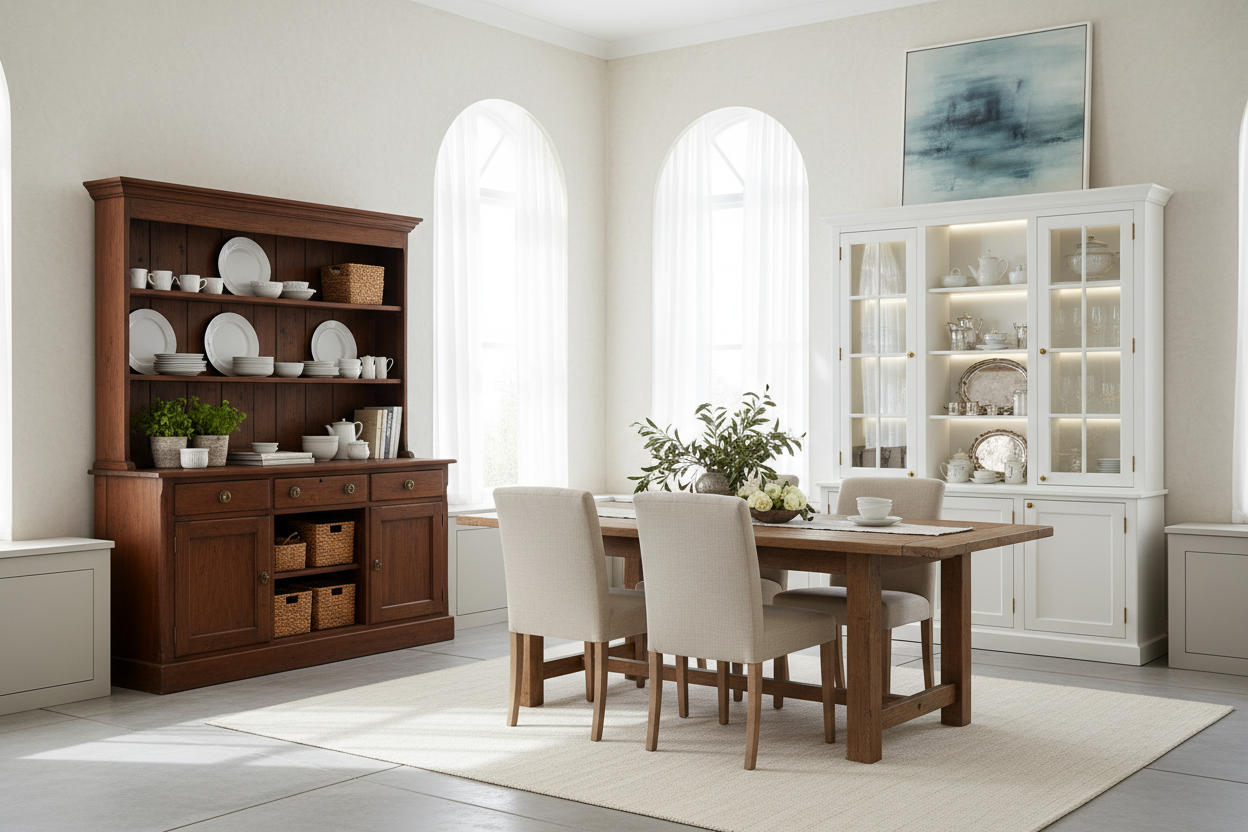
You're standing in your dining room, tape measure in hand, trying to decide between a hutch and a china cabinet. Maybe you just moved into a new home and the space feels empty. Or perhaps your kids have left for college, and you're finally ready to replace that worn-out storage piece that's been collecting dust since the 90s. I've been there with over 200 clients, and I can tell you: choosing the right piece makes all the difference between a functional, beautiful space and one that feels awkward or cluttered.
Quick Takeaways
- A hutch combines upper open shelving or glass doors with lower closed storage (often a buffet base).
- A china cabinet is typically a single, tall unit designed primarily for displaying items behind glass.
- Hutches offer more versatile storage; china cabinets prioritize curated display.
- Consider your room's traffic flow—main walkways need at least 36 inches of clearance.
- Measure twice: standard dining room pieces range from 60 to 84 inches wide.
What Exactly Is a Hutch? (And What Makes It Different)
Let's start with the hutch. Picture this: a lower cabinet, usually about 30 to 36 inches tall, topped with an upper section that has shelves. Those shelves might be open or behind glass doors. The lower part often functions like a buffet or sideboard—deep drawers for linens, cabinets for serving platters. The upper part is for display: your grandmother's teacup collection, family photos, or decorative bowls.
In my experience, hutches are the workhorses of North American dining rooms. They're typically made from solid woods like oak or maple, or quality veneers over plywood frames. I recently placed a 72-inch wide hutch in a client's kitchen-dining combo. The lower cabinets stored everyday dishes, while the open shelves above displayed her colorful pottery collection. It added storage without closing off the room.
The China Cabinet: More Than Just Fine China Storage
Now, the china cabinet. This is the more formal cousin. Think of a single, tall unit—often 70 to 90 inches high—with glass doors covering most of the front. Inside, you'll find adjustable shelves, sometimes with interior lighting to showcase your pieces. While traditionally for fine china and crystal, today's versions are much more versatile.
The design has evolved. Modern china cabinets might feature sleek metal frames, frosted glass, or even open backs. I love when clients use them in unexpected ways. One placed a beautiful 63H China Cabinet With Glass Door And Light in her living room to display art books and ceramics. The integrated lighting made it a focal point, not just storage.
Side-by-Side Comparison: Hutch vs China Cabinet
Let's put them side by side. Storage capacity: hutches usually win for bulkier items. Those lower cabinets can hold serving bowls, tablecloths, even small appliances. China cabinets offer more display-oriented space—perfect for collections you want to see but not necessarily access daily.
Dimensions matter. A typical hutch might be 60 to 84 inches wide and 72 to 84 inches tall. A china cabinet is often narrower (48 to 60 inches wide) but taller (up to 90 inches). Placement: hutches work well against long walls in dining rooms or as room dividers in open-concept spaces. China cabinets often anchor a corner or serve as a statement piece on a primary wall. Always leave 36 inches for walkways around dining furniture.
When to Choose a Hutch (And When to Skip It)
Choose a hutch when you need versatile storage. I recommend them for kitchen-dining combos where you need easy access to everyday dishes. They're excellent in entryways too—lower cabinets for shoes, upper shelves for keys and decor. Homes with active families appreciate the mix of concealed and open storage.
Skip the hutch if your space is narrow. Some hutches can be 18 inches deep, which eats into room flow. Also, if you prefer a minimalist look, the two-piece design might feel too busy. In very formal dining rooms, a china cabinet often looks more appropriate.
The China Cabinet's Modern Comeback: Beyond Traditional Dining Rooms
China cabinets are having a moment, and not just in dining rooms. I'm seeing them in home offices storing books and supplies behind glass. In living rooms, they display curated collections—vintage cameras, mineral specimens, even sneakers (yes, really!).
The styling has changed. Instead of perfectly matched china sets, clients mix heirlooms with modern art pieces. Color matters too. While traditional woods are still popular, painted finishes in deep blues or matte black make a statement. For inspiration on contemporary approaches, check out The Complete Guide To Choosing And Styling A China Cabinet. And if you're considering a bold color, my Black China Cabinet Styling Guide covers how to make it work.
What About Buffets? Where They Fit In the Conversation
Clients often ask about buffets too. A buffet (or sideboard) is typically just the lower portion of a hutch—30 to 36 inches tall, with drawers and cabinets. It offers substantial storage without display space. Choose a buffet over a hutch if you need surface area for serving food or if your ceiling is low. Pair it with wall shelves or art if you want display options. Buffets prioritize pure storage; hutches and china cabinets balance storage with display.
Making Your Decision: Questions to Ask Before You Buy
Before you commit, ask yourself these questions. First, measure your space. Not just the wall, but the room's traffic patterns. For smaller dining areas, consider space-saving solutions like an Elegant Corner China Cabinet.
What are you storing? Everyday dishes need easy access (hutch). Delicate heirlooms need protection and display (china cabinet). How formal is the room? Finally, does it match your style? For modern homes, browse options like the Black Cabinet With Glass Doors Collection.
Frequently Asked Questions
Can a hutch and china cabinet be used in living rooms?
Absolutely. I often place them in living rooms as display storage for books, media, or collections. Just ensure the scale fits—larger rooms can handle taller pieces.
What's the price difference typically?
Quality hutches and china cabinets in solid wood can range from $1,500 to $4,000. China cabinets with special features like lighting or antique glass might be on the higher end. Construction matters: kiln-dried hardwood frames last decades; particleboard might not.
How do I style the shelves without looking cluttered?
Use the rule of thirds. Fill about two-thirds of each shelf, leaving breathing space. Mix heights and textures. Group items in odd numbers. And edit regularly—rotate pieces seasonally.
Are these pieces outdated in modern homes?
Not at all. The key is choosing a style that fits your home. Clean lines, mixed materials, and intentional styling keep them feeling fresh. I've placed modern china cabinets in loft apartments that looked fantastic.
From my two decades of designing homes, I'll share an honest downside: both pieces are substantial. Once placed, they're not easy to move. I once had a client fall in love with an 84-inch hutch online, only to discover it overwhelmed her 10x12 dining room. We swapped it for a 60-inch china cabinet that provided display without dominating the space. Measure carefully, consider your daily needs, and choose the piece that will serve you beautifully for years to come.

Leave a comment
This site is protected by hCaptcha and the hCaptcha Privacy Policy and Terms of Service apply.