










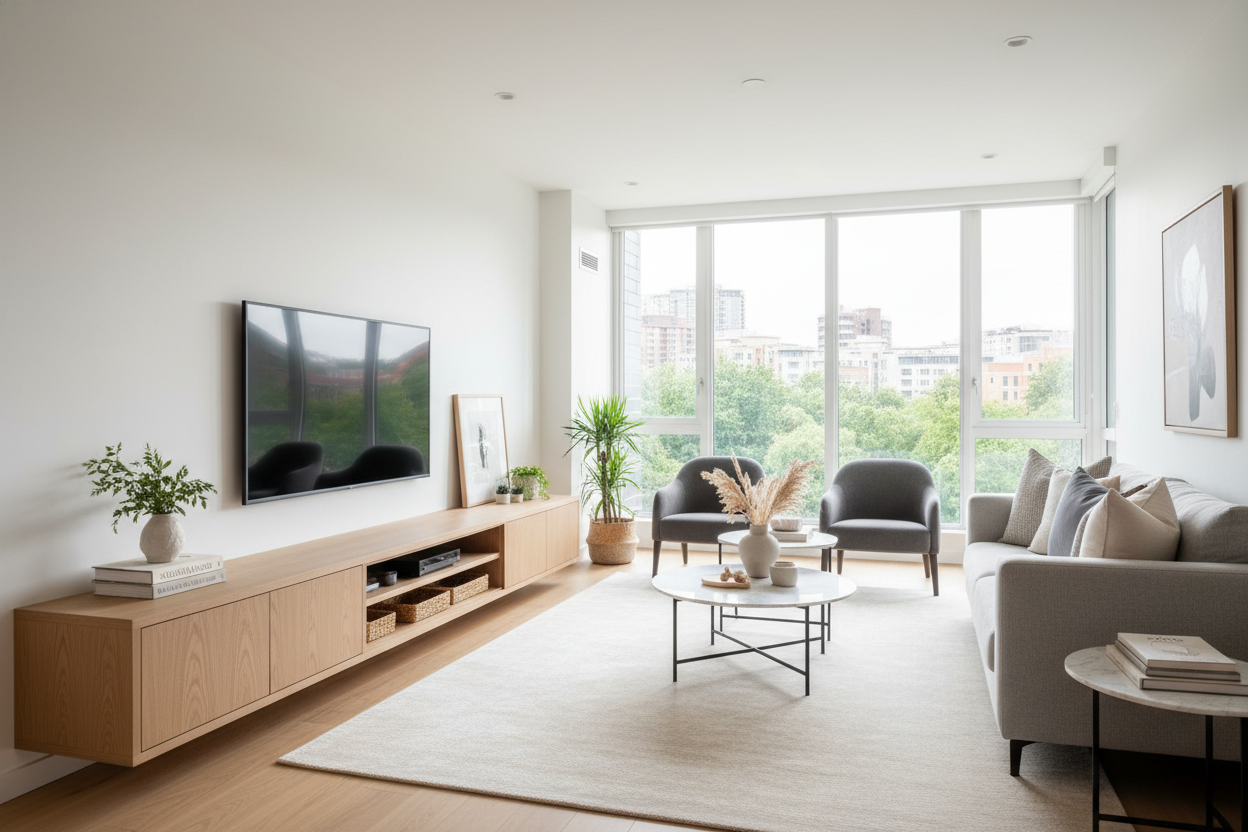
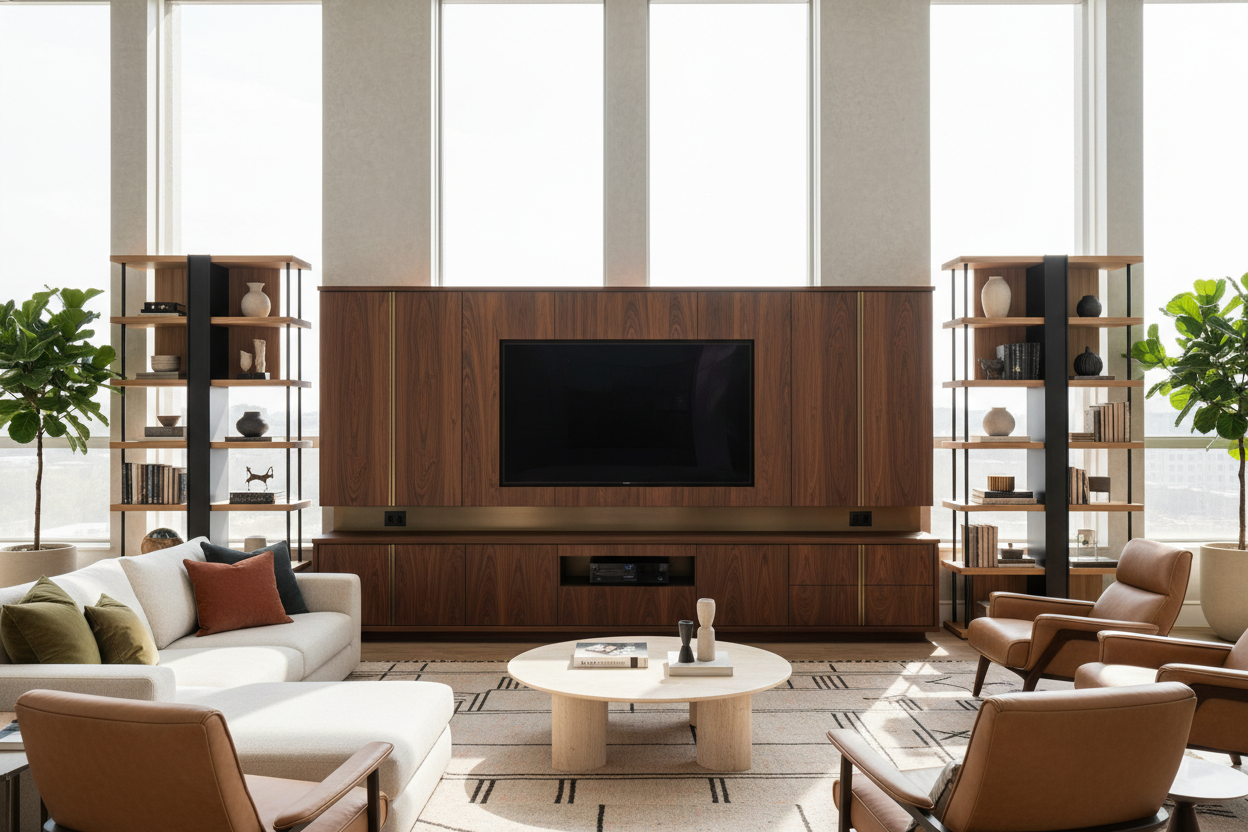
I spent three years in a cramped apartment staring at a floor-to-ceiling media wall that I bought because I thought more storage equaled a better life. It didn't. It felt like a monolith was slowly crushing my sofa, making my 12x14 living room feel like a storage unit with a TV in it. I finally hit a breaking point, sold the beast on Marketplace, and swapped it for low entertainment centers. The room breathed for the first time since I moved in.
Quick Takeaways
- Low-profile units increase visual wall space, making standard 8-foot ceilings feel significantly taller.
- A wider footprint often provides more usable storage for bulky tech than vertical shelving.
- Keeping the TV at eye-level (around 42 inches from the floor to the center of the screen) prevents neck strain.
- Renters should look for adjustable or modular designs to fit future floor plans.
The Day I Realized My TV Stand Was Ruining My Room
The realization didn't happen overnight. It happened when I tried to host four friends for a movie night and realized we were all leaning forward because the massive hutch made the room feel like it was closing in. That old unit was 30 inches high and nearly 2 feet deep. In a small space, every inch of depth you give up to furniture is an inch of floor space you lose for living. Moving to a low entertainment unit wasn't just a style choice; it was a desperate bid for air.
The Optical Illusion of Low Entertainment Centers
There is some basic spatial math at play here. When you lower the height of your furniture, you increase the amount of 'uninterrupted' wall space. This is why a low cabinet might be your best asset—it keeps the sightlines clear. By dropping the surface of the stand to about 15 or 18 inches off the ground, the ceiling suddenly feels miles away. I noticed I stopped feeling claustrophobic during my morning coffee because the wall wasn't dominated by a dark mass of wood and electronics.
But Where Does All the Clutter Actually Go?
The biggest fear I had was losing storage. I have a PS5, a chunky mesh router, and a collection of physical media I refuse to let go of. However, a low entertainment cabinet that is wider—say, 70 to 80 inches—actually offers more surface area for tech than a tall, narrow one. I opted for a large TV cabinet with spacious storage that hides the 'tech gore' behind solid doors. It is a masterclass in how a low cabinet transforms small spaces by keeping the mess below eye level where you aren't constantly staring at it. I’ve found that deep, horizontal drawers are far more efficient for controllers and cables than open shelves that just collect dust.
Finding the Right Proportions for a Low TV Unit
Sizing is where most people mess up. If you have a 65-inch TV, a small low media cabinet will make the screen look top-heavy and precarious. You want the stand to be at least 6 to 10 inches wider than the TV on both sides to 'anchor' the look. For my fellow serial renters, I always suggest an adjustable modern TV console cabinet. I’ve used one in three different apartments now; I can stretch it out to fill a long wall or slide it together when I’m stuck with a weird corner. It’s the only way to ensure your furniture investment survives a move.
What to Do With All That Blank Wall Space Now
Once you lower the furniture, you’re left with a lot of 'white space' above the TV. Don't panic and fill it with tiny clutter. I went with a single, oversized piece of art hung about 10 inches above the screen, slightly off-center. It looks intentional and gallery-like rather than cluttered. You could also do a few floating shelves, but keep them thin—about 1-inch thick—to maintain that airy feeling you just worked so hard to get. The goal is to let the wall be a wall, not a storage rack.
FAQ
How low is too low for a TV stand?
Most low-profile units sit between 12 and 18 inches high. If you have a standard sofa with an 18-inch seat height, this is the sweet spot. Anything lower than 10 inches might feel like the TV is sitting on the floor unless you have very low, Japanese-style floor seating.
Will a low unit hide my cables?
Only if you choose one with integrated cable management. Look for units with 'mouse holes' in the back panel or an open-back middle section. Avoid the temptation to just shove wires behind it—without a back panel, you'll see the 'spaghetti' from the side.
Is a low entertainment center sturdy enough for heavy TVs?
Weight capacity is about the build, not the height. Look for units with a center support leg. Even a low-profile stand can sag in the middle over time if it’s made of cheap 1/2-inch MDF without a middle support point.


Leave a comment
This site is protected by hCaptcha and the hCaptcha Privacy Policy and Terms of Service apply.