










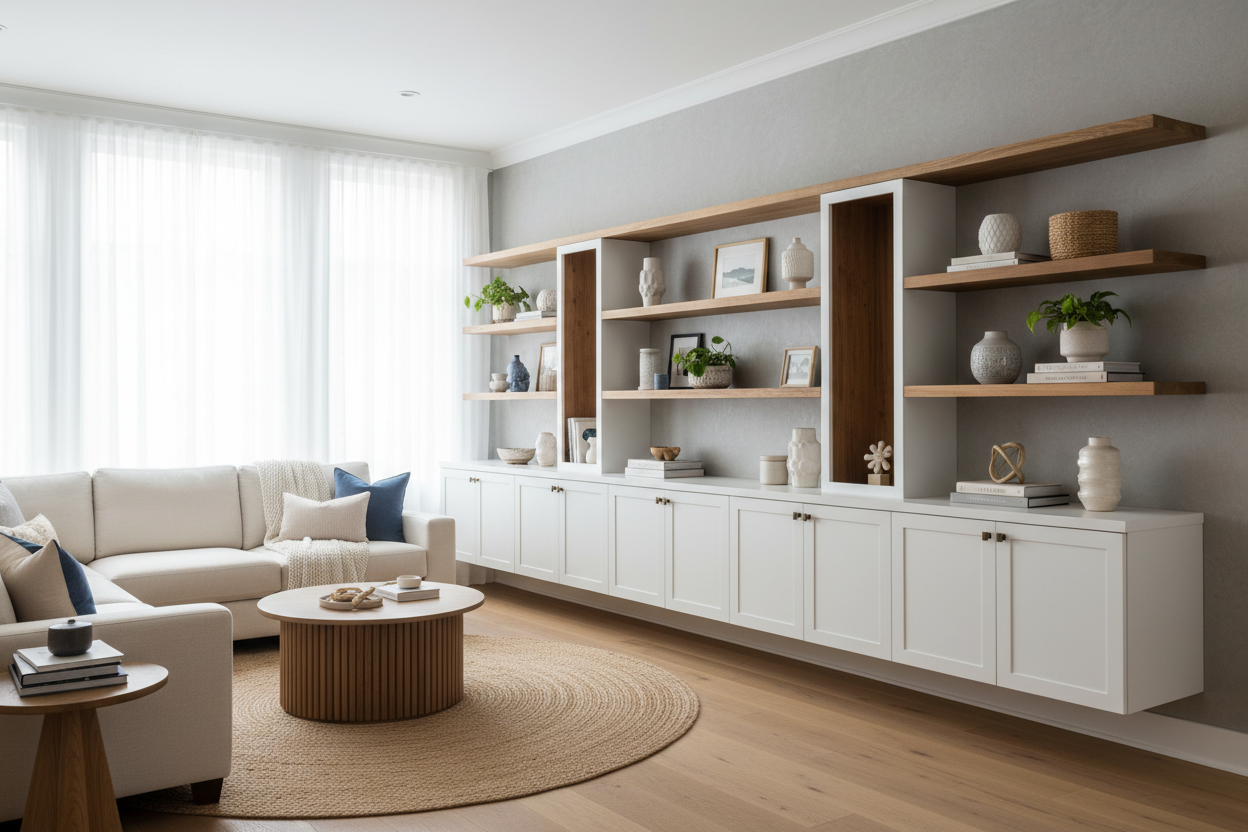
I spent three weeks staring at a blank alcove in my living room, clutching a $12,000 quote from a local carpenter. He wanted six weeks of lead time and a whole lot of drywall dust to give me the wall-to-wall library of my dreams. I wanted the custom built in look, but I also like being able to change my mind—and keep my security deposit. I decided to take a risk on modular units instead.
Quick Takeaways
- Measure three times, buy once. Gaps are the enemy of the built-in look.
- Always anchor your units to the wall for safety and that 'permanent' feel.
- Mix closed base cabinets with open shelving to hide the messy stuff.
- Use lighting to blur the lines between separate furniture pieces.
Why I Skipped the Carpenter (But Kept the Dream)
The allure of a custom built in is real. It makes a room feel finished, intentional, and expensive. But let's be honest: hiring a pro is a headache. You're dealing with contractor schedules, the mess of sanding on-site, and the terrifying reality that once those shelves are in, they are never moving. If you decide to turn that 'library' into a dining nook three years from now, you’re looking at a sledgehammer and a lot of regret.
I chose the modular route because I wanted control. I wanted to be able to pick the exact shade of charcoal grey without arguing about paint swatches. By using high-quality free-standing units, I achieved the same visual weight for about a quarter of the price. Plus, if I move, these pieces are coming with me. It’s about getting that architectural 'oomph' without the permanent commitment to a single floor plan.
The Anatomy of a Convincing 'Fake' Built-In
The secret to faking architecture is the 'flush' rule. If your units have a 1-inch gap between them, the illusion dies instantly. I look for pieces with straight, vertical edges—avoid anything with decorative crown molding that overhangs the sides. When you find a custom shelf cabinet that aligns perfectly with its neighbor, the eye stops seeing two boxes and starts seeing one massive piece of millwork.
You can style standard pieces for a custom finish by simply being obsessive about the alignment. I’ve even used small shims under the feet of my custom cabinets shelves to make sure the tops are perfectly level. It sounds tedious, but that level line across the top is what tricks the brain into thinking a carpenter spent all day with a laser level. Also, I always prioritize adjustable shelf storage. Real millwork is rarely static, and you want the flexibility to move shelves to fit a tall vase or a stack of oversized art books without it looking like a struggle.
Blending Open Display with Hidden Clutter Zones
Nobody actually wants to see your tangled HDMI cables, the router, or the board games with the ripped corners. A wall of purely open shelving looks messy, not sophisticated. That’s why the best custom shelves and cabinets setups use a 'weighted' layout. You want the heavy, closed storage at the bottom to anchor the room and the airy, open shelves at the top for the pretty stuff.
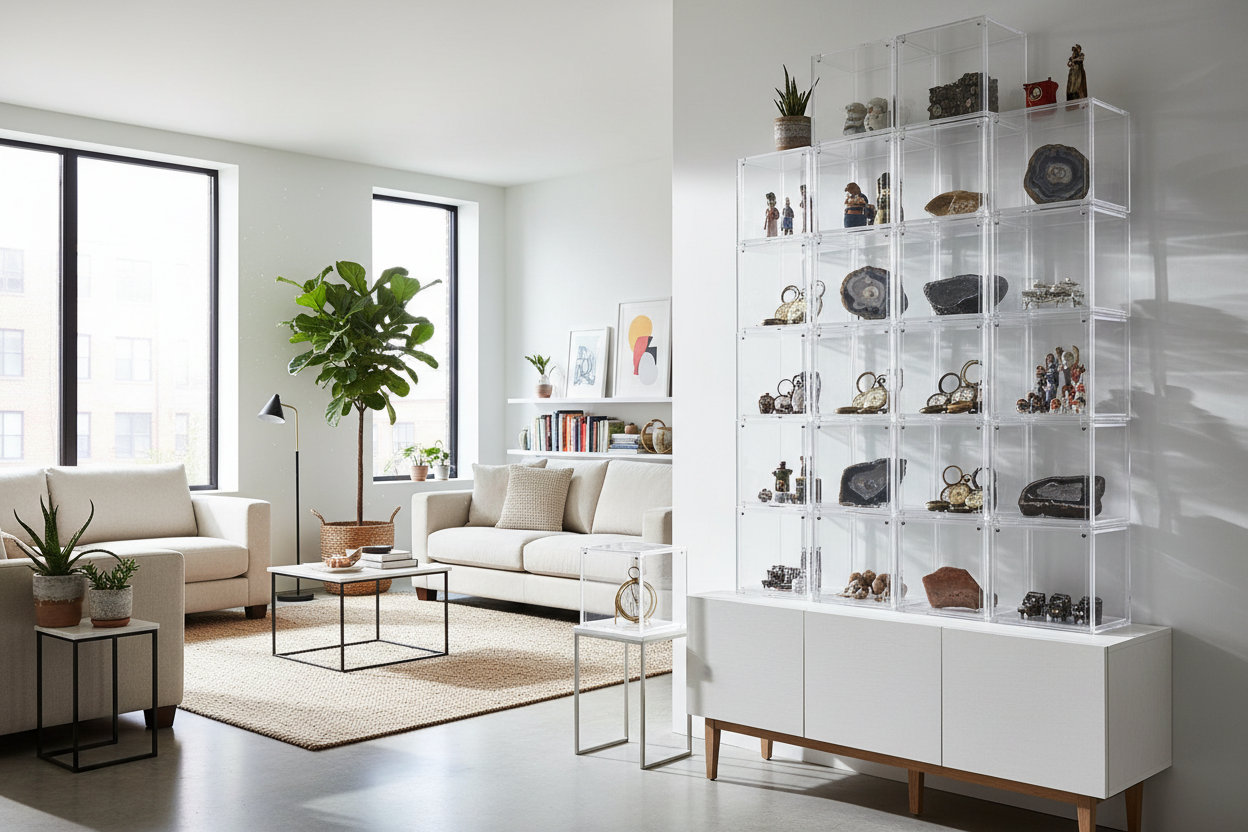
I usually aim for a 30/70 split: thirty percent closed storage, seventy percent open display. This contemporary sideboard cabinet is a solid example of a base that feels substantial. It gives you a place to balance display and concealment so the room doesn't feel like a warehouse. By placing tall bookcases directly on top of or behind a sturdy sideboard, you create a tiered look that feels like it was designed specifically for your wall dimensions.
Sourcing the Right Base Pieces on the Internet
Buying custom storage cabinets online can be a gamble if you don't check the specs. I have a strict 'no-flimsy-backing' rule. If the back of the cabinet is that thin, folded cardboard that you nail on with tiny tacks, skip it. You want something with a bit of heft. A custom built storage cabinet should feel like it could survive a move without folding into a parallelogram.
If you’re dealing with a weird nook or an awkward corner, don’t just leave it empty. A large display cabinet corner shelf can bridge the gap between two straight units, making the setup look like it was framed into the house. Look for pieces that sit flush against the wall—if you have thick baseboards, you might need to remove a small section of the baseboard or choose furniture with a recessed base to get that 'built-in' tight fit.
The Final Styling Touches That Fool the Eye
Once the furniture is in place, the styling is what seals the deal. I use 'bridge' objects to blur the lines between separate units. This means placing a large tray or a long wooden bowl across the seam where two base cabinets meet. It forces the eye to see the two units as a single continuous surface.
Lighting is the other pro move. Battery-operated puck lights or plug-in library lights attached to the top of the units add that high-end gallery vibe. Finally, add some trailing plants like pothos or ivy on the top shelves. The vines break up the hard vertical lines of the furniture and make the whole setup feel like it’s grown into the room over time. When your friends ask who did your millwork, you can just smile and keep your secret.
How do I make the gaps between units disappear?
If you have a tiny gap, you can use color-matched wood filler or even a strip of matching lath wood painted the same color as the cabinets. However, if you choose units with perfectly square edges, you can often just zip-tie the frames together at the back to pull them tight.
Is it safe to stack shelves on top of cabinets?
Only if you secure everything to the wall studs. Never just balance a heavy bookshelf on a sideboard. Use 'L' brackets or anti-tip kits to anchor both the top and bottom units. Safety first, aesthetics second.
Can I do this in a small apartment?
Actually, this is better for small apartments than real built-ins. It adds massive amounts of vertical storage without the permanent construction. Just make sure to use lighter colors like white or pale oak so the 'wall' of furniture doesn't overwhelm the small square footage.


Leave a comment
This site is protected by hCaptcha and the hCaptcha Privacy Policy and Terms of Service apply.