










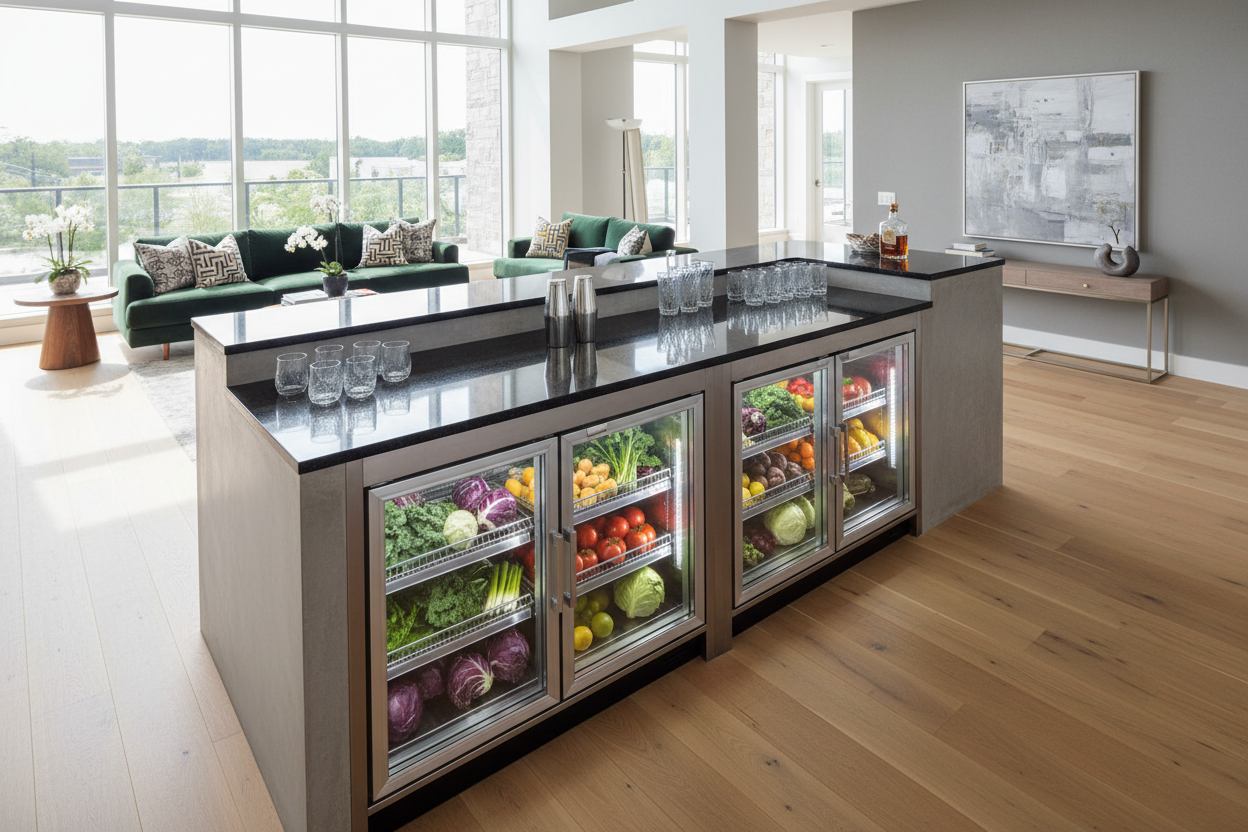
I was standing in my kitchen, staring at three different coolers—a wine fridge that barely fit six Pinots, a mini-fridge stuffed with IPAs, and a main fridge overflowing with leftover dip. I realized I didn't need another 'appliance.' I needed a solution used by professionals. That is when I started looking at grocery refrigerated display cases.
Hosting thirty people for a housewarming party with lukewarm prosecco was the final straw. I wanted volume, I wanted visibility, and I wanted that industrial-chic look that says, 'I take my hobbies way too seriously.' Here is the reality of bringing the supermarket home.
Quick Takeaways
- Commercial units offer 10x the storage of residential wine fridges for a lower price per cubic foot.
- They are significantly louder—think 'humming hive' rather than 'silent butler.'
- Delivery is the hardest part; these units weigh hundreds of pounds and do not play well with stairs.
- Lighting is everything—swap the clinical white LEDs for warm tones to avoid the deli aesthetic.
The Standard Wine Fridge Was Holding Me Back
The standard wine fridge is a lie. They say it holds 36 bottles, but that is only if they are all thin Rieslings. Try putting three fat Chardonnays or a few craft bombers in there and the rack jams. I was tired of the Tetris game every time I came home from the liquor store.
I needed something that could handle a case of wine, two dozen mixers, and still have room for a platter of appetizers. The idea of using commercial equipment took root when I realized that most 'luxury' home fridges are just pretty boxes with weak compressors. I wanted the brute force of a cooler designed to keep milk cold in a 90-degree grocery store.
Commercial Specs vs. Residential Reality
A high-end residential built-in can easily set you back $10,000. After visiting a commercial display cases store, I found that a massive supermarket display case cost about 40% less and offered four times the volume. You are not paying for the 'luxury' brand name; you are paying for stainless steel, heavy-duty shelving, and a compressor that could cool a small garage.
The storage capacity is staggering. While my old fridge struggled with a single layer of cans, these units are deep enough to stack three or four deep. The cooling speed is also on another level—a room-temperature beverage is ice cold in twenty minutes. It is pure utility over vanity.
The Brutal Truth About Delivery Day
The delivery guy looked at my basement stairs and just laughed. Moving grocery store refrigerated display cases is not like moving a sofa. These things are 500 to 800 pounds of glass and steel. I spent three hours measuring the radius of my hallway, much like I did when fitting a corner display case in the guest room, but this time the stakes involved a potential hole in the drywall.
We had to hire a specialized crew with a motorized stair climber. It cost an extra $400, but it saved my floor and my marriage. If you are planning this, do not assume your buddies can help you move it for a six-pack. You need professional weight-lifters who understand center-of-gravity issues.
How to Style It So Your Basement Doesn't Look Like a Deli
The 'Deli Vibe' is a real risk. If you leave the stock 5000K fluorescent lights in, your basement will feel like a pharmacy at 3 AM. I quickly realized that the secret to a high-end look was mimicking tall glass display cases with adjustable lighting. I swapped the harsh tubes for warm 2700K LED strips that I could dim.
To soften the industrial edges of the refrigerated produce display cases, I integrated them into custom cabinetry. By 'framing' the metal with dark oak wood, the unit looks like a built-in feature rather than something I stole from the back of a Whole Foods. It is about contrast—cold steel against warm textures.
The Verdict: Are the Noise and Electric Bills Worth It?
The hum is the biggest hurdle. Commercial compressors are designed for warehouses, not open-concept homes. It is a low, constant thrum that you eventually tune out, but your guests will definitely notice it at first. My electric bill jumped about $30 a month, which is the price of a decent bottle of gin, so I can live with it.
Was it worth the chaos? Absolutely. There is a specific kind of joy in seeing fifty perfectly chilled drinks lined up behind glass. It turns a simple basement into a destination. If you have the floor space and the patience for a difficult delivery, skip the wine fridge and go big.
FAQ
Is it too loud for a living room?
Probably. Unless you have a dedicated basement bar or a very large, open floor plan, the compressor cycle will likely annoy you while watching TV. It is built for performance, not silence.
Do I need special wiring?
Most smaller units run on a standard 115V plug, but they pull a lot of amps. I highly recommend putting it on a dedicated circuit so you don't trip the breaker when you turn on the blender or the microwave.
How do you keep the glass from fogging?
Commercial units usually have heated glass or high-velocity fans to prevent condensation. Make sure you buy a 'triple-pane' or 'heated glass' model if you live in a humid climate, or you will never actually see what is inside.



Leave a comment
This site is protected by hCaptcha and the hCaptcha Privacy Policy and Terms of Service apply.