










I spent three months scouring antique fairs for the perfect 1920s sketch and curated a gallery wall that finally felt 'finished.' Then, I sat on my sofa and realized the entire room was still held hostage by a 65-inch matte black rectangle. It sat there like a dead pixel in the middle of my life, sucking the soul out of my design choices. I didn't want to live in a sports bar, but I also wasn't ready to give up my Sunday night prestige dramas. The solution was surprisingly old-school: I needed a tv cabinet with doors to hide tv.
Quick Takeaways
- Screens are massive visual anchors that usually clash with intentional home decor.
- A hidden tv cabinet with doors creates a psychological 'off switch' for the room.
- Measure your door clearance—sliding doors are better for small apartments, while hinged hutches need room to breathe.
- Ventilation is non-negotiable; your electronics shouldn't be baking in a wooden oven.
The 'Giant Black Void' Conundrum
Modern TVs are marvels of engineering, but let’s be honest: they are incredibly ugly when they aren’t on. We spend thousands of dollars on velvet sofas and hand-knotted rugs, only to point all our furniture at a giant plastic slab. It creates a 'black hole' effect where the eye is immediately drawn to the void rather than the architecture of the room or the art on the walls. I found myself feeling like my living room wasn't a place for conversation, but a waiting room for the next Netflix binge.
You probably know the feeling—that nagging sense that Your Screen Is an Eyesore: Try a TV Wall Cabinet With Doors to Hide TV is a sentiment shared by anyone who values aesthetics. It’s not about being anti-tech; it’s about control. When the screen is 80 inches of glass, it dictates the room’s energy. By choosing a cabinet that actually closes, you reclaim the wall. You get to decide when the room is a cinema and when it’s a sophisticated lounge for cocktails and actual human interaction. It’s the difference between living in a media suite and living in a home.
Trading My Open Shelf for a Hidden TV Cabinet With Doors
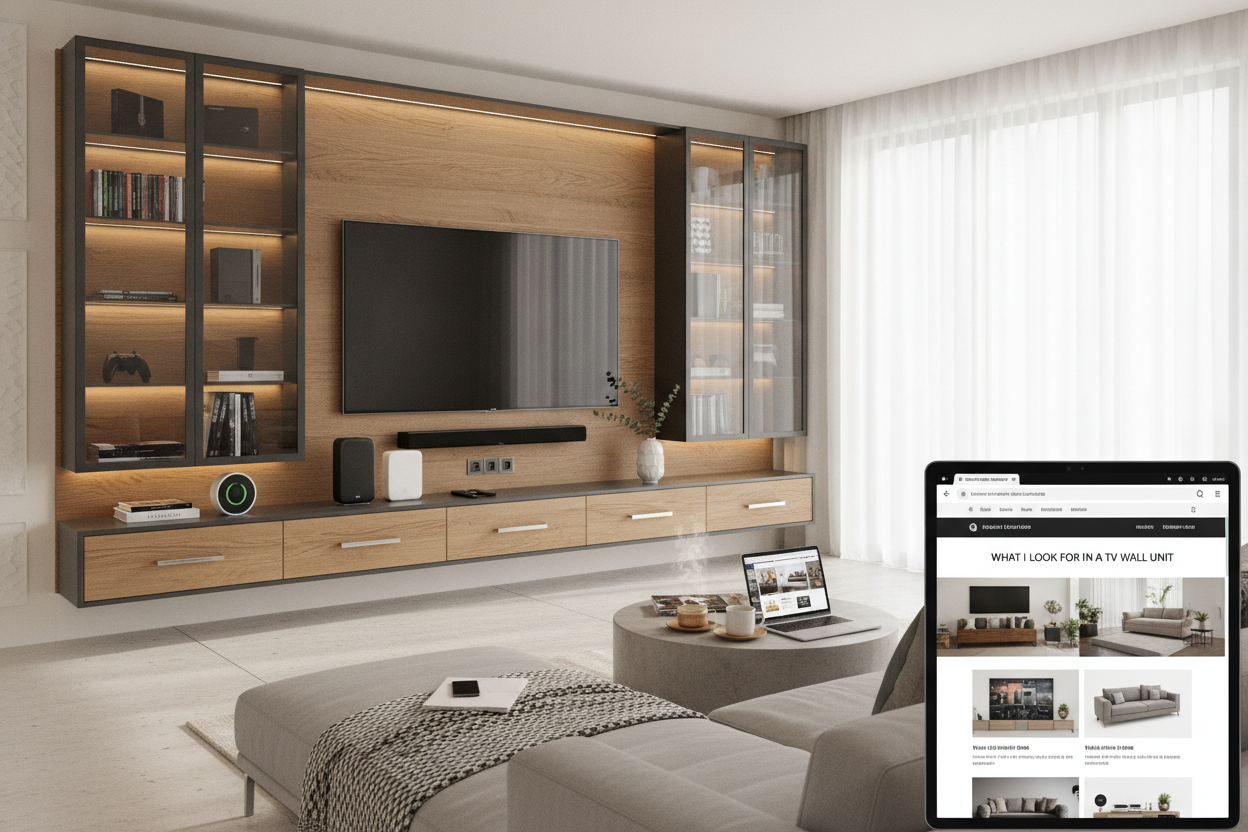
I used to have one of those minimalist, open-shelf industrial racks. You know the ones—plenty of 'airflow' but also a direct view of every tangled HDMI cable and the dust bunnies that congregate behind the PlayStation. It was a visual nightmare. Transitioning to a dedicated hidden tv cabinet with doors felt like finally putting on a tailored suit after years of wearing oversized sweatpants. The transformation was instant. Suddenly, the room felt five feet wider because the visual clutter was gone.
When I was shopping, I realized that some people just want to hide the clutter, not the whole screen. If you're in that camp, you might look for something like a Modern Tv Console Cabinet Media Console Adjustable Length With Drawers And Legs. It’s a great middle-ground for keeping the tech organized in drawers while leaving the screen accessible. But for me, the goal was total concealment. I wanted to walk into the room and see a beautiful piece of cabinetry, not a glowing rectangle. I chose a solid oak piece that looks like a heritage sideboard. When the doors are shut, you’d never guess there’s a high-tech display hiding behind the wood grain.
Sliding vs. Hinged: Choosing Your Media Cabinet With Doors to Hide TV
This is where I made my first big mistake. I originally bought a gorgeous tv hutch with doors to hide tv that had traditional swinging doors. It looked stunning in the showroom. But when I got it into my 12x15 living room, I realized that to watch TV, the doors had to stay open at a 90-degree angle, effectively blocking the path to the kitchen. I was constantly dodging the 'wings' of my own furniture. If you have a massive open-concept great room, hinged doors feel grand and classic. If you're living in a real-world apartment, you need a tv cabinet with sliding doors to hide tv.
Sliding mechanisms—especially the 'pocket door' variety that tucks back into the cabinet—are the gold standard. They keep the footprint small and the look clean. I also briefly considered a Black Cabinet With Glass Doors, thinking the glass might look lighter. But here’s the truth: unless the glass is heavily smoked or fluted, you’re still going to see the silhouette of the TV through it. It defeats the purpose of 'hiding' it. Stick to solid wood or opaque materials if you want that true 'invisible' effect. I ended up swapping my hinged unit for a sliding track model, and it saved my shins and my sanity.
Will My Remote Still Work Through a TV Stand With Doors to Hide TV?
This is the number one question people ask, and for good reason. No one wants to sit there with the doors open just so the remote can talk to the cable box. If you’re using a modern tv stand with doors to hide tv, most remotes today use Bluetooth or RF (Radio Frequency), which can pass through wood just fine. However, if you have older gear that relies on IR (Infrared), you’ll need a direct line of sight. I solved this by installing a $20 IR repeater—a tiny little 'eye' that sits on the edge of the cabinet and sends the signal inside to the hidden components.
The other big concern is heat. If you’re running a 4K receiver, a gaming console, and a large screen inside an entertainment center with doors to hide tv, things are going to get hot. I learned this the hard way when my receiver started smelling like toasted circuits. Always check the back panel. If it’s solid wood, get a hole saw and vent that thing. Better yet, look for cabinets with built-in mesh backings or slatted doors that allow for natural convection. Your tech needs to breathe as much as your room needs to look good.
The Ultimate Party Trick: Out of Sight, Out of Mind
There is a genuine psychological shift that happens when you close those doors at the end of the night. It’s like clearing the table after a meal. It signals to your brain that 'the show is over' and it’s time to wind down. My screen time actually dropped by about 30% after I got my media cabinet with doors to hide tv because I wasn't mindlessly hitting the 'on' button just because the screen was staring at me. It makes the act of watching a movie feel like an intentional event rather than a default state of existence.
For those who want to go even further—the real 'wow' factor—you could skip the doors entirely and go for a 50 4 Inch Lifting Tv Stand With Electric Vertical Lift Tv Cabinet Hidden Tv Mechanism With Remote Control. It’s the ultimate way to make a TV disappear into the furniture itself. But whether you go for a high-tech lift or a classic wooden hutch, the result is the same: a room that feels like a home again, not a theater. My living room is finally a place where the art takes center stage, and the TV is just an invited guest that knows when to leave.
FAQ
Do I need to worry about the TV falling over inside the cabinet?
Most cabinets designed to hide TVs include mounting brackets or deep enough shelving to keep the unit stable. I always recommend anchoring the cabinet to the wall, especially if you have heavy sliding doors that shift the center of gravity when opened.
Can I put a soundbar inside a cabinet with doors?
You can, but the sound will be muffled if the doors are solid. If you want to keep the doors closed while listening to music, look for a cabinet with acoustically transparent mesh panels or 'slatted' door designs that let sound waves pass through.
How do I manage all the wires?
Look for a unit with pre-drilled cable management ports. If it doesn't have them, use a 2-inch spade bit to create your own. Use Velcro ties to bundle cables together so the doors don't snag on a stray HDMI cord when you're closing them.


Leave a comment
This site is protected by hCaptcha and the hCaptcha Privacy Policy and Terms of Service apply.