










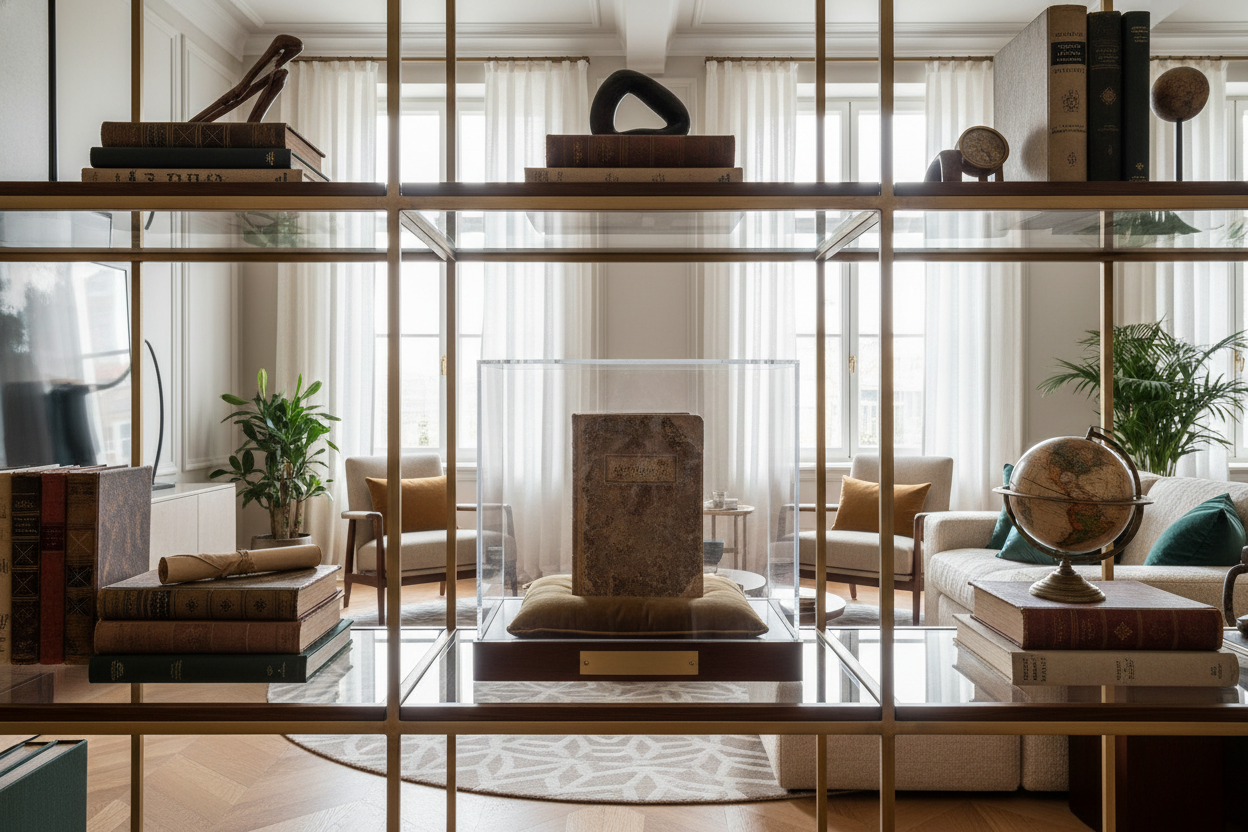
I used to think book collectors who used enclosures were a bit much. I’m a reader, not a curator at the Met. I want my books reachable, slightly worn, and part of the room’s energy. But then I left my signed, first-edition hardback on a sunny shelf for a summer and watched the spine fade from a deep navy to a dusty, sad grey. The dust had literally baked into the paper fibers, and the humidity made the pages ripple like a potato chip.
That was the day I stopped being a purist and started investing in a book display box. It’s not about being precious; it’s about basic preservation. If you’ve spent more than fifty bucks on a book, or if it has sentimental value that can’t be replaced by a trip to a used bookstore, you need to stop leaving it exposed to the elements.
Quick Takeaways
- UV radiation is the primary cause of spine fading and paper brittleness.
- Acrylic offers better UV protection than standard glass, but glass is more scratch-resistant.
- A single book display case creates a visual focal point, turning a book into art.
- Avoid airtight seals; books need a tiny bit of airflow to prevent foxing and mold.
The Heartbreak of Sun Fading (Why Open Shelves Are Traps)
We all love the look of floor-to-ceiling libraries, but standard open shelves are basically slow-motion shredders for your best books. Sunlight is the obvious villain. Even indirect light in a bright room will eventually bleach the ink right off a dust jacket. I learned this the hard way when my favorite novel developed a permanent 'shadow' where the book next to it had partially blocked the sun.
Then there’s the dust. On an open shelf, dust settles on the top edge of the pages. Over years, those particles work their way down into the binding, attracting moisture and causing that musty smell we associate with old basements. If you have a large collection that needs more than just a single box, I’d suggest looking into a multi-tier storage shelf for books that features glass doors. It gives you the look of an open library with the protection of a closed environment.
A dedicated display case for books acts as a physical barrier against these silent killers. It’s not just about the light; it’s about creating a micro-climate. By containing the book, you’re shielding it from the 'aggressive' dust of a high-traffic living room and the fluctuating humidity that causes covers to warp and glue to crack.
Why I Swore Off Stacking and Chose a Single Book Display Case
There is a massive psychological difference between a book on a shelf and a book in a single book display case. When you stack books or line them up spine-out, they become texture. They’re background noise. They’re the 'bookshelf wealth' trend that everyone is obsessed with right now. But some books deserve to be the lead singer, not the backup dancers.
I started using a single case for my most prized possession—a signed copy of a limited-run sci-fi novel. Suddenly, it wasn’t just a thing taking up 1.5 inches of shelf space. It became a sculptural focal point. It forced me to appreciate the cover art, the texture of the cloth binding, and the sheer physical presence of the object. It’s the difference between a family photo in a shoebox and one that’s professionally framed on the mantel.
From a practical standpoint, isolating a book also protects it from 'shelf wear'—that scuffing that happens when you slide books in and out of a tight row. No more torn headbands or frayed corners because you were trying to squeeze one more volume onto the shelf. A large book display case gives the item room to breathe, literally and figuratively.
The Great Debate: Acrylic vs. Glass Book Display Box
When you start shopping, you’ll hit the big fork in the road: acrylic or glass? I’ve owned both, and they serve very different vibes. Acrylic book display cases are the modern standard for a reason. They are incredibly lightweight, which is a lifesaver if you’re placing them on a floating shelf or a delicate glass-top coffee table. High-quality acrylic is also naturally more UV-resistant than standard window glass, which is a huge plus for preservation.
However, acrylic has a downside: it’s a magnet for static and scratches. If you use a rough paper towel to clean a book display case acrylic, you’ll leave fine swirl marks that catch the light. You have to treat it like a car’s paint job. On the other hand, a glass book display box has that satisfying heft and 'old world' clarity. It feels permanent. It doesn’t scratch easily, and it doesn’t yellow over decades.
If you’re stuck, I’ve actually tested glass vs acrylic cases in the past to see how they hold up to daily life. For a glass display case for books, I usually recommend it for heavy, oversized coffee table books where the weight of the case helps keep everything anchored. For rare paperbacks or smaller hardcovers, a book glass case or a lightweight acrylic box is usually the way to go. Just make sure whatever you choose has a high UV-rating if it’s sitting anywhere near a window.
How to Style a Book Glass Case Without It Looking Like a Museum
The biggest fear people have with a glass case for book storage is that their house will start looking like a stuffy archival reading room. Nobody wants to live in a library where you feel like you need white gloves to touch the furniture. To keep it cozy, I like to mix materials. Don’t just put a glass display case for books on a glass table. Put it on a wooden sideboard or a marble mantel to create some contrast.
If you have a collection of three or four special volumes, consider a book display case wall arrangement. Use small, individual floating shelves and put one book display box on each. It looks like a gallery wall but with 3D objects. It breaks up the monotony of flat frames and adds a ton of depth to the room. I’ve even seen people use a dedicated corner display case to house a mini-collection of first editions, which turns a dead corner of a room into a sophisticated library nook.
Don't be afraid to add a 'prop' inside the box if there's room. A dried flower from a wedding, a vintage bookmark, or even a small coin can add a layer of personal storytelling. The goal is to make the book look celebrated, not quarantined. A single book glass case on a nightstand with a small lamp next to it creates a perfect, moody vignette that says 'I love this story' without saying 'Don't touch my stuff.'
FAQ
Do book display cases prevent yellowing?
They definitely slow it down. Yellowing is caused by oxidation and UV exposure. A case with UV-filtering material blocks the rays that break down the lignin in the paper, keeping your pages white (or at least less brown) for much longer.
Can I store a book flat in a display case?
Yes, but be careful with the spine. For very heavy books, storing them flat can actually be better because it prevents the 'text block' from sagging and pulling away from the binding. Just don't stack five heavy books on top of each other, or you'll crush the bottom one's spine.
How do I clean an acrylic book display case?
Never use Windex or anything with ammonia; it will cloud the acrylic. Use a dedicated plastic cleaner or just a very soft, damp microfiber cloth. Gently blot the dust away rather than rubbing it in, which is how those annoying scratches happen.


Leave a comment
This site is protected by hCaptcha and the hCaptcha Privacy Policy and Terms of Service apply.