










I spent last Saturday on the floor of my living room, surrounded by 14 bags of unlabeled screws and a set of instructions that looked more like a Rorschach test than a manual. By hour four, I was actually crying over a piece of particle board that had arrived chipped. That was the moment I swore off flat-pack shelving forever and decided to invest in a display ready case.
- Save your weekends: No more 6-hour assembly marathons.
- Structural integrity: Factory-glued joints beat hand-tightened cams every time.
- Professional lighting: Pre-wired LEDs look sleek, not DIY.
- Longevity: These pieces survive moves; flat-pack usually ends up in a dumpster.
The Flat-Pack Breaking Point
We have been conditioned to believe that 'some assembly required' is a rite of passage for adulthood. It is not. It is a scam. I once spent an entire afternoon building a 'sturdy' bookshelf that wobbled the second I put a hardcover on it. The MDF was so thin I could practically see through it, and the back panel was held on by tiny nails that started popping out within a week.
When you value your time at more than zero dollars an hour, the math on cheap furniture stops making sense. I realized I was paying to be a part-time, unpaid furniture factory worker. I wanted a piece that felt permanent—something with real weight and finished edges that didn't scream 'I just moved out of my dorm.'
What Actually Makes a Case 'Display Ready'?
The term 'display ready' is the holy grail for people who actually have a life. It means the unit arrives at your door fully or mostly constructed by people who have professional-grade tools and jigs. We are talking about solid frames, leveled doors, and glass that doesn't rattle every time you walk past it.
Unlike the boxes you pick up at big-box retailers, these are factory-built units. The difference is in the details: the hinges are already aligned, the magnetic catches actually catch, and the finish is consistent across every single panel. You are buying a finished product, not a project.
The Structural Perks of Skipping Assembly
There is a massive difference between a shelf you screwed together and one that was built in a controlled environment. Factory-built units use industrial adhesives and dowel construction that you just can't replicate on your living room rug. This is especially true when glass is involved.
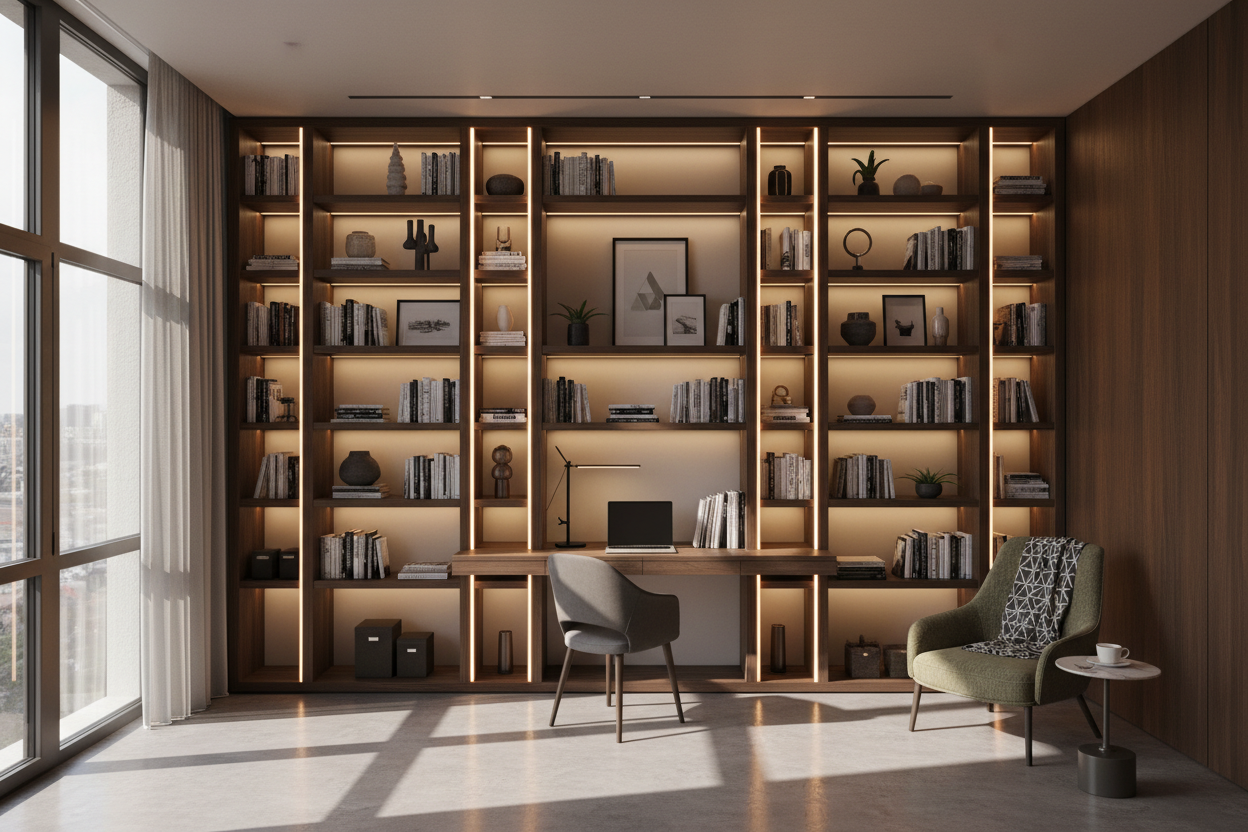
Trying to install glass panels yourself is a recipe for fingerprints and shattered nerves. A pre-built glass door display case with LED light is a total flex because the wiring is hidden inside the frame during manufacturing. You don't have to deal with messy cables or sticky-back LED strips that peel off in the humidity.
How to Place It So Your House Doesn't Look Like a Retail Store
The biggest fear with high-end display cases is the 'museum' effect. You don't want your living room to feel like a gift shop. The trick is integration. Don't just slap a massive case in the middle of a long wall and call it a day. Use the architecture of the room to your advantage.
Tucking a corner display case into an underutilized nook is a pro move. It softens the visual impact of a large piece of furniture by letting the walls 'hug' it. If you are on the fence about whether these units feel too traditional, check out this designers take on corner cabinets to see how they can actually ground a room's layout.
Is the Higher Upfront Price Actually Worth It?
I’ll be honest: the price tag on a pre-assembled unit can give you a bit of sticker shock compared to the $89 flat-pack special. But you have to look at the 'cost per year.' A cheap MDF shelf lasts maybe three years if you're lucky and don't move. A solid, factory-built piece lasts decades.
A tall china curio cabinet is a significant investment, but it is a 'forever' piece. It's the difference between buying five cheap pairs of shoes that fall apart in the rain versus one pair of high-quality boots that you resole for years. Plus, you get the immediate gratification of styling it thirty minutes after it arrives.
My Personal Experience
I once bought a 'ready to assemble' cabinet that was so heavy I couldn't even drag the box into my apartment. I had to open it in the hallway and carry it piece by piece, which took two hours before I even started building. When I finally switched to a display-ready unit, the delivery team unboxed it, took the trash away, and I was drinking wine and arranging my vintage camera collection by sunset. I'll never go back.
FAQ
Do display ready cases require any work at all?
Usually, you just have to pop the adjustable shelves onto their pins. It takes about five minutes and zero tools. It's the 'fun' part of furniture without the labor.
How do I move a fully assembled case?
Invest in a set of furniture sliders. Since these units are built with better structural integrity, they handle being moved much better than flat-pack pieces, which tend to 'rack' or lean if you slide them.
Are they too heavy for apartment floors?
Most modern apartments can handle the weight of a standard display case just fine. If you live in a very old building with soft wood floors, just use felt pads to distribute the weight and prevent indentation.


Leave a comment
This site is protected by hCaptcha and the hCaptcha Privacy Policy and Terms of Service apply.