










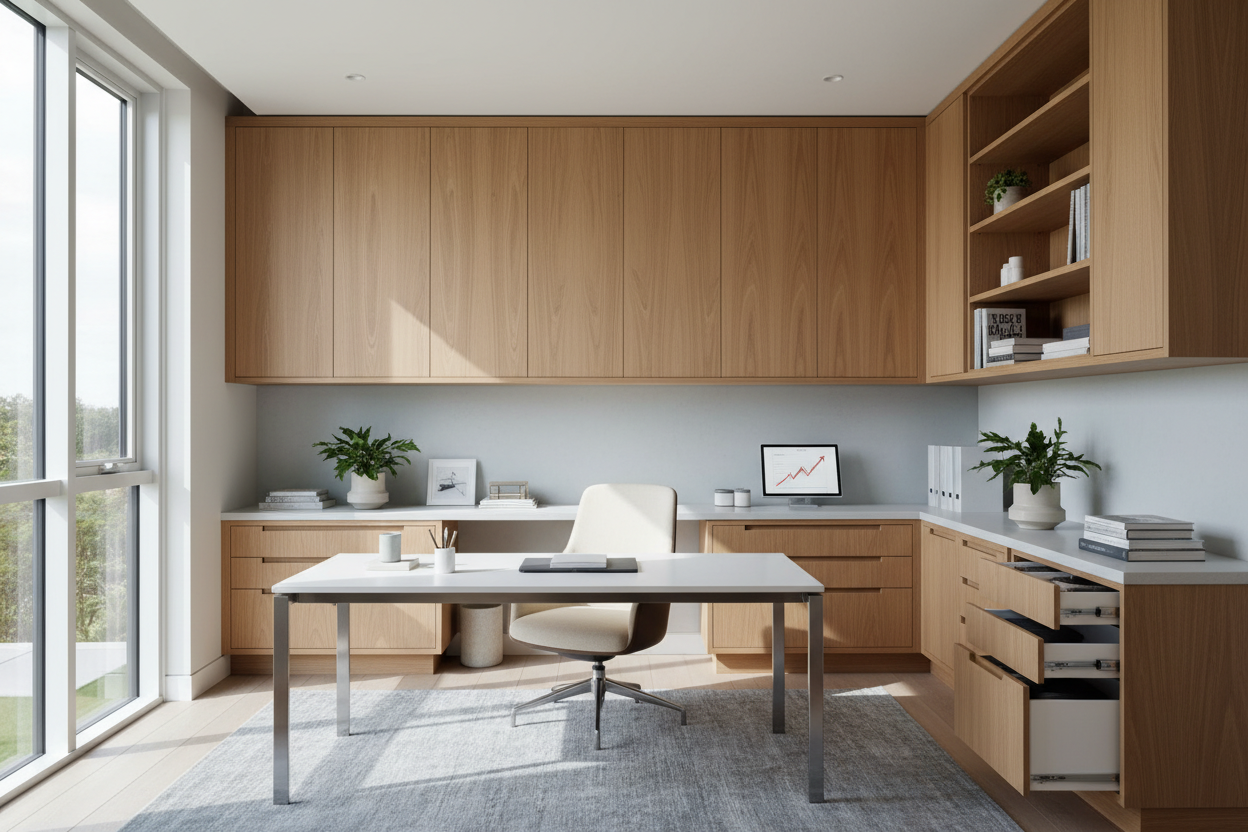
The difference between a chaotic desk and a productive sanctuary often comes down to one element: intentional joinery. As we continue to navigate the era of remote work, the makeshift table in the corner no longer suffices. You need a dedicated workspace that marries ergonomics with high-end aesthetics. This brings us to the potential of a closets by design home office. While the brand is synonymous with wardrobe organization, their foray into office cabinetry offers a compelling, semi-custom solution for homeowners looking to graduate from flat-pack furniture without the lead times of bespoke millwork.
Quick Decision Guide: Key Features to Consider
- Material Core: Most units utilize industrial-grade particleboard with Thermally Fused Laminate (TFL), which offers higher scratch resistance than standard melamine.
- Customization Level: Semi-custom. You can adjust dimensions to the inch, but you are limited to their catalog of door styles and finishes.
- Ergonomics: Look for keyboard trays and monitor risers that can be integrated directly into the cabinetry to maintain clean sightlines.
- Installation: Professional installation is mandatory, ensuring units are anchored securely to studs—vital for heavy file storage.
Analyzing the Build Quality and Materiality
When I evaluate cabinetry for a client, the first thing I check is the finish consistency and edge banding. A Closets by Design office setup typically employs a high-density laminate. From a design perspective, this is a pragmatic choice for a high-traffic zone. Unlike solid wood, which can react to humidity changes (warping drawers or sticking doors), high-quality laminate remains stable.
However, the visual success of these units depends heavily on the finish selection. To achieve a luxury look, I recommend steering clear of faux-wood grains that try too hard to look like oak or cherry. Instead, opt for solid matte colors—like a deep charcoal or a crisp white—or their textured finishes that mimic linen or concrete. These contemporary choices elevate the perceived value of the space.
Space Planning and Workflow
A static desk is easy to buy; a functional workflow is harder to design. When configuring your layout, consider the "triangle of reach." Your primary work surface, your reference materials (shelving), and your supply storage (drawers) should be accessible without standing up.
The Vertical Advantage
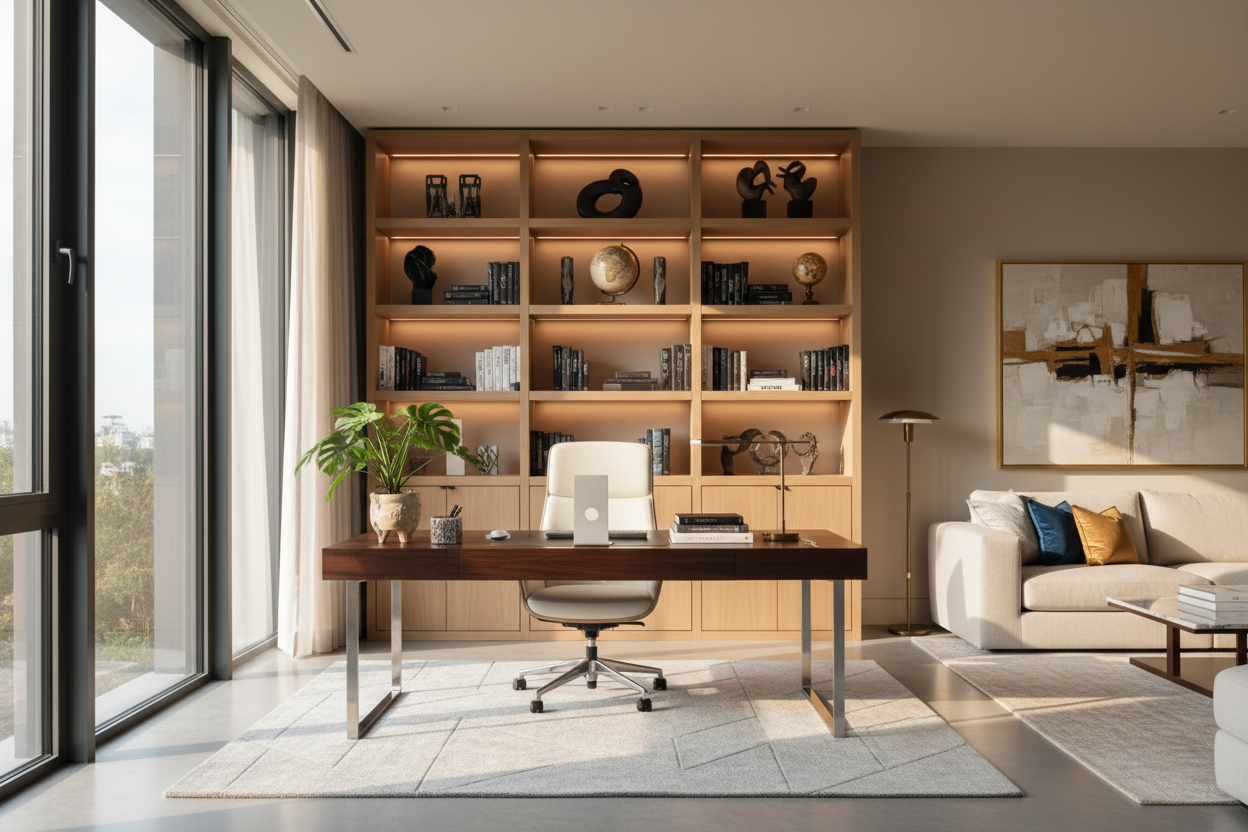
The primary benefit of using a custom service is floor-to-ceiling utilization. In smaller rooms, taking the cabinetry all the way to the crown molding draws the eye upward, making the room feel more expansive. Use the upper cabinets for archival storage—items you need once a month—and keep open shelving at eye level for items that require immediate access or for displaying decorative objects to soften the "office" feel.
Navigating the Customer Experience
Engaging with a franchise model requires a different approach than hiring a local carpenter. The closets by design customer service experience can vary by region, as these are individually owned and operated locations. The design consultation is crucial. Do not just rely on the 3D rendering; ask to see physical samples of the hardware and the laminate.
Furthermore, because these systems are built-to-order, communication is key. Once you have the closet by design phone number for your local representative, ensure you have a direct line to your specific designer, not just the general dispatch. This continuity ensures that the nuance of your specific space—like that awkwardly placed outlet—isn't lost in translation between the sales floor and the factory.
My Personal Take on Closets by Design Home Office Projects
I want to share a specific observation from a project I managed last year where we utilized this system for a client's dual-purpose guest room/office. The marketing photos often show pristine, floating shelves, but the reality involves installation nuances.
The installer arrived and realized the client's walls were significantly bowed—a common issue in older homes. What impressed me was the "scribing" process. They didn't just bolt the unit to the wall leaving a gap; they actually cut the filler panels on-site to match the curvature of the drywall. However, here is the "unpolished" truth: the wire management grommets were standard plastic. They felt cheap compared to the rest of the build. My advice? Buy your own high-end metal grommets or pop-up outlets beforehand and ask the installer to use those instead. It’s a $50 upgrade that makes the desk feel like a $5,000 piece of millwork.
Conclusion
Investing in a custom workspace is about more than storage; it is about creating an environment that respects your professional life. A Closets by Design system offers a robust middle ground between DIY solutions and architectural joinery. With the right finish choices and a keen eye on the installation details, you can create a workspace that feels both permanent and inspiring.
Frequently Asked Questions
How do I find the closet by design phone number for my area?
Because they operate as franchises, there isn't a single universal support line for design queries. You should visit their main website and enter your zip code to route directly to the local office's contact information.
Does a closets by design office include electrical work?
Generally, no. Their installers are carpenters, not electricians. While they can cut grommet holes for wire management, if you need outlets moved or integrated lighting hardwired, you will need to hire a licensed electrician to prep the space before the cabinetry arrives.
What if I have an issue with the installation?
This is where understanding the franchise model is vital. Your closets by design customer service point of contact should be the local operations manager. Most locations offer a warranty on the cabinetry, but labor warranties can vary, so always clarify the terms of service before signing the final design approval.

Leave a comment
This site is protected by hCaptcha and the hCaptcha Privacy Policy and Terms of Service apply.