










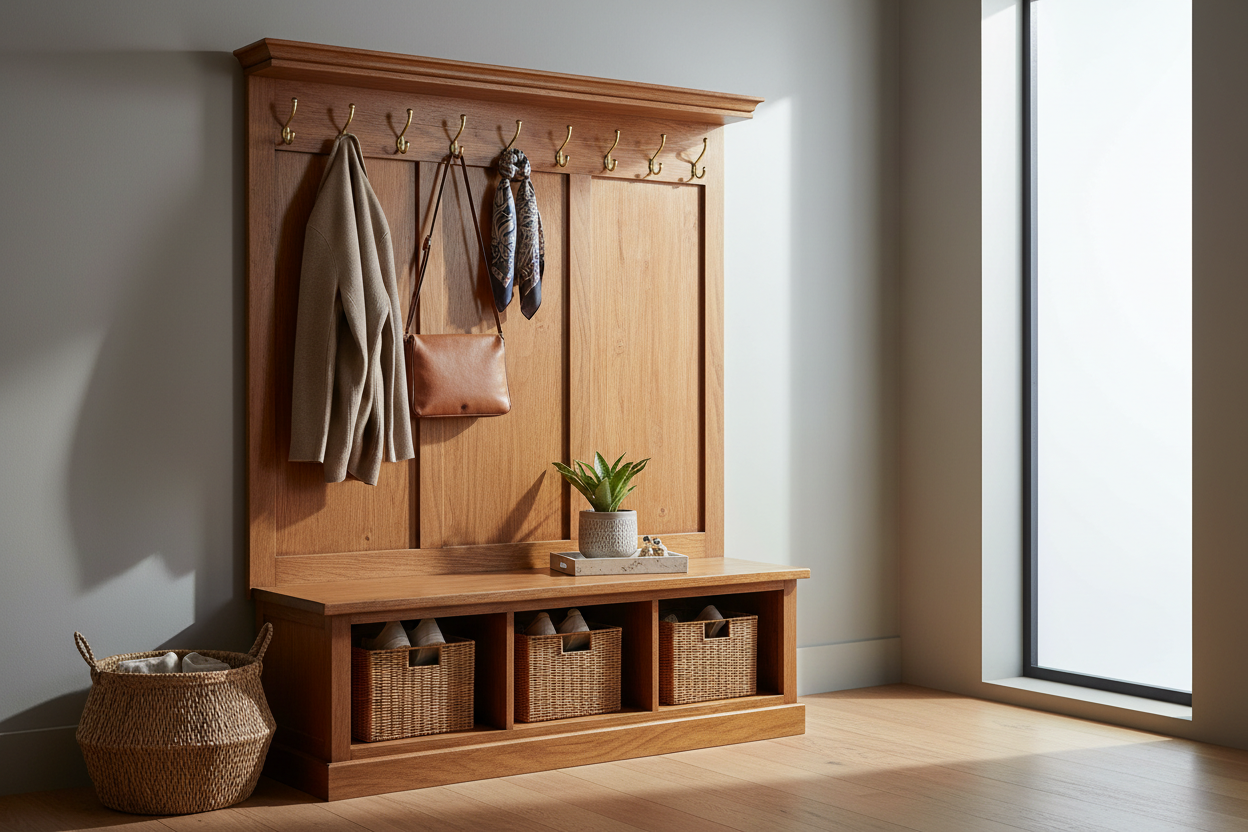
The foyer is the handshake of the home; it greets you before anything else. Yet, for many of my clients, this critical transition zone becomes a chaotic dumping ground for mail, muddy boots, and pet leashes. When we look for solutions that balance high-end aesthetics with genuine utility, the pottery barn entryway organizer frequently comes up in conversation. But does the brand prestige match the functional reality? Below, I break down the construction quality, spatial considerations, and design impact to help you decide if this is the right architectural addition for your entry.
Quick Decision Guide: Key Features to Evaluate
- Construction Type: Look for kiln-dried solid wood frames versus MDF composites for longevity in high-traffic zones.
- Mounting System: Check if the unit uses a French cleat system (superior for weight distribution) or standard keyhole mounts.
- Modularity: Determine if the collection (e.g., Aubrey or Livingston) allows for component mixing to fit specific wall widths.
- Depth Profile: Ensure the organizer depth (usually 14"-18") allows for clear walking paths without crowding the door swing.
Analyzing Material Integrity and Build
As a designer, the first thing I inspect is the joinery and material composition. Pottery Barn is known for using kiln-dried wood, a process that removes moisture to prevent warping or cracking—a non-negotiable feature for entryways that experience temperature fluctuations from opening doors.
Solid Wood vs. Veneers
While the structural frames are often solid pine or poplar, be aware that large panels in these organizers often utilize wood veneers over engineered wood. This isn't necessarily a negative; it adds stability and prevents splitting. However, you want to ensure the finish is sealed properly. The best organizers feature a multi-step finish that can withstand the abrasion of metal keys and wet umbrellas without immediate scarring.
Space Planning: The Ergonomics of the Drop Zone
A beautiful organizer is useless if it disrupts the flow of traffic. When specifying a pottery barn entryway organizer, visual weight is just as important as physical dimensions.
Verticality and Ceiling Height
Many of these units are substantial. If you have standard 8-foot ceilings, opt for a unit that leaves at least 12 to 18 inches of breathing room at the top. This negative space prevents the unit from feeling like it is looming over guests. For the bench component, look for a seat height between 18 and 20 inches, which is the ergonomic sweet spot for putting on shoes.
Visual Balance and Hardware
The hardware—hooks, pulls, and knobs—acts as the jewelry of the piece. One reason I often recommend these specific organizers is the ability to coordinate hardware finishes with your existing overhead lighting or door levers. If you choose a darker wood finish like a mahogany or espresso, ensure your entryway has adequate ambient lighting, as dark furniture absorbs light and can make a small foyer feel cavernous.
My Personal Take on the Pottery Barn Entryway Organizer
I want to share a candid experience from a project I managed last year in a renovated farmhouse. We selected the full wall system from the Aubrey collection. While the photos looked pristine, the installation revealed a detail most people overlook: baseboards.
These units are designed to sit flush against the wall, but they rarely come with baseboard cutouts. We had to hire a carpenter to scribe the bottom of the unit to match the home's existing trim work. Without that custom cut, there would have been a glaring one-inch gap behind the unit, compromising the built-in look. Furthermore, the "distressed" white finish is beautiful, but I noticed that denim dye transfer from sitting on the bench is a real issue if you don't treat the cushion with a fabric guard immediately. It is a stunning piece of furniture, but it requires a bit of on-site finesse to make it look truly integrated.
Conclusion
Investing in a high-quality entryway system is about reclaiming order in your daily routine. While the price point is significant, the modularity and resale value of these pieces often justify the cost. Just remember to measure your baseboards and plan for professional installation to achieve that seamless, showroom aesthetic.
Frequently Asked Questions
How much weight can the bench typically hold?
Most benches in these collections are rated for approximately 200 to 300 lbs. However, this is heavily dependent on proper assembly. If the unit is floating (wall-mounted), hitting the studs is critical for safety.
Can I mix components from different collections?
Generally, no. The molding profiles, plinths, and finish undertones vary slightly between collections (e.g., the white in the Livingston collection may differ from the white in the Aubrey collection). Stick to one family for a cohesive look.
How do I clean the wood finish in a high-traffic mudroom?
Avoid harsh chemical cleaners which can strip the protective lacquer. Use a soft, slightly damp cloth for dust and mud, and immediately wipe dry. For the hardware, a microfiber cloth is sufficient to remove fingerprints without scratching the metal plating.


Leave a comment
This site is protected by hCaptcha and the hCaptcha Privacy Policy and Terms of Service apply.