











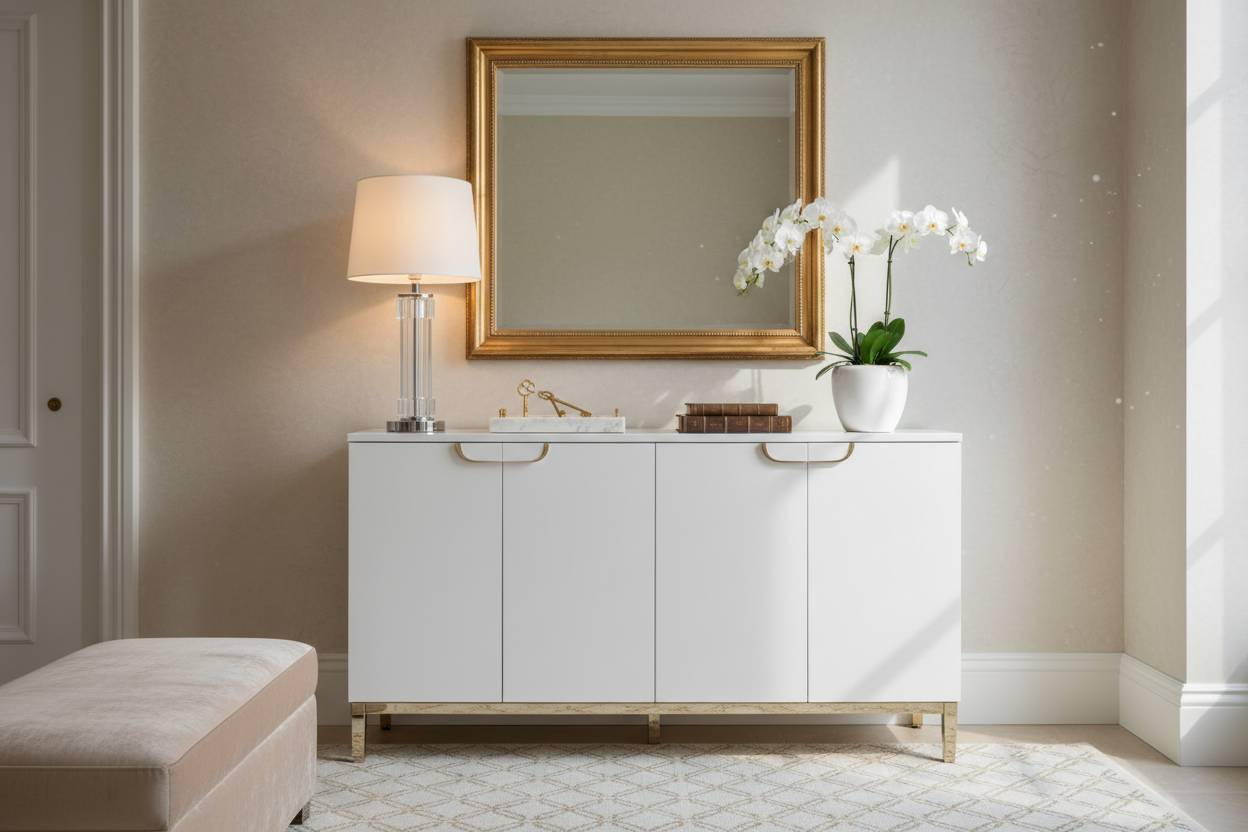
The foyer is the handshake of the home; it sets the expectation for the rest of the interior. Yet, it is often the most cluttered zone, plagued by piles of mail, scattered shoes, and keys that never have a home. The solution isn't just storage—it is selecting a piece that reduces visual noise while maximizing utility. A entryway organizer white finish is often the go-to choice for designers because it reflects light, making narrow hallways feel expansive rather than claustrophobic. However, selecting the wrong shade or material can quickly turn your chic entry into something that looks clinical or cheap.
Key Features to Look For
- Material Density: Opt for solid wood or high-density MDF over particle board to prevent sagging shelves.
- Finish Durability: Look for baked-on lacquer or melamine coatings that resist scuffs better than standard latex paint.
- Undertone Matching: Ensure the white of the furniture matches your trim (cool vs. warm) to avoid a "dirty" appearance.
- Hardware Contrast: High-quality brass or matte black pulls elevate a simple white unit to a luxury piece.
- Depth Profile: For narrow corridors, ensure the unit depth does not exceed 15 inches to maintain traffic flow.
Choosing the Right Material and Finish
When specifying a white entryway organizer for a client, the conversation starts with the finish. White is unforgiving; it hides nothing. If you are looking for longevity in a high-traffic zone, avoid standard flat paint. It absorbs oils from hands and is difficult to scrub without burnishing the surface.
Instead, prioritize high-gloss lacquer or engineered veneers. High-gloss finishes bounce ambient light, which is crucial in foyers that lack natural windows. If you prefer a matte aesthetic, ensure the piece is finished with a catalyzed conversion varnish, which provides a hard, non-yellowing shell. This distinction is vital: cheap white furniture often yellows within two years due to UV exposure, while high-quality finishes remain crisp.
Space Planning and Visual Weight
A white organizer has a distinct advantage: it carries less "visual weight" than a dark wood or metal unit. This allows you to select a larger piece with more storage capacity without it dominating the room. However, silhouette matters.
Floating vs. Freestanding
For tight apartments, I often recommend a wall-mounted (floating) white organizer. By keeping the floor visible beneath the unit, you trick the eye into perceiving more square footage. If you require a freestanding unit for heavy coat storage, look for legs that lift the bulk of the cabinet off the floor. This negative space is essential for maintaining an airy atmosphere.
Styling for a Luxury Aesthetic
The danger with white furniture is that it can feel sterile or mass-produced. To counter this, you must introduce texture. If the organizer has open cubbies, use woven seagrass or felt baskets rather than plastic bins. The organic texture warms up the cool white tones.
Additionally, pay attention to the hardware. Replacing standard builder-grade knobs with knurled brass or leather pulls is a ten-minute upgrade that makes a budget-friendly piece look bespoke. Treat the top of the organizer as a vignette: style it with a substantial ceramic bowl for keys and a tall structural vase to add height, breaking up the horizontal lines.
Lessons from My Own Projects
I learned a hard lesson about white entryway furniture early in my career during a project in a Brooklyn brownstone. I specified a gorgeous, custom-painted white bench with built-in storage. It looked pristine on installation day.
Three weeks later, the client called. The bench seat was stained blue. I hadn't accounted for the fact that the family wore dark raw denim jeans, and the dye had transferred onto the porous semi-gloss paint while they sat to put on shoes. It was a nightmare to clean and required repainting with a marine-grade finish. Now, whenever I use a white organizer with a seating component, I insist on a non-porous laminate top or a removable, washable cushion. It’s a small detail that saves the piece from looking ruined within a month.
By focusing on the right materials and respecting the undertones of your space, a white organizer becomes more than just a place to dump your keys—it becomes a central architectural feature of your home's entrance.
Frequently Asked Questions
How do I prevent my white organizer from turning yellow?
Yellowing is usually caused by sunlight reacting with oil-based paints or cheap lacquers. To prevent this, choose furniture finished with water-based acrylics or UV-resistant polyurethane. Keep the unit out of direct, harsh sunlight if possible.
What is the ideal depth for an entryway organizer in a narrow hall?
In a standard hallway (36 to 48 inches wide), aim for a console or organizer that is no deeper than 12 to 14 inches. This preserves the "clearance zone" required for comfortable walking, ensuring you don't feel like you have to turn sideways to pass.
Can I mix a cool white organizer with warm white walls?
This is risky. A cool, blue-based white organizer against warm, creamy walls can make the walls look dingy or the furniture look starkly cheap. It is best to match the undertones—warm with warm, cool with cool—or go for a deliberate high contrast, such as a bright white unit against a dark charcoal or navy wall.


Leave a comment
This site is protected by hCaptcha and the hCaptcha Privacy Policy and Terms of Service apply.