










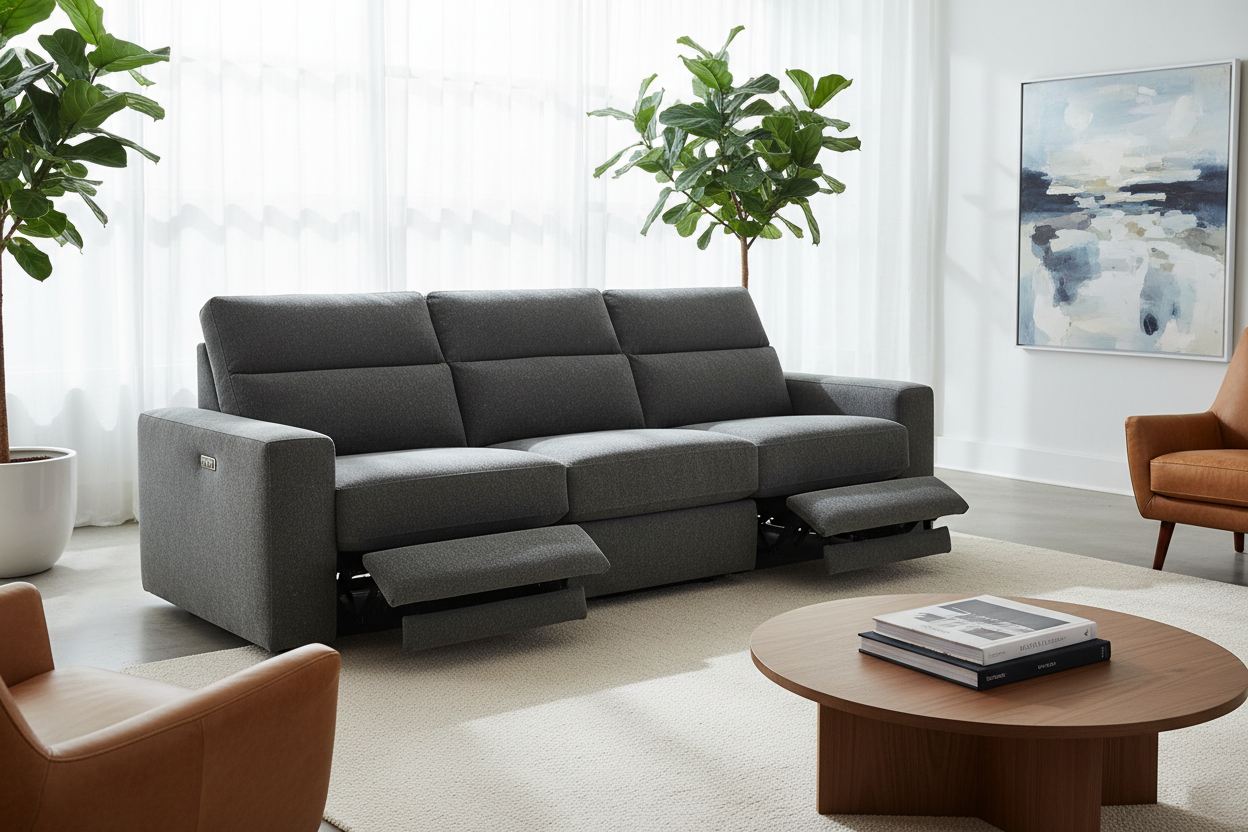
You want the Sunday afternoon nap-ability of a La-Z-Boy, but you also want the sophisticated silhouette of a modern Italian settee. This is the classic tension I see in client consultations almost daily. The stigma of the bulky, overstuffed furniture of the 90s still lingers, causing hesitation. However, modern motion furniture has evolved. So, what is a recliner sofa in the context of contemporary design? Simply put, it is a multi-seat upholstered sofa with an integrated metal mechanism that allows the backrest to tilt and a footrest to extend, offering ergonomic support that a static frame simply cannot match.
Quick Decision Guide: Key Features to Look For
- Mechanism Type: Choose between manual (lever/pull-handle) for longevity or power (button-operated) for infinite positioning and ease of use.
- Wall Clearance: Standard recliners need 8-12 inches behind them. For tighter rooms, specify "wall-hugger" mechanisms that slide forward as they recline.
- Upholstery Grade: Motion furniture causes friction. Opt for high-rub count performance fabrics or top-grain leather to prevent premature wear between cushions.
- Frame Construction: Look for kiln-dried hardwood frames reinforced with metal seat boxes to handle the extra weight of the mechanism.
Recliner Sofa vs. Regular Sofa: The Trade-Offs
The primary difference between a recliner sofa vs regular sofa lies in the structure and the visual weight. A stationary sofa acts as a solid anchor; it allows for sleeker lines, higher legs, and a lighter aesthetic. In contrast, a recliner sofa requires a base that sits closer to the floor to hide the mechanism.
From a functional standpoint, a regular sofa forces you to lie horizontally to elevate your legs—taking up three seats for one person. A sofa couch with recliner functionality allows two or three people to elevate their legs simultaneously without fighting for space. If your primary goal is media viewing or lumbar support, the motion sofa wins every time.
Sectional vs. Reclining Sofa: Analyzing the Layout
When deciding between a sectional vs reclining sofa, consider your room's flow. A sectional (L-shape or U-shape) is fantastic for conversation and defining a zone in an open-concept floor plan. However, the corner seat of a sectional is often a "dead zone" for legroom.
A straight reclining sofa offers more flexibility. Many modern designs function as a couch that reclines on both sides (the left and right seats), leaving the middle seat stationary. This is often a better choice for narrow living rooms where a chaise lounge would block the traffic path.
Materiality and Aesthetics
Fabric Selection for Motion
Because the fabric on a recliner stretches and folds repeatedly, pattern matching is difficult. I almost always advise clients to stick to solids or textured weaves rather than large prints. Leather is the gold standard here because it moves with the mechanism without snagging, developing a rich patina over time.
Visual Balance
Recliners are visually heavy. To counter this, pair them with lighter accent chairs (think spindle legs or open frames) and glass coffee tables. This restores the equilibrium in the room so the space doesn't feel "stuffed."
My Personal Take on what is a recliner sofa
I learned a hard lesson early in my career regarding power recliners in open-concept spaces. I specified a stunning, high-end power reclining sofa to float in the center of a client's great room. It looked perfect on the floor plan.
However, on installation day, we realized the flaw: power recliners need electricity. We ended up with a black power cord snaking across a beautiful wool rug to the nearest wall outlet—a major tripping hazard and an eyesore. We had to rush order a rechargeable battery pack (which sits hidden under the frame) to solve it. Now, I never buy a power recliner without checking outlet placement or ordering a battery pack. Also, be aware that leather on recliners will "puddle" (stretch out) faster on the footrest than the seat. It’s not a defect; it’s a characteristic of natural hide, but it drives perfectionist clients crazy.
Frequently Asked Questions
How much space do I need behind a recliner sofa?
Standard models require about 8 to 12 inches of clearance from the wall to fully recline. However, "zero-wall" or "wall-hugger" designs are available that require as little as 2 to 4 inches, making them ideal for smaller apartments.
Are power recliners prone to breaking?
Modern motors are quite durable, often outlasting the fabric. The most common point of failure is actually the switch or the power transformer, both of which are easily replaceable parts. Manual levers have fewer parts but endure more physical stress from yanking.
Can I put a coffee table in front of a recliner sofa?
Yes, but you must be strategic. You need enough clearance for the footrest to extend fully without hitting the table. I recommend a distance of at least 18 to 24 inches between the sofa edge and the coffee table, or using nesting side tables instead.

Leave a comment
This site is protected by hCaptcha and the hCaptcha Privacy Policy and Terms of Service apply.