










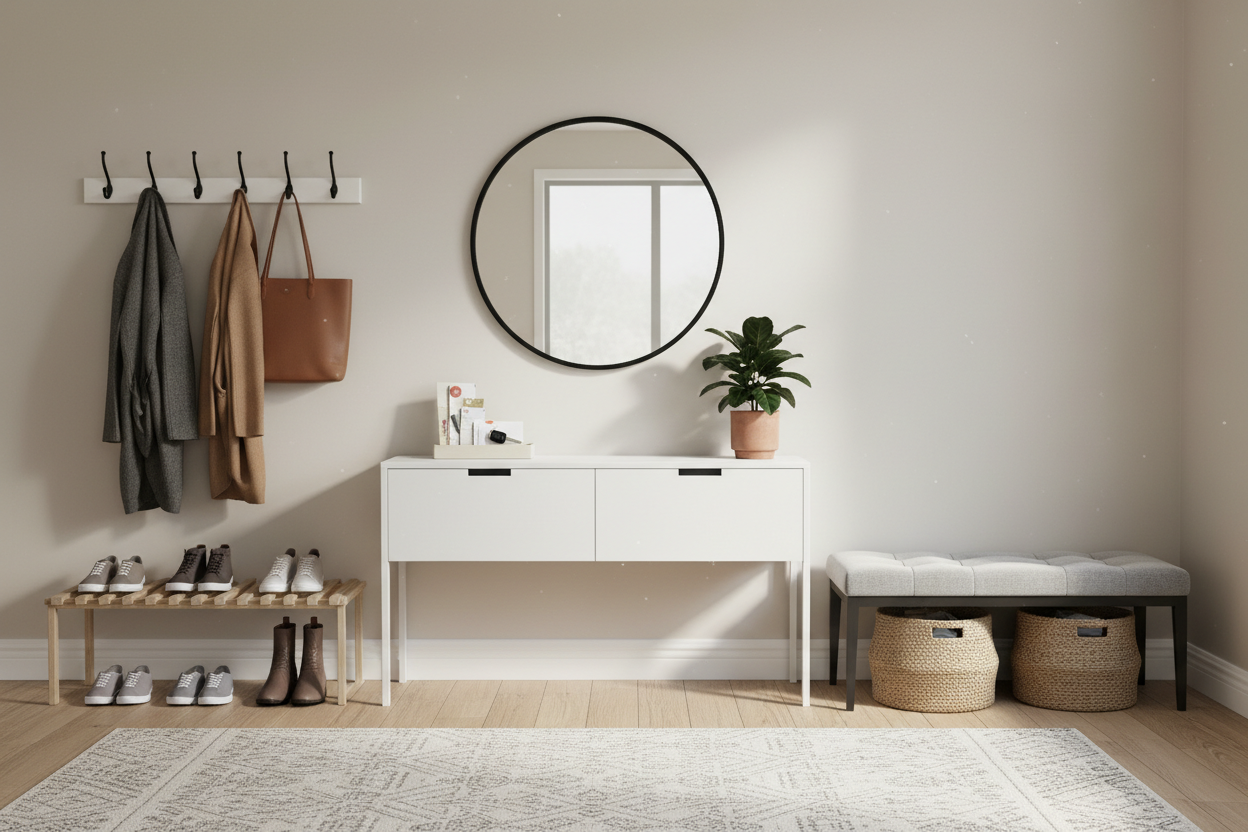
Coming home should feel like a relief, not an obstacle course. Yet, for many of us, the first few steps into the house involve dodging a scattering of sneakers, stepping over backpacks, and frantically searching for a clear surface to drop the mail. If you are struggling with this daily chaos, the solution lies in establishing dedicated zones within your available footprint. Effective front hallway storage isn't just about buying bins; it is about creating a logical flow where every item—from keys to heavy winter coats—has a specific, accessible home immediately upon entry.
I learned this lesson the hard way in my first apartment. The hallway was barely three feet wide, essentially a long, dark tunnel. For months, I tried to force a standard coat rack into the corner, which only resulted in the rack toppling over every time I grabbed a jacket. It wasn't until I abandoned floor-standing furniture entirely and switched to wall-mounted systems that the space became functional. I installed a row of heavy-duty hooks at varying heights and a floating shelf for keys. Suddenly, the floor was clear, the door opened fully, and the stress of walking through the door vanished. That experience taught me that in narrow spaces, you have to think vertically, not horizontally.
Assessing Your "Drop Zone" Needs
Before buying a single basket or bench, stop and look at what actually piles up. Most hallway entrance storage fails because it doesn't match the inhabitants' habits. If you naturally kick off your shoes the moment you step inside, a shoe rack in the bedroom closet is useless. If you carry a laptop bag daily, you need a sturdy hook or a bench surface, not a delicate console table.
Take inventory of the items currently cluttering your floor. You will likely find a mix of "active" items (things used daily) and "passive" items (off-season gear or stuff belonging elsewhere). Your goal is to design storage strictly for the active items. Everything else needs to move to a closet or a different room. This editing process is free and often frees up more space than a new piece of furniture would.
Conquering the Shoe Pile
Footwear is the primary antagonist in the battle for a clean hall. In a narrow corridor, a standard deep shoe rack can block traffic. Tip-out shoe cabinets are a game-changer here. These units are remarkably slim—often less than 10 inches deep—and hide shoes behind a sleek door rather than leaving them on display. They keep the visual noise down, which makes the hallway feel wider.
If you have a bit more width to work with, a bench with storage underneath offers a dual function. It provides a place to sit while putting on shoes, which is particularly helpful for households with children or elderly family members. Look for benches with open cubbies for frequently worn pairs and perhaps a closed cabinet for less attractive boots. Raising furniture off the floor on legs, rather than having it sit flush with the ground, also creates an illusion of more space by allowing light to travel underneath.
Maximizing Vertical Real Estate
When the floor plan is tight, the walls are your best asset. High-mounted shelves can hold baskets for scarves, gloves, and hats—items you don't need to reach every single day. Below that, a robust system of hooks is essential. Don't be stingy with hooks. Install more than you think you need. If you have guests, they will need a place to hang their coats, and an empty hook is far more inviting than tossing a jacket on the sofa.
For families, consider installing a second row of hooks at a lower height. This empowers children to hang up their own backpacks and jackets. It fosters independence and saves you from picking their gear up off the floor. This tiered approach utilizes the full height of the wall and triples your storage capacity without encroaching on the walkway.
The Console Table: Form Meets Function
If your front hallway storage plans allow for a table, choose one with drawers. A flat surface collects clutter like a magnet. Without drawers, a console table quickly becomes a graveyard for unassigned mail, loose change, and receipts. Drawers hide these small, messy items while keeping them accessible.
Place a small tray or bowl on the surface specifically for keys and wallets. This sets a visual boundary. When the bowl is full, it's time to clean it out. This prevents the clutter from spreading across the entire table. A mirror hung above the console not only allows for a last-minute appearance check but also reflects light, making a cramped hallway feel airier and more open.
Handling Paper and Mail
Paper clutter is insidious. It enters the house and migrates to the kitchen counter, the dining table, or gets lost under a coat. Integrating a mail sorting system into your hallway entrance storage setup stops this migration. A simple wall-mounted file holder or a dedicated slot in a console table drawer works wonders.
Make a rule to sort mail immediately. Recycling goes in the bin (keep a small wastebasket nearby if possible), bills go to the office, and personal mail goes into the slot. By dealing with paper the moment it crosses the threshold, you prevent piles from forming deeper inside the home.
Lighting and Aesthetics
Storage doesn't have to be purely utilitarian. A dark hallway feels smaller and more cluttered than a well-lit one. If you lack natural light, ensure your overhead lighting is bright and warm. You might add a small table lamp to a console or battery-operated sconces flanking a mirror. When the space looks good, you are psychologically more inclined to keep it tidy.
Rug choice matters here too. A durable runner rug draws the eye down the hall, creating a sense of length. It also protects your floors from the grit and moisture brought in from outside. Choose a pattern that hides dirt well and material that is easy to clean, such as wool or a washable synthetic blend.
Frequently Asked Questions
What if my front door opens directly into the living room with no defined hallway?
You can create a "faux" entryway by placing a piece of furniture, like a bookshelf or a sofa back, perpendicular to the wall to define the space. Alternatively, use a distinct rug and a wall-mounted hook system behind the door to establish a visual drop zone zone without needing physical walls.
How do I prevent the storage bench from becoming a dumping ground?
The key is to ensure the bench isn't the only surface available. If you provide specific hooks for bags and a bowl for keys, the bench is more likely to remain clear for sitting. Regular weekly resets, where you clear everything off and put it away, are also necessary to maintain the habit.
Can I use hallway storage for non-outdoor items?
Absolutely. If you are short on linen closets, a tall, closed cabinet in a wide hallway can serve as excellent overflow storage for towels, cleaning supplies, or pantry items. Just ensure the cabinet is shallow enough to not obstruct the walkway and has doors to keep the visual clutter hidden.


Leave a comment
This site is protected by hCaptcha and the hCaptcha Privacy Policy and Terms of Service apply.