










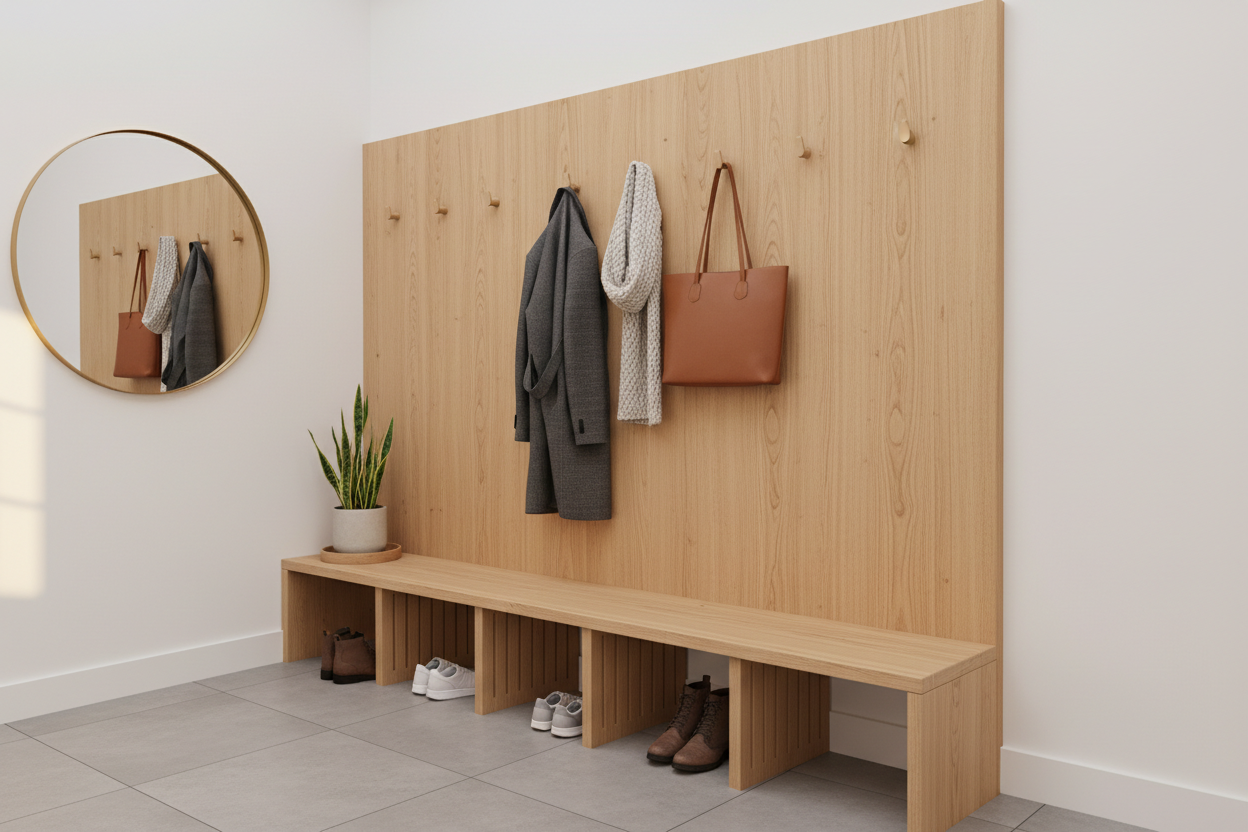
Walking through your front door should feel like a relief, a shedding of the day's stress. Instead, for many of us, it feels like navigating an obstacle course. You trip over a stray sneaker, toss your keys onto a cluttered table, and struggle to find a place for your coat that isn't the back of a dining chair. If this chaotic scene sounds familiar, your home is likely missing one crucial piece of furniture: a dedicated landing strip, specifically an entryway bench and hooks combination.
This isn't just about tidiness; it is about creating a functional transition space. The entryway sets the tone for the rest of the house. When you have a designated spot to sit down, take off your shoes, and hang up your jacket, you are physically and mentally shifting gears from "outside mode" to "home mode." Let's explore how to transform that messy foyer into an organized sanctuary.
My Battle with the "Shoe Mountain"
I learned the value of vertical storage the hard way. In my first home, the front door opened directly into the living room. There was no closet, no foyer, just a patch of hardwood floor that quickly became a graveyard for muddy boots and heavy winter coats. I tried using a standard shoe rack, but it didn't solve the coat problem. I tried a coat rack, but it eventually tipped over under the weight of wet wool.
The turning point came when I finally invested in a solid entryway bench with hooks. Suddenly, the vertical space that had been useless became the most hardworking square footage in the house. I could sit to tie my laces without hopping on one foot, and the visual clutter vanished because everything had a specific "home." That experience taught me that furniture needs to multi-task just as much as we do.
Understanding the Hall Tree Concept
When designers talk about this furniture category, they often refer to it as a "hall tree." This is essentially an all-in-one unit that provides a seating area, storage underneath (cubbies or a flip-top lid), and a back panel featuring hanging hardware. This unified design is often safer and more stable than separate pieces, especially in high-traffic zones.
The beauty of a hall tree lies in its footprint. It utilizes vertical height rather than floor width. For narrow hallways where a bulky cabinet wouldn't fit, a slender bench with hooks draws the eye upward and keeps the floor clear. It creates the illusion of a mudroom even if you don't actually have a dedicated room for mud.
Choosing the Right Materials for Durability
Entryway furniture takes a beating. It faces wet umbrellas, grit from hiking boots, and heavy backpacks being tossed onto it daily. Therefore, the material you choose matters significantly more here than it does for a nightstand or a bookshelf.
Solid wood is the gold standard for longevity, but it comes with a higher price tag and weight. If you move frequently, a heavy oak unit might be a nightmare to transport. Metal frames combined with wood accents offer a nice industrial look and are generally lighter, though you must ensure the metal is powder-coated to resist rust from wet raincoats.
Engineered wood (MDF or particleboard) is the most common material for budget-friendly options. While affordable, these materials swell if they get wet. If you choose engineered wood, look for units with a laminate finish that seals the edges, or plan to use a plastic tray inside the shoe cubbies to catch water drips.
Sizing and Placement Strategy
Before you fall in love with a specific design, get your tape measure out. The depth of the unit is usually the biggest constraint. Standard hallway width is often around 36 to 42 inches. If your bench is 18 inches deep, you might make the passage feel claustrophobic. Look for "slim" or "shallow" profiles that are around 12 to 15 inches deep if you are working with a tight corridor.
Height is equally important. If the unit is too tall, it might overwhelm a room with standard 8-foot ceilings. Conversely, if the hooks are placed too low, long trench coats or dresses will pool on the bench, rendering the seating area unusable. A functional entryway bench and hooks setup should have the hardware mounted at least 48 to 60 inches from the floor to accommodate adult-sized outerwear.
The Weight Capacity Factor
Never assume a bench is sturdy enough to sit on just because it looks like a seat. Many decorative units are designed solely for holding bags or displaying decor. Check the manufacturer's specifications for the static load capacity. A bench meant for daily shoe-tying needs to support at least 200-250 pounds to be safe for adults. If the unit uses hollow metal tubes, check the weld points; these are often the first places to fail under repeated stress.
Styling Your Entryway Storage
Once you have the structure in place, the fun part begins. A bare bench with hooks can look a bit like a gym locker room if you aren't careful. You need to soften the hard lines to make it welcoming.
Start with the overhead storage. If your unit has a shelf above the hooks, use woven baskets to hide seasonal items like gloves, beanies, or scarves. This adds texture and hides the clutter. For the bench itself, add a durable outdoor-fabric cushion or a couple of throw pillows. These introduce color and make the spot inviting, though you should avoid precious fabrics like velvet that won't survive a wet raincoat dripping on them.
Don't forget the hooks themselves. If the unit comes with cheap, flimsy hardware, swap them out. Replacing standard hooks with vintage brass, matte black, or ceramic knobs is an inexpensive upgrade that makes a mass-produced piece of furniture look custom and high-end.
Safety and Installation
There is one non-negotiable step in setting up this type of furniture: wall anchoring. Because these units are tall and shallow, they are prone to tipping forward, especially when loaded with heavy coats on the front hooks. If you have children who might be tempted to climb on the bench to reach a hat, the tipping risk increases exponentially.
Most reputable furniture comes with an anti-tip kit. Install it. If you are building a DIY solution where you mount a shelf and hooks on the wall above a separate bench, ensure you are drilling into studs. Drywall anchors are rarely sufficient to hold the dynamic weight of backpacks and heavy winter gear being pulled on and off daily.
Making the Final Decision
Your entryway is the handshake of your home. It greets you and your guests before anything else. By consolidating your storage into a single, cohesive unit, you reclaim your floor space and your sanity. Whether you choose a rustic farmhouse hall tree or a sleek, modern metal frame, the goal remains the same: a place for everything, and everything in its place. Stop tripping over shoes and start enjoying the feeling of coming home.
Frequently Asked Questions
How high should the hooks be above the bench?
Ideally, hooks should be positioned about 40 to 48 inches above the seat of the bench. This provides enough clearance for most jackets and bags to hang freely without bunching up on the seat, while still allowing you to sit down comfortably underneath them.
Can I use a hall tree in a narrow apartment hallway?
Yes, but you must prioritize depth. Look for units specifically labeled as "slim" or "space-saving," which often have a depth of 12 to 14 inches. Alternatively, you can achieve the same function by mounting wall hooks and placing a very narrow bench underneath, which reduces visual bulk.
Is it better to buy a one-piece unit or separate bench and hooks?
A one-piece unit (hall tree) is generally easier to set up and requires less wall drilling, making it great for renters. However, separate pieces allow for more customization; you can mount the hooks at the exact height you need and choose a bench width that perfectly fits your specific wall space.


Leave a comment
This site is protected by hCaptcha and the hCaptcha Privacy Policy and Terms of Service apply.