










For years, the conversation surrounding the home office was an afterthought—a makeshift desk in a guest room or a laptop on the dining table. However, as a designer who specializes in residential workspaces, I have witnessed a massive shift. We are no longer just talking about convenience; we are analyzing the financial benefits of working from home and how those surplus funds can be strategically reinvested into your property.
When you eliminate the daily commute, the dry cleaning bills, and the overpriced city lunches, you aren't just saving pennies; you are unlocking a significant budget that can elevate your living standards. The question is not just about saving money; it is about where that capital should go to create a space that offers returns in productivity, comfort, and property value.
Quick Decision Guide: Reallocating Your Savings
Before you purchase new furniture, understand where your recovered budget makes the most impact. Here is a breakdown of high-ROI design elements:
- Ergonomic Seating: Prioritize chairs with high Martindale rub counts and adjustable lumbar support over aesthetic-only accent chairs.
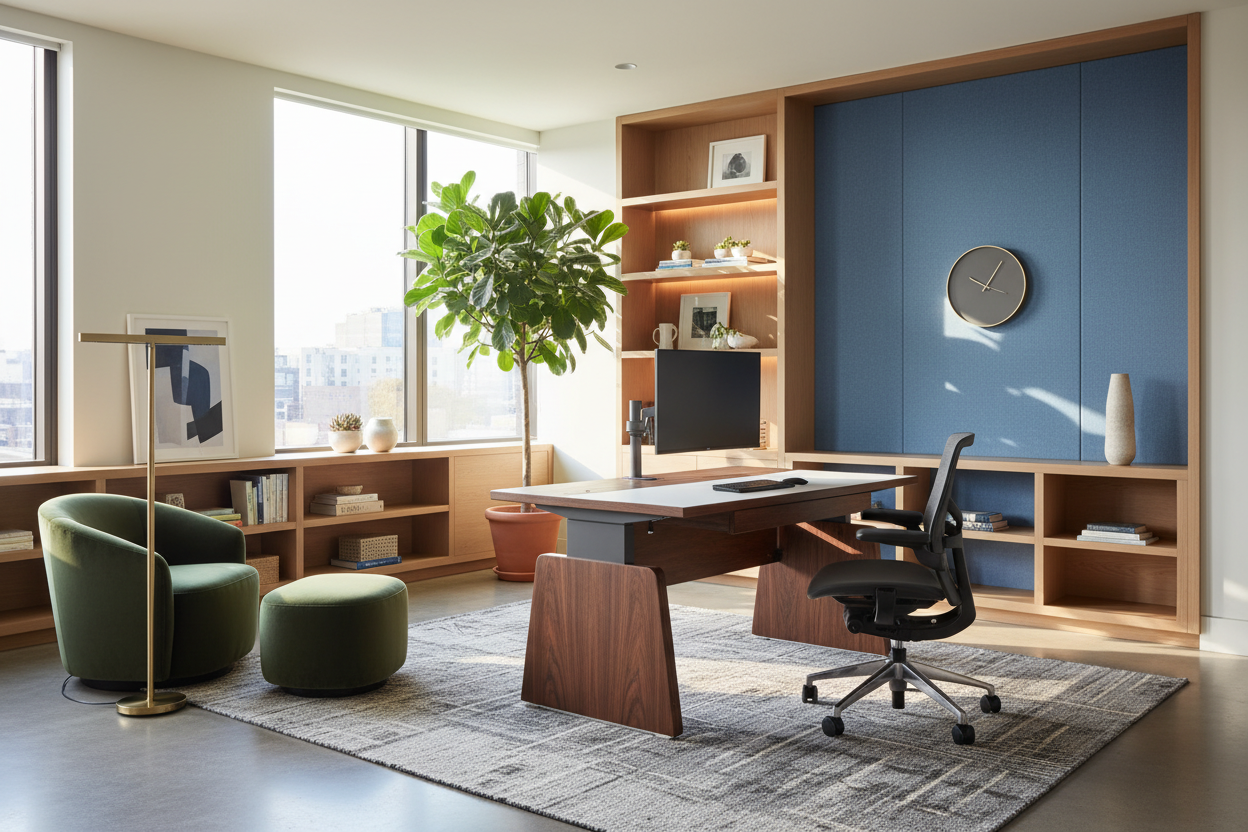
- Solid Wood Surfaces: Invest in solid walnut or oak desks rather than veneer; they can be refinished and last decades.
- Layered Lighting: Move budget from overhead cans to task lighting with high CRI (Color Rendering Index) to reduce eye strain.
- Acoustic Treatments: Use savings to install acoustic panels or heavy drapery to dampen echo and improve focus.
From Commuter Costs to Ergonomic Assets
Think of your office chair as the primary tool of your trade. The average professional spends roughly 2,000 hours a year sitting. If home-based work can save you the cost of fuel and vehicle maintenance, that liquidity should flow directly into ergonomics.
Choosing the Right Mechanism
Cheap task chairs often utilize a simple tilt mechanism. However, when you reinvest your savings into a tier-one chair, look for a synchro-tilt mechanism. This allows the backrest and seat pan to move in a specific ratio (usually 2:1), keeping your feet flat on the floor while you recline. This reduces pressure on the underside of your thighs—a common cause of circulation issues.
Materiality: Veneer vs. Solid Wood Investments
One of the most common mistakes I see is clients buying flat-pack furniture that deteriorates within two years. When you calculate the annual savings of working remotely, you often find you have the budget for heirloom-quality pieces.
The Durability Factor
A solid wood desk, such as white oak or walnut, offers tactile warmth that laminate cannot replicate. More importantly, solid wood can be sanded and refinished if scratched. Veneer, once chipped, exposes the particleboard underneath and ruins the aesthetic. From a design perspective, a solid wood desk anchors the room, serving as a focal point that adds visual weight and sophistication to the space.
Lighting as a Mood Regulator
Corporate offices are notorious for harsh, cool-toned fluorescent lighting (often 4000K-5000K). At home, you have the luxury of control. Use your budget to layer your lighting. Start with ambient light (general illumination), add task light (focused on the desk), and finish with accent light (highlighting art or shelves).
Aim for bulbs with a temperature of 2700K to 3000K for a warmer, residential feel that reduces anxiety. High-end task lamps often feature dimming capabilities and adjustable arms, allowing you to direct light exactly where needed without creating glare on your monitor.
My Personal Take on the Financial Benefits of Working From Home
I want to be transparent about my own journey. When I transitioned my design studio to a home-based model, I tracked my expenses meticulously. I realized I was saving roughly $350 a month on gas, parking, and coffee runs. Instead of letting that money disappear into general household expenses, I bought a vintage leather Eames Soft Pad chair.
Here is the unpolished truth that product descriptions won't tell you: high-end leather requires a break-in period. For the first three weeks, the chair felt stiff, and I almost regretted the purchase. But by month two, the leather had warmed to my body temperature and molded to my posture. Furthermore, the aluminum frame has a specific coolness to the touch that feels reassuringly solid. It wasn't just a purchase; it was a reallocation of funds from "getting to work" to "being at work." That chair has now lasted me seven years, far outliving the cheap mesh alternatives I used to buy annually.
Conclusion
The shift to remote work is more than a logistical change; it is a financial opportunity to curate a space that serves you. By recognizing that home-based work can save significant capital, you can justify investing in pieces that offer superior ergonomics, timeless aesthetics, and lasting durability. Don't just save the money—build a better environment with it.
Frequently Asked Questions
How much should I budget for a high-quality home office desk?
If you are looking for solid wood with quality joinery, expect to invest between $1,200 and $2,500. While this seems high, remember that this replaces the recurring costs of commuting and is a piece of furniture that can last a lifetime.
Does expensive office furniture actually improve productivity?
Yes, specifically regarding ergonomics. A chair that supports your lumbar spine and a desk at the correct height reduce physical fatigue, allowing you to maintain focus for longer periods without discomfort.
What is the first thing I should upgrade with my savings?
Always start with the chair. It is the only piece of furniture that physically interacts with your body for eight hours a day. Visual upgrades like desks and lighting should come second to physical support.


Leave a comment
This site is protected by hCaptcha and the hCaptcha Privacy Policy and Terms of Service apply.