










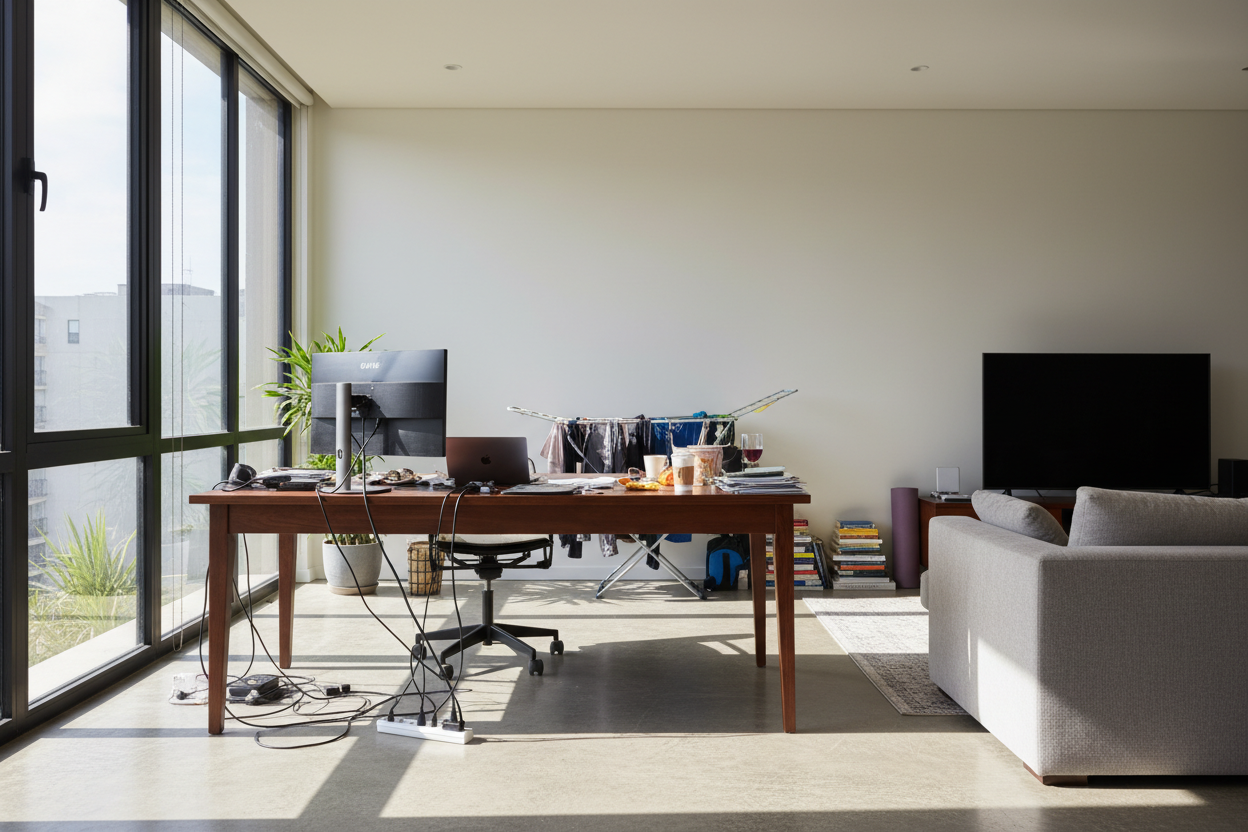
We often blame our discipline or our schedules when we feel burnt out, but as an interior designer, I see a different culprit: the environment. The blurring of lines between where we rest and where we produce is one of the most significant challenges of working from home. When your dining table becomes your desk, or your sofa becomes a conference room, the lack of spatial psychology impacts your focus. This article explores how intentional furniture selection and layout planning can resolve the physical and mental struggles of remote work.
Quick Decision Guide: Solving WFH Design Dilemmas
- Ergonomic Integrity: Prioritize chairs with synchro-tilt mechanisms and lumbar adjustability over purely aesthetic silhouettes to prevent physical fatigue.
- Zoning Capability: Use area rugs or open shelving units to create visual boundaries that separate "living" from "working."
- Material Durability: For high-use surfaces, opt for high-pressure laminates or sealed hardwoods that resist heat from laptops and coffee rings.
- Lighting Layers: Combat eye strain by balancing ambient overhead light with focused, adjustable task lighting (2700K-3000K temperature).
- Acoustic Control: Incorporate soft textures like upholstered panels or heavy drapery to dampen echo and reduce audio distractions.
The Ergonomic Equation: Comfort vs. Style
One of the primary issues with work from home setups is the sacrifice of function for form. Clients often want a chair that looks beautiful in a living room corner but fails to support them during an eight-hour shift. The solution lies in finding the intersection of engineering and design.
When selecting seating, look beyond the upholstery. You need a 5-star base for stability and high-density molded foam rather than cut foam. Cut foam breaks down within months, leading to the sensation of sitting on the frame—a common problem work from home employees face. If you prefer a softer aesthetic, look for performance velvets or boucle fabrics that wrap around commercial-grade ergonomic frames.
Zoning: Creating Mental Boundaries
Work from home concerns often center on the inability to "switch off." In an open-plan home, this is a layout issue. We need to create a "commute" within the room. If you don't have a dedicated office, position your desk so your back is to the living area, or use a console table behind the desk to anchor it.
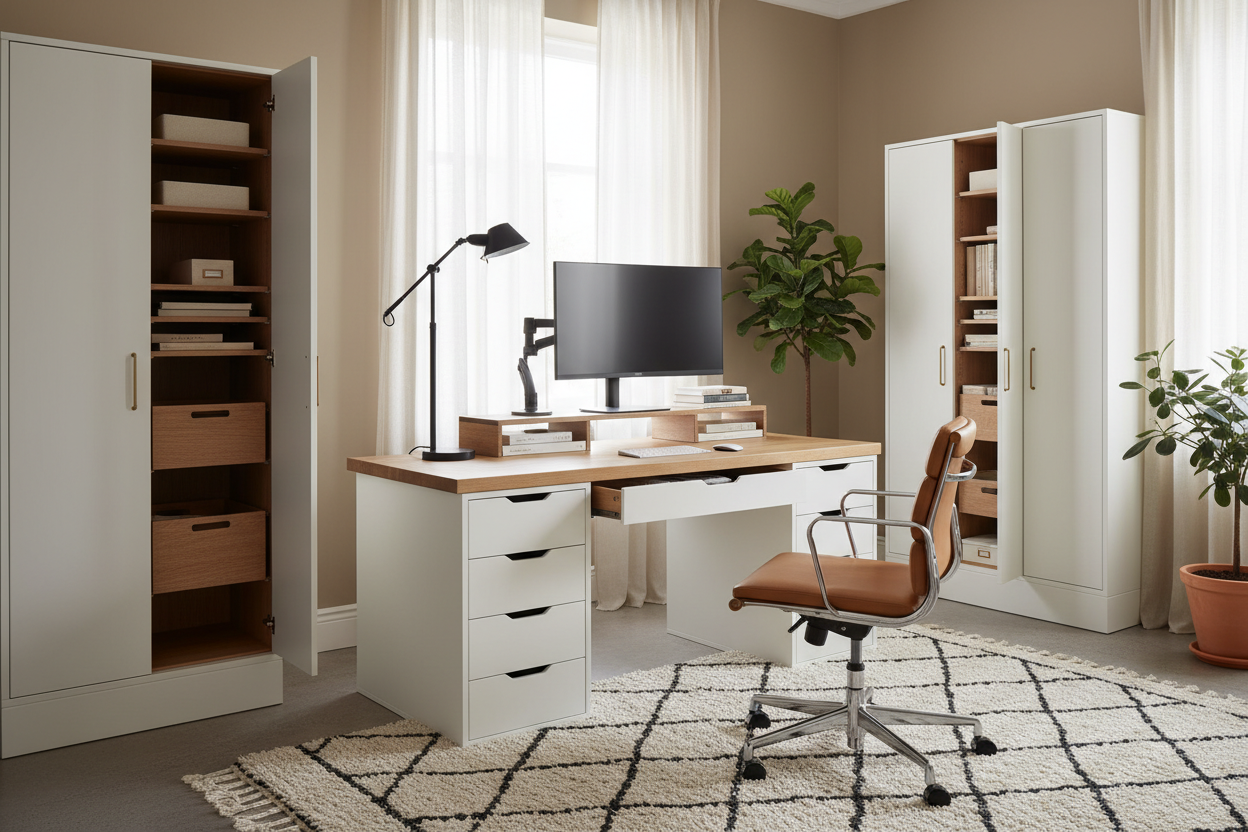
This spatial separation mitigates work from home struggles by signaling to your brain that when you are in this specific zone, you are in professional mode. Using a distinct area rug under the desk also helps visually contain the workspace, preventing the "office creep" where papers and tech sprawl across the entire home.
Lighting and Visual Balance
Many remote work challenges and solutions boil down to sensory input. Poor lighting causes lethargy and headaches. Relying solely on a ceiling fixture creates harsh shadows on your workspace. Instead, layer your lighting. Start with ambient light, add a task lamp with an articulating arm for precision, and consider accent lighting (like an LED strip behind a monitor) to reduce contrast glare.
Managing Visual Noise
Clutter is a major work from home challenge. Visual noise creates mental noise. I recommend closed storage—credenzas or filing cabinets with solid doors—over open shelving for office supplies. This allows you to hide the chaos of cables and paperwork at the end of the day, restoring the room's function as a sanctuary.
My Personal Take on Challenges of Working From Home
I learned about wfh challenges the hard way during a project renovation in my own apartment. I fell in love with a vintage mid-century modern teak desk. It was visually stunning—a true sculptural piece. However, I ignored the fact that the apron (the drawer section under the top) was unusually deep.
After two weeks of working at it, my knees were constantly bruising against the bottom of the drawer, and because the desk surface was 30 inches high (standard is closer to 29), I had to hike my chair up. This left my feet dangling slightly, cutting off circulation. It was a beautiful disaster. I realized that no amount of aesthetic appreciation could outweigh the physical distraction. I had to swap it for a height-adjustable desk with a beveled edge. It taught me that in a workspace, the furniture must serve the body first, and the eye second.
Conclusion
Addressing the work from home issues inherent in our modern lives requires more than just willpower; it requires a supportive environment. By investing in ergonomic furniture, establishing clear zones, and controlling your lighting, you transform your home from a place of distraction into a space of focus. Curate your workspace with the same care you give your living room, and the productivity will follow.
Frequently Asked Questions
How can I fit a workspace in a small apartment without it taking over?
Look for "cloffice" solutions or wall-mounted secretary desks. These allow you to fold the work surface up and close the doors when the workday is done, effectively hiding the visual reminder of your job.
Is a standing desk worth the investment for home use?
Yes, specifically for breaking sedentary patterns. However, ensure you choose one with a dual-motor system for stability. Wobbling monitors are a subtle but significant irritant that contributes to problems with working at home.
What is the best fabric for a home office chair?
Mesh is superior for breathability, especially in warmer climates. However, for a more residential feel that blends with decor, a high-rub-count wool blend offers durability and temperature regulation without looking like corporate furniture.


Leave a comment
This site is protected by hCaptcha and the hCaptcha Privacy Policy and Terms of Service apply.