










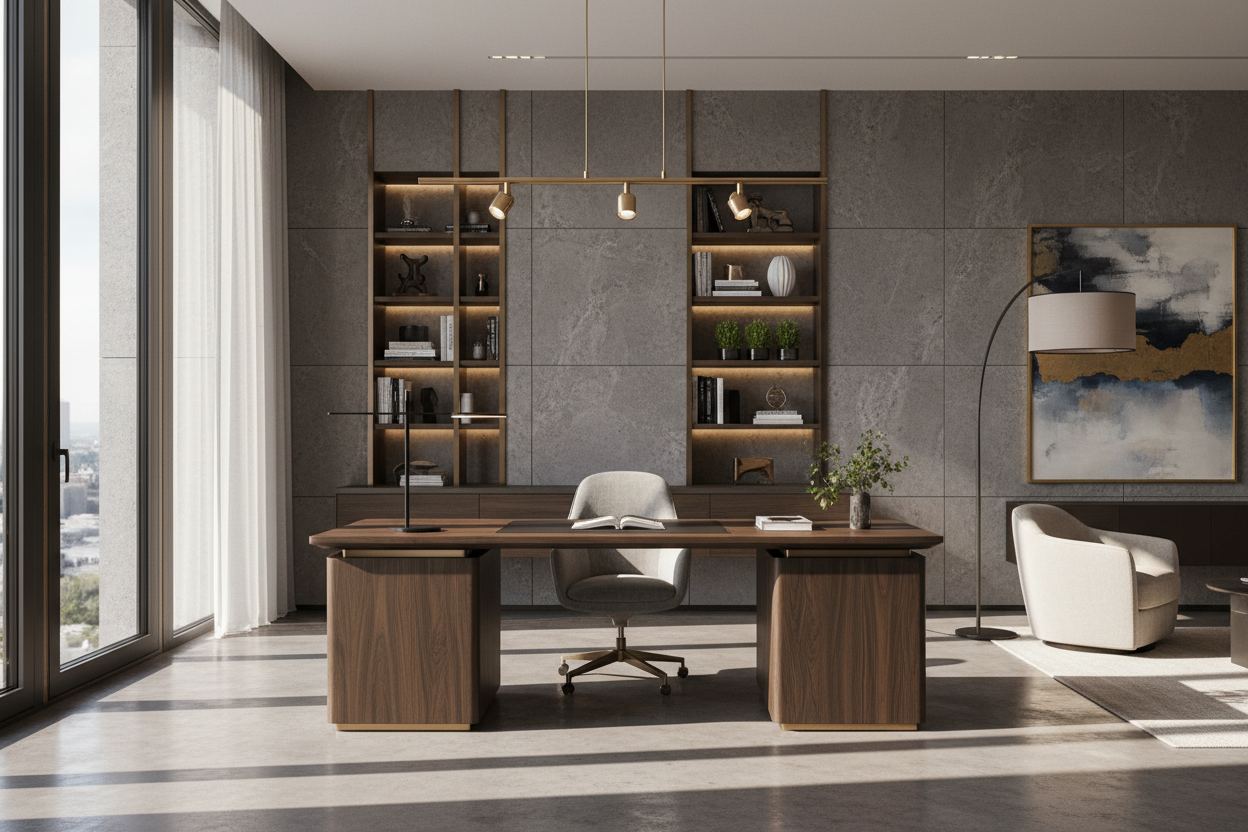
There is nothing quite as draining as trying to focus in a room relying solely on a single, harsh overhead fixture. It flattens the room’s depth and creates aggressive shadows that strain the eyes by midday. Proper illumination is the unsung hero of interior design; it dictates the mood, functionality, and perceived size of your workspace. In this guide, we will explore sophisticated desk lighting ideas that balance high-performance ergonomics with the curated aesthetic of a high-end study.
Key Features to Look For
- Adjustability: Look for articulating arms or pivoting heads to direct light exactly where your hands are working.
- Color Temperature: Aim for 2700K to 3000K for residential comfort, or 4000K for intense focus tasks.
- Footprint: Ensure the base size corresponds to your desk surface area to maintain usable workspace.
- Dimming Capabilities: Essential for transitioning from deep work modes to evening ambiance.
- Glare Control: Select fixtures with diffusers or deep shades to prevent direct eye contact with the bulb.
The Art of Layering Light
In luxury design, we never rely on a single source. To truly elevate your office desk lighting ideas, you must think in layers. Start with ambient lighting to wash the room generally, but let your desk lamp serve as the specific 'task' layer. Finally, consider accent lighting—perhaps an LED strip behind a monitor or inside shelving—to add depth and reduce the contrast ratio between your bright screen and the dark wall behind it. This technique, known as bias lighting, significantly reduces eye fatigue.
Materiality and Silhouette
When selecting a fixture, treat it as a piece of sculpture. For a masculine, mid-century modern aesthetic, matte black metal paired with walnut accents offers a timeless appeal. If your space leans towards 'quiet luxury,' consider unlacquered brass or a ceramic base with a linen shade. However, be mindful of visual weight. A heavy, solid stone lamp might ground a large executive desk, but it will overwhelm a delicate writing bureau. Always ensure the scale of the lamp complements the mass of the furniture.
Ergonomics: Positioning for Performance
Avoiding the Shadow Trap
The placement of your light is just as critical as the design itself. If you are right-handed, place the lamp on your left side. This prevents your hand from casting a shadow across the page while you write or sketch. Conversely, left-handed users should position the fixture on the right. This simple adjustment instantly improves functionality.
Managing Surface Reflection
Pay close attention to your desk's finish. A high-gloss lacquer or glass top acts like a mirror. If you place a lamp with an exposed bulb or a shallow shade over these surfaces, you will battle constant glare. For glossy desks, opt for a lamp with a diffuser or a strictly directional head that angles light away from the user’s line of sight.
Lessons from My Own Projects
I learned the hard way about 'Color Rendering Index' (CRI) during a project for a graphic designer. I had specified a stunning, vintage Italian architectural lamp for her drafting table. Aesthetically, it was a masterpiece. However, I fitted it with a standard generic LED bulb.
Two days later, she called me in a panic because her fabric swatches looked muddy and green-tinted under the light. I realized the bulb had a low CRI (around 70). We swapped it for a high-CRI bulb (90+), and suddenly the true vibrancy of her reds and blues returned. It taught me that the fixture is the body, but the bulb is the soul. Never skimp on the quality of the actual light source, especially if your work involves color.
Conclusion
Upgrading your lighting is one of the highest-ROI changes you can make to a home office. By selecting a fixture that offers both architectural beauty and ergonomic support, you turn a mundane workspace into a place of inspiration. Don't settle for shadows; curate your glow.
Frequently Asked Questions
What is the best color temperature for a home office?
For most home offices, 3000K (Soft White) is the sweet spot. It is crisp enough to keep you alert but warm enough to feel residential and inviting. If you do precision work like drafting, bump it up to 4000K (Cool White).
How tall should a desk lamp be?
Ideally, the light source should be positioned above your head level when seated but below your eye level to avoid glare. A lamp that stands 15 to 20 inches tall usually fits this ergonomic window perfectly.
Can I use a floor lamp instead of a desk lamp?
Absolutely. If desk real estate is limited, an arc floor lamp or a dedicated task floor lamp positioned close to the side of the desk is a fantastic space-saving solution that still provides directional light.

Leave a comment
This site is protected by hCaptcha and the hCaptcha Privacy Policy and Terms of Service apply.