










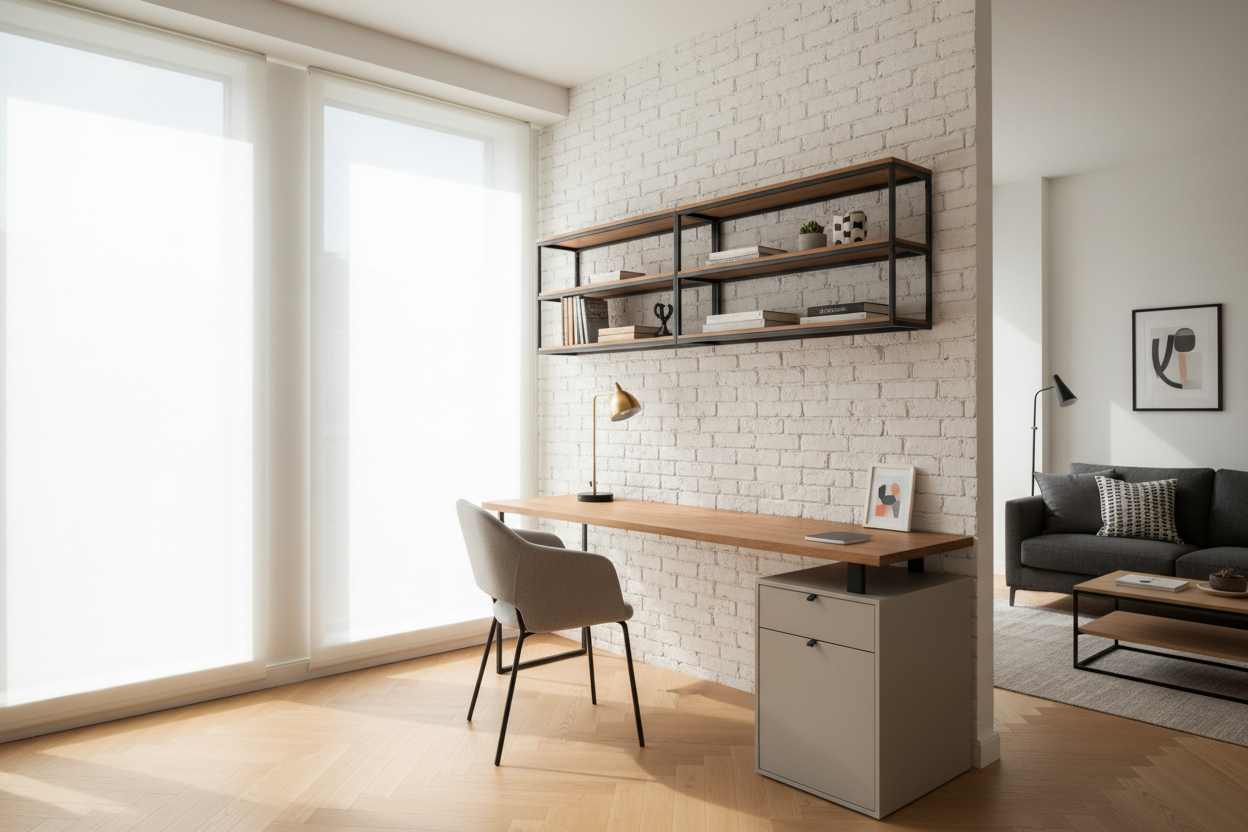
We have all faced the dilemma: you need a dedicated workspace, but your floor plan refuses to cooperate. The challenge isn't just finding a desk that fits; it is carving out a zone that feels professional, productive, and distinct from your relaxation areas. Designing effective micro offices requires a surgical approach to space planning, where every square inch must justify its existence through function or aesthetic value. It is about creating a distinct architectural moment within a larger room.
Key Features for Functional Micro Layouts
- Vertical Utilization: Prioritize floor-to-ceiling shelving or wall-mounted hutches to minimize the footprint.
- Visual Weight: Opt for legs with open silhouettes or floating desks to keep the room feeling expansive.
- Ergonomic Scale: Ensure chair width and depth allow for movement without striking surrounding furniture.
- Integrated Lighting: Look for joinery with built-in LED channels to avoid bulky desk lamps.
- Material Continuity: Select finishes that harmonize with the adjacent living space to reduce visual clutter.
Space Planning and Visual Flow
When integrating a workspace into a living area or bedroom, the primary goal is to maintain the room's visual equilibrium. A heavy, dark oak executive desk will dominate a small room, making it feel claustrophobic. Instead, look for a micro office space that utilizes negative space. Floating desks are particularly effective here; by keeping the floor visible beneath the work surface, you trick the eye into perceiving the room as larger than it is.
Consider the "traffic patterns" of your home. A micro office should never impede the natural flow of movement. If you are converting a closet or an alcove, ensure that the chair, when pulled out, does not block a hallway or door swing. We call this the "active footprint" of the office, which is always larger than the furniture itself.
Selecting Materials: Durability vs. Aesthetics
In compact spaces, you are often in closer proximity to your furniture, meaning textures and finishes are more noticeable. While high-pressure laminates are durable, they often lack the warmth and tactile quality of natural materials.
Wood Veneers vs. Solid Wood
For a luxury micro office, I often recommend high-quality wood veneers over solid wood for shelving. Veneers offer stability against warping—crucial for shelves holding heavy books—while providing that rich, organic grain pattern. However, for the desktop itself, solid hardwood is superior. It can be refinished if scratched and withstands the daily abrasion of laptops and writing instruments better than a thin veneer.
Lighting and Ambiance
Lighting defines the mood. In a micro setting, you rarely have space for a statement task lamp. Instead, focus on ambient and task layering. If you are building into cabinetry, specify routed LED channels with a diffuser. Aim for a color temperature of 3000K to 3500K; this provides a clean, neutral white light that is conducive to focus but warm enough not to feel clinical against your home's softer evening lighting.
My Personal Take on Micro Offices
I learned the hard way that "compact" furniture dimensions on a spec sheet can be deceiving. A few years ago, I designed a custom micro office nook for a client in a pre-war apartment. We selected a stunning, velvet-upholstered mid-century chair to act as the focal point. It looked incredible on the mood board.
However, once installed, I realized I hadn't accounted for the armrest height relative to the desk apron (the drawer structure underneath). The chair couldn't tuck fully under the desk. This meant the chair stuck out about 12 inches into the room permanently, disrupting the walkway. Furthermore, within three months, the velvet on the armrests was worn down from constantly rubbing against the desk edge. Now, I always measure the "clearance height" of the desk drawer and compare it strictly against the chair's arm height. In micro spaces, that 2-inch discrepancy is the difference between a sleek look and a cluttered obstacle.
Conclusion
Creating a functional workspace in a small footprint doesn't mean compromising on sophistication. By prioritizing vertical storage, understanding the visual weight of your furniture, and selecting materials that age gracefully, you can curate a space that invites productivity. Treat your micro office not as a compromise, but as a jewel-box feature of your home design.
Frequently Asked Questions
What is the minimum depth for a functional micro desk?
For a laptop setup, you can get away with a depth of 18 to 20 inches. However, if you use an external monitor, aim for at least 24 inches to maintain proper focal distance and prevent eye strain.
How do I manage cables in a floating micro office?
Cable management is critical in open designs. Use hollow-leg desks where cables run inside the structure, or install a raceway (cable channel) painted the same color as the wall directly underneath the floating shelf to render wires invisible.
Can a closet really work as a micro office?
Absolutely. The "cloffice" is a viable design strategy. The key is removing the header (the wall section above the door) if possible to let in light, and installing a pull-out keyboard tray to maximize the usable desktop surface area.


Leave a comment
This site is protected by hCaptcha and the hCaptcha Privacy Policy and Terms of Service apply.