










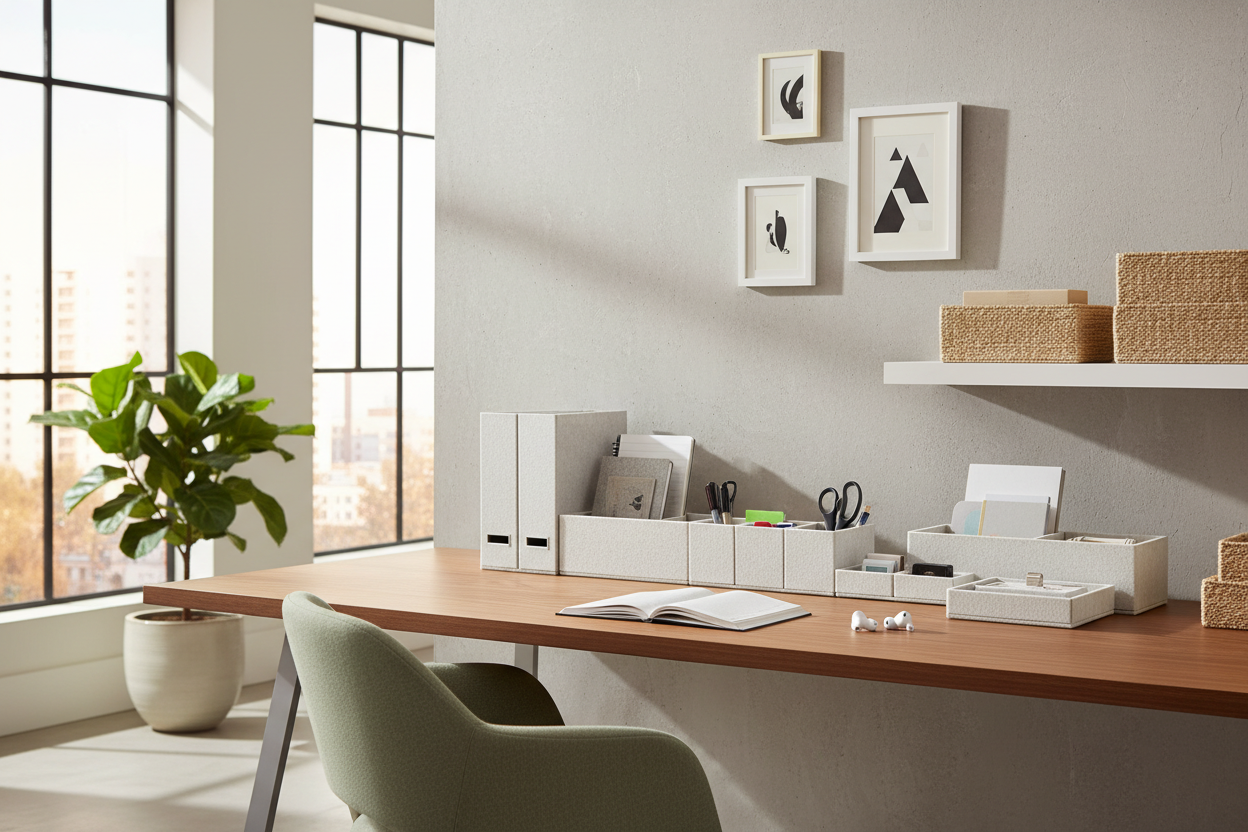
Visual noise is the silent killer of productivity. When I walk into a client's home office, the first thing I assess isn't the chair ergonomics or the lighting temperature—it's the surface clutter. A disorganized workspace fractures your focus, turning creative flow into cognitive load. The solution isn't just to hide things away, but to curate them. Finding the right desk bin organizer is about striking a balance between accessibility and visual serenity, ensuring every pen and paper clip has a deliberate home.
Key Features to Look For
- Material Integrity: Choose materials that complement your desk surface (e.g., felt for glass desks to prevent sliding, wood for warmth).
- Modular Capability: Look for storage boxes for desks that can stack or nest, allowing the layout to evolve with your workflow.
- Vertical Profile: Ensure the height of your desktop storage bins doesn't obstruct your monitor or line of sight.
- Interior Lining: High-quality desk organizer containers often feature lined bottoms to reduce the noise of items being dropped inside.
Selecting the Right Material and Texture
As a designer, I prioritize texture just as much as function. When selecting organizer bins for desk setups, you must consider the interplay of materials. If you have a high-gloss lacquer desk, avoid cheap plastic containers for desk use; they will look flimsy and scratch the surface. Instead, opt for leather or heavy-gauge card stock desk organization boxes.
For solid wood tables, clear acrylic desk bins can create a modern, floating effect that keeps the beautiful grain visible. However, be mindful of the "visual weight." Opaque desk storage containers hide the mess inside, creating a cleaner look, while transparent ones force you to keep the contents tidy.
Space Planning: The Zone Defense
Placement is paramount. I often see homeowners buying a generic desk storage bin without measuring their "reach zones." Your primary zone—within arm's reach—should house your essentials in low-profile desktop storage containers. Secondary zones can handle larger storage bins for desk archives or items used less frequently.
If you are working with a compact writing table rather than a full executive desk, look for a desk with storage bins integrated into the design, or choose narrow, vertical bins for desk surfaces that utilize upward space without consuming valuable square footage. The goal is to maintain a clear 60% of your desktop for actual work.
Ergonomics and Accessibility
A beautiful desk container is useless if it hampers your workflow. Ergonomics extends to how you reach for a stapler or a charging cable. The best desk organizer containers feature angled openings or shallow depths, allowing you to retrieve items without digging. Deep, dark bins become graveyards for office supplies. When sourcing desktop storage bins, I always test the "grab factor"—can I retrieve a post-it note with one hand without tipping the container over? If not, it stays on the shelf.
Lessons from My Own Projects
I learned a hard lesson about acoustics and friction early in my career. I once styled a stunning, minimalist glass desk for a client using rigid, hard-plastic desk bins. They looked sleek and architectural in the photos. However, a week later, the client called to complain. Every time she dropped a pen into the bin or slid the container to wipe the desk, it made a harsh, clattering sound that echoed in her minimalist room. It was driving her crazy.
I had to replace them all with felt-lined storage boxes. The difference was immediate—the soft thud of a pen hitting felt is oddly satisfying, and the silence when moving the bins preserved the room's tranquility. It taught me that luxury isn't just about how an object looks; it's about the sound it makes and how it feels under your hand.
Conclusion
Transforming your workspace doesn't require a full renovation. By carefully selecting a desk bin organizer that aligns with your aesthetic and workflow, you reclaim your mental space. Treat these containers not as afterthoughts, but as architectural elements of your daily life.
Frequently Asked Questions
How do I clean felt or fabric desk storage containers?
For felt or fabric bins, a lint roller is your best friend for daily dust. For stains, spot clean with a damp cloth and mild soap, but never soak them, as this can ruin the structural rigidity of the box.
What is the ideal size for a desktop storage bin?
Ideally, a desktop bin should be no wider than 1/3 of your available side space and no taller than 6 inches unless it is a file holder. This ensures it doesn't visually dominate the desk or topple over easily.
Can I mix and match different styles of desk bins?
Yes, but keep a common thread. You can mix materials (like wood and metal) if they share a color palette, or mix colors if the material remains consistent. Too many disparate styles will recreate the visual clutter you are trying to eliminate.


Leave a comment
This site is protected by hCaptcha and the hCaptcha Privacy Policy and Terms of Service apply.