










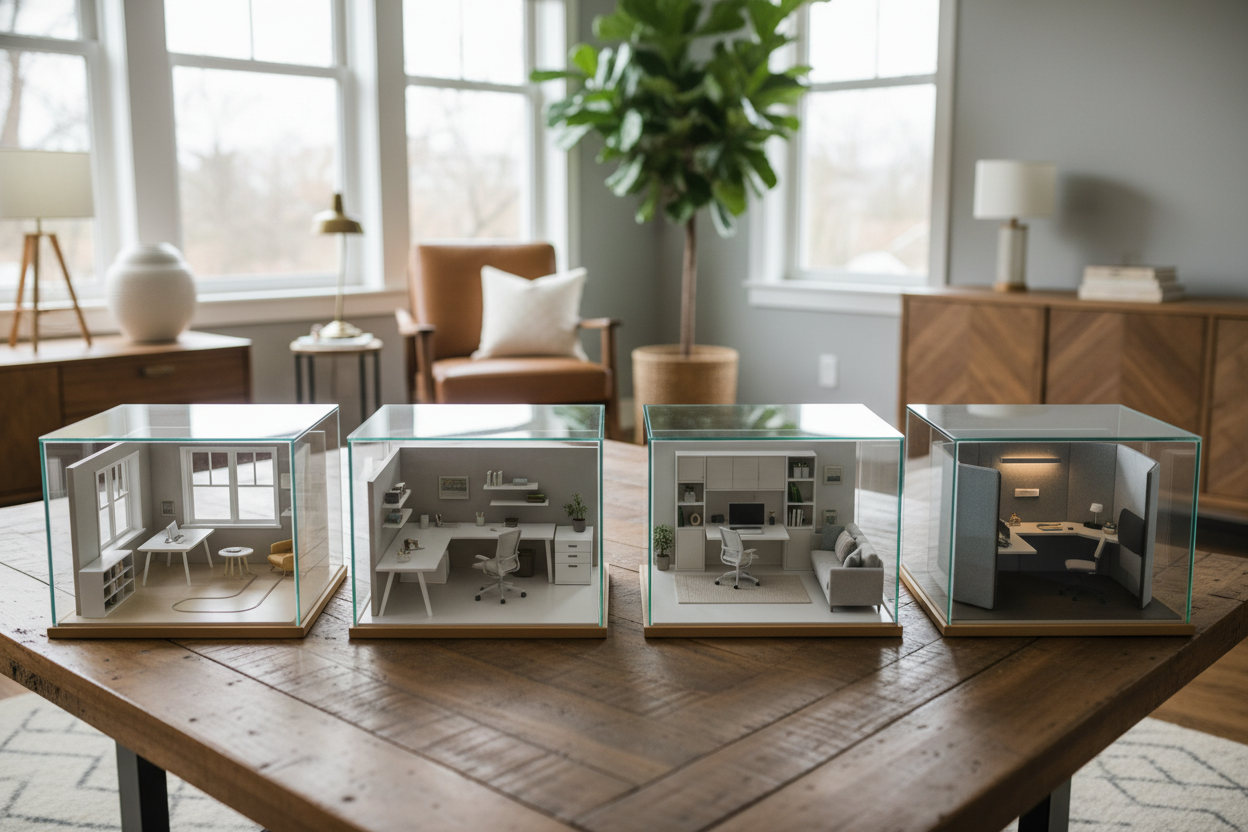
It is a common frustration I see in client consultations: trying to carve out a productive zone in a room that barely fits a guest bed, or attempting to reclaim a chaotic corner of the living room. The challenge isn't just fitting furniture in; it is about respecting spatial dynamics so you don't feel claustrophobic while working. Designing a compact workspace requires a shift in perspective, prioritizing verticality and visual lightness over heavy executive silhouettes. Below, we explore **small office layout examples** that balance high-end aesthetics with rigorous functionality.
Key Principles for Compact Workspaces
Before purchasing a single piece of furniture, consider these fundamental rules of spatial planning. These elements are what separate a cluttered room from a curated studio.
- Scale and Proportion: Avoid overstuffed furniture; opt for sleek profiles with exposed legs to increase visible floor space.
- Traffic Flow: Maintain a minimum of 30 to 36 inches of clearance behind your chair for movement.
- Vertical Utilization: Use floor-to-ceiling shelving to draw the eye upward and maximize storage without eating up square footage.
- Lighting Layering: Combine task lighting with ambient sconces to eliminate shadows and make the room feel expansive.
Mastering the Small Office Plan Layout
When drafting a small office plan layout, the position of the desk dictates the success of the room. A common impulse is to push the desk directly against a wall. While this saves space, it can feel uninspiring.
The "Command Position" Variation
Even in tiny office plans, try to float the desk perpendicular to the window or facing the door. If you lack the depth for a full float, consider a T-shape layout where the desk extends from a wall of shelving. This allows you to look into the room rather than at a blank wall, improving focus and reducing the feeling of confinement.
The L-Shape Corner Strategy
Utilizing a corner effectively is standard practice, but the execution matters. Instead of a bulky, solid wood corner unit, look for an L-shaped configuration with open metal framing or glass tops. This reduces visual weight. Ensure the return (the side part of the desk) is shallow—around 15 to 18 inches—to keep the central floor area open.
Ergonomics and Material Selection
In a constrained footprint, every texture counts. Heavy, dark woods like mahogany can make the office room layout feel smaller.
Visual Weight vs. Physical Weight
For small spaces, I often recommend materials that reflect light or allow the eye to travel through them. Acrylic chairs or desks with slender metallic legs create a "ghost" effect, providing function without visual blockage. If you prefer wood, opt for lighter grains like white oak or ash, or a walnut veneer with a matte finish for a sophisticated, warm touch that doesn't overpower the room.
The Chair Dilemma
The biggest error in small offices is choosing an executive chair designed for a corner office. These chairs physically dominate the room. Look for mid-back task chairs with a slim profile. Mesh backs are excellent for breathability and visual transparency, ensuring the room doesn't feel stuffed.
My Personal Take on Small Office Layout Examples
I learned a hard lesson early in my career while designing a 60-square-foot study for a client in a historic brownstone. I specified a beautiful, solid oak desk with built-in drawer pedestals on both sides. On the floor plan, it fit perfectly.
However, once installed, I realized I had neglected the "knee-knock" factor. In such a small room, the visual mass of those solid pedestals made the room feel like a coffin. Furthermore, the client couldn't swivel their chair without banging their knees against the drawers because the clearance was too tight. We had to swap it for a "parson style" desk—just a top and four legs—and moved the storage to floating shelves above. The difference was night and day. The lesson? In small spaces, seeing the wall behind the furniture and the floor beneath it is crucial for psychological comfort.
Conclusion
Creating a functional workspace in a limited area is less about compromise and more about clever editing. By selecting the right scale, embracing vertical storage, and paying attention to small office layout examples that prioritize flow, you can build a studio that feels bespoke and airy. It is time to stop working from the dining table and curate a space that respects your workflow.
Frequently Asked Questions
What is the minimum width required for a functional small office desk?
For a primary workspace, try not to go smaller than 42 inches wide. Anything smaller restricts your ability to have a laptop and a notepad side-by-side. However, the depth can be as shallow as 20 inches if you are using a flat-screen monitor mounted on the wall.
How do I handle lighting in a windowless small office?
Avoid a single overhead fixture, which creates a cave-like effect. Use "wall washing" with LED strips or sconces to illuminate vertical surfaces, making the walls appear to recede. Pair this with a high-quality task lamp (2700K to 3000K temperature) for warmth.
Should I use a rug in a tiny office plan?
Yes, but sizing is critical. A rug that is too small (floating in the middle of the room) chops up the visual plane. Choose a rug that extends almost to the walls (leaving a 6-inch border) to unify the space, or skip the rug entirely if you have beautiful continuous flooring, as this helps the room feel larger.

Leave a comment
This site is protected by hCaptcha and the hCaptcha Privacy Policy and Terms of Service apply.