










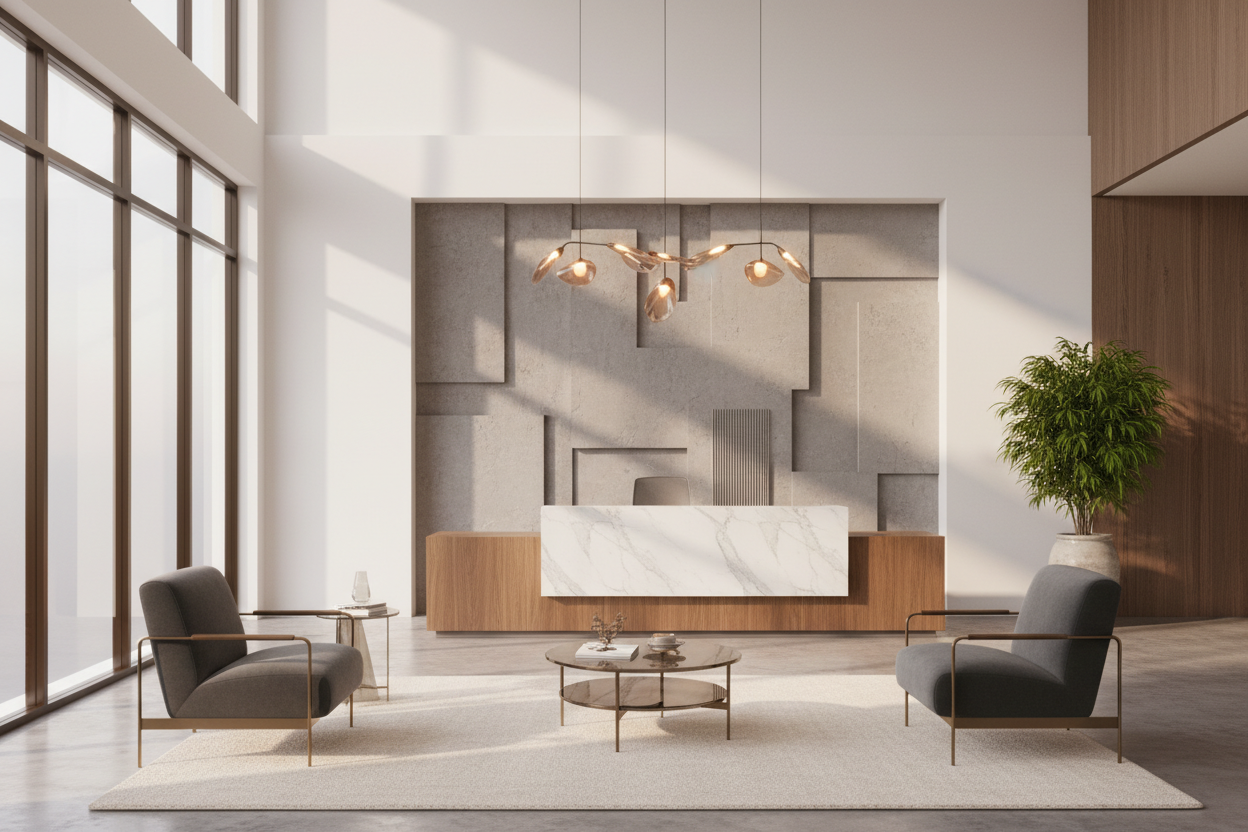
We have all walked into a workspace that instantly felt cold, sterile, or confusing. You step through the doors, and instead of a clear path or a welcoming face, you are met with a massive, barricade-like desk and awkward fluorescent lighting. That initial ten seconds sets the tone for clients, interviewees, and your own team. Getting your office entry design right is not just about aesthetics; it is about human psychology and spatial flow. Let's break down how to create a reception space that actually works.
Quick Decision Guide
- Leave at least 48 inches of clear walkway from the front door to the reception desk to avoid bottlenecks.
- Anchor the space with a focal point, whether that is a textured feature wall or a well-lit logo sign.
- Choose commercial-grade performance fabrics for seating; residential velvet will show wear within months.
- Layer your lighting by mixing recessed ceiling fixtures with warm table lamps or pendants.
Space Planning: Directing the Foot Traffic
The layout of your reception area dictates how people behave the moment they arrive. A good floor plan guides guests intuitively toward the check-in point without the need for excessive signage.
Mastering Small Office Entrance Ideas
If you are working with a tight footprint, negative space is your best friend. Avoid stuffing a massive, L-shaped desk into a room that cannot handle its visual weight. Instead, opt for a floating, minimal reception console and wall-mounted storage. Keep seating scaled down—think tailored armchairs rather than deep, sprawling sofas. Floating furniture just a few inches off the wall can also create an illusion of more breathing room.
Translating Brand Identity into Physical Space
Your entry is the physical handshake of your business. The materials and color palette should reflect your company culture before a single word is spoken.
Corporate Office Entrance Design
For traditional corporate environments, trust is communicated through substance. Think natural stone, rich walnut veneers, and architectural lighting. The goal is permanence. However, avoid making it feel like a mausoleum by introducing organic textures, like a living moss wall or strategically placed indoor trees, to soften the hard architectural lines.
Office Entrance Decoration Ideas
Decor should never impede function. Instead of cluttering tables with magazines, focus on impactful, large-scale art or custom millwork. Use a high-traffic area rug to define the waiting zone within a larger open-concept office entrance lobby. This subtle visual cue tells guests exactly where to sit while adding much-needed acoustic dampening to the room.
Designer's Honest Take: Lessons from the Field
Early in my career, I designed a stunning, minimalist tech office entry in Seattle. We used polished concrete floors, a custom marble reception desk, and glass partitions. Visually, it was a masterpiece. Practically? It was an acoustic nightmare.
Every time the front door opened, the street noise bounced off all those hard surfaces. Phone calls at the reception desk echoed throughout the entire floor. I learned the hard way that you cannot sacrifice acoustics for a sleek silhouette. Now, I always specify sound-absorbing materials—like acoustic wood-slat ceiling baffles or heavy, commercial-grade upholstered seating—to absorb the ambient noise. A beautiful lobby is useless if the receptionist cannot hear the guests.
Frequently Asked Questions
How do I make a small office entry look bigger?
Maximize natural light and use reflective surfaces strategically. Keep the sightlines clear by choosing furniture with exposed legs rather than solid bases, which reduces the visual weight in the room.
What is the best seating for an office entrance lobby?
Look for firm, commercial-grade lounge chairs with a seat height around 18 inches. Guests should not sink so deep into a sofa that they struggle to stand up gracefully when called for their meeting.
How do I balance security with a welcoming design?
Use subtle architectural barriers. Changes in flooring materials or a strategically placed planter can naturally halt visitors at the reception desk without making them feel fenced in or interrogated.

Leave a comment
This site is protected by hCaptcha and the hCaptcha Privacy Policy and Terms of Service apply.