


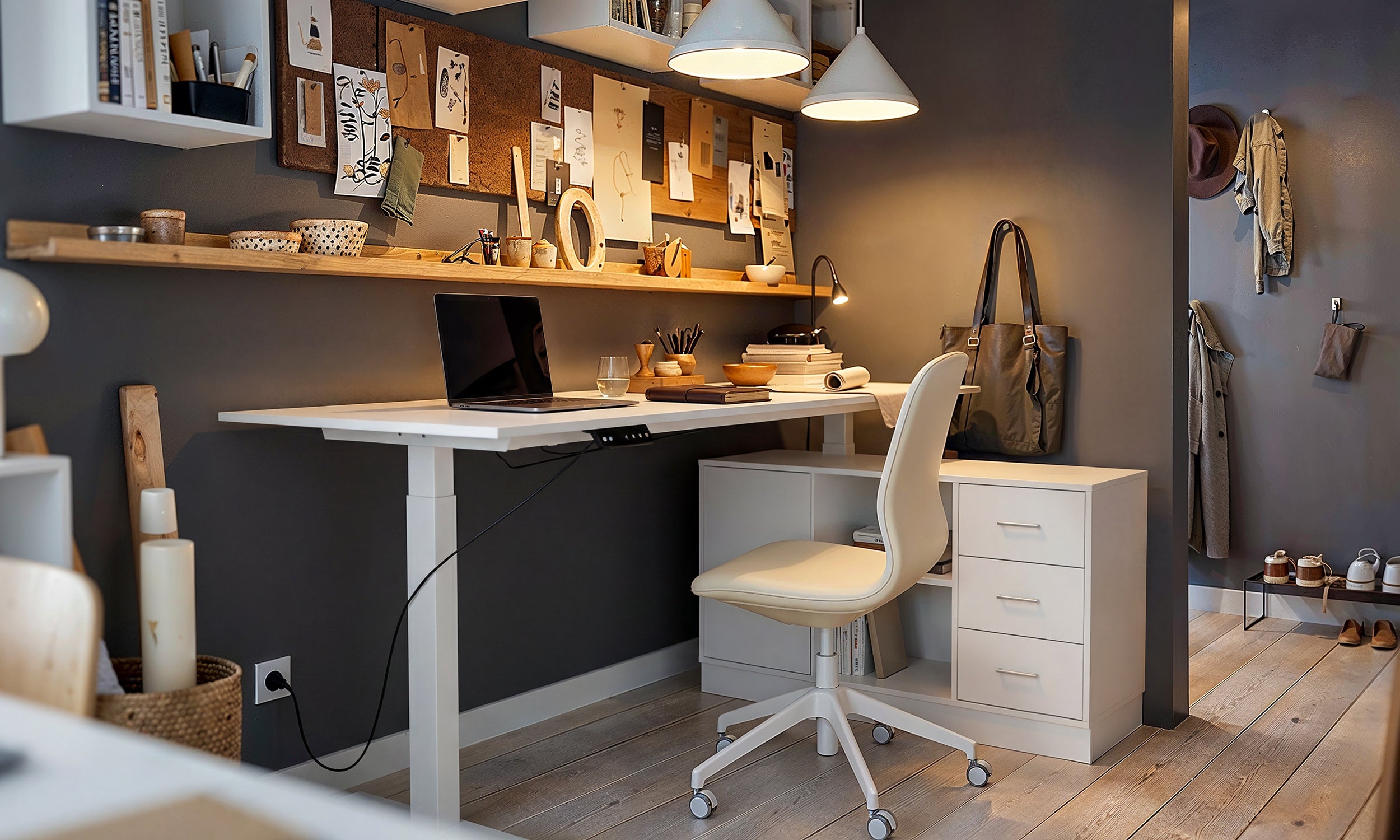
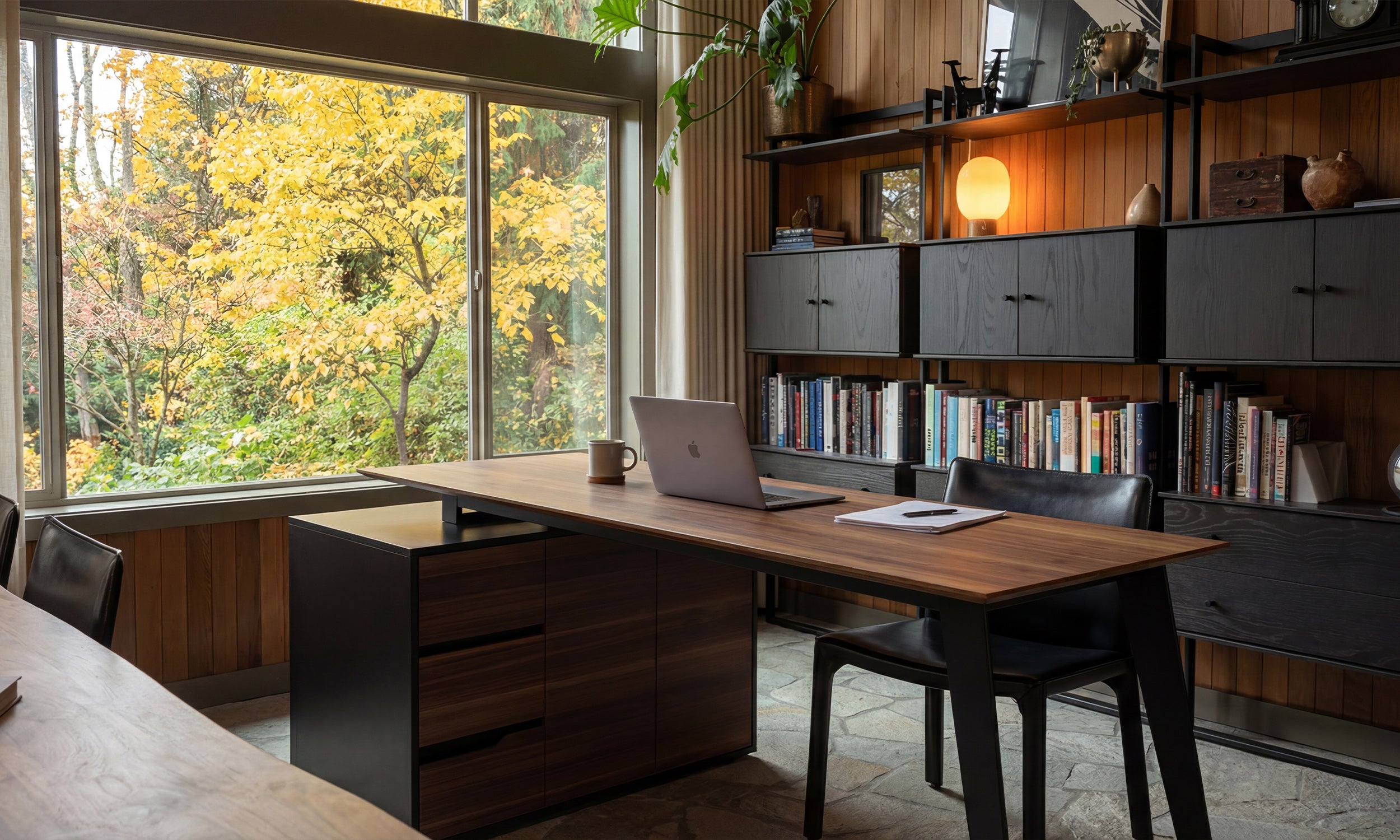


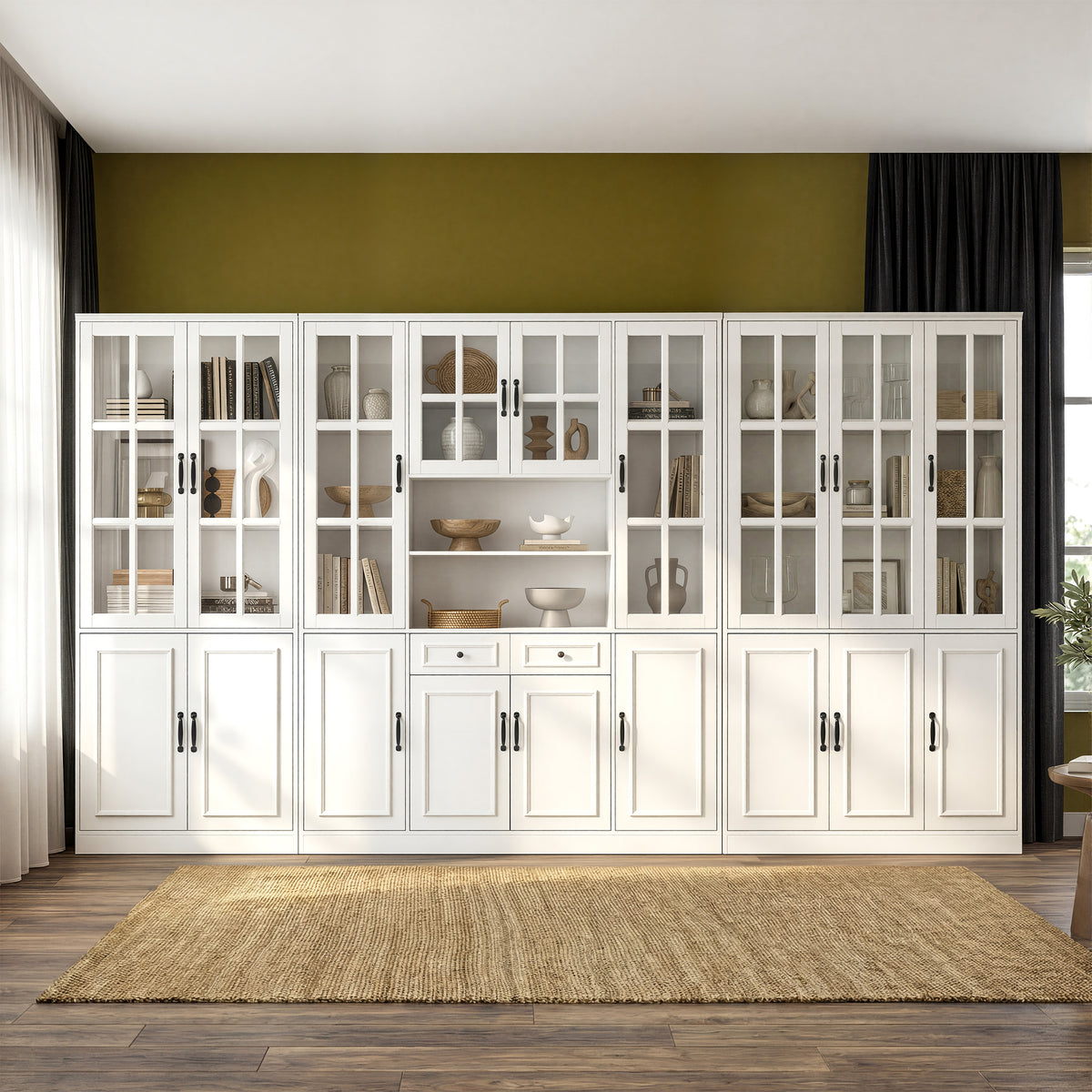
Modular cabinets are standard-size units you buy ready-made, assemble and line up side by side; built-in cabinets are custom cabinetry designed, made and fixed to one specific wall. Modular cabinets cost far less, arrive in days instead of months and move with you, while built-ins give a perfect fit, a seamless floor-to-ceiling look and stay with the house. For most renters, first-time buyers and anyone who expects to move or change the room, modular is the cost-effective choice; built-ins make sense in a long-term home with an awkward wall.
This guide compares modular cabinets vs built in cabinets on cost, flexibility, installation, moving house, home value and the look, using real cabinet sizes from the FUFU&GAGA modular storage cabinets collection.
Key Differences at a Glance
| Modular cabinets | Built-in cabinets | |
|---|---|---|
| What they are | Pre-manufactured units in standard sizes that combine into a wall | Custom built cabinets made to fit one space |
| Cost | Single units start under $300; very wide sets run above $1,000 | Often several thousand dollars per wall, plus labor costs |
| Lead time | In-stock pieces usually ship within 48 hours | Weeks to months for design and build |
| Installation | DIY assembly, then anchor each unit to the wall | Skilled labor: scribing, trim, fastening to the structure |
| Fit | Standard sizes, so small gaps at the ends are normal | Perfect fit wall to wall and floor to ceiling |
| Moving house | Disassemble and take them along | Stay with the house |
| Changes later | Add, remove or replace one unit | Changes mean rebuilding or refinishing |
What Are Modular Cabinets?
Modular cabinets are mass produced in fixed widths, heights and depths so that units from the same series line up. You will see them called prefabricated cabinets, prefab cabinets, stock cabinets or ready-to-assemble (RTA) cabinets; most are delivered flat packed. In a kitchen they are base and wall units; in a living room, dining room or bedroom they are tall freestanding bookcases, display cabinets and armoires.
The standard sizes are the point. In the Sofna series, every unit is 78.7" tall and 15.7" deep, and the widths are 31.5", 47.2", 63", 78.7", 94.5", 110.2" and 141.7". Because 31.5" + 47.2" = 78.7" and 31.5" + 47.2" + 63" = 141.7", you can build almost any wall from a few pieces and keep a consistent line across the top.
What Are Built-In Cabinets?
Built-in cabinets are custom cabinetry designed for one wall and attached to it, usually by custom cabinet makers or a finish carpenter. The cabinet box is sized to the inch, scribed to uneven walls, and finished with trim up to the ceiling. Materials, finishes, door styles and interior layout are open to your specific design preferences, from solid wood to painted plywood, which is why custom cabinets also cover odd spaces such as sloped ceilings, window seats or alcoves of any width.
Between the two sit semi custom cabinets: factory-made boxes in standard sizes with more customization options for finishes, cabinet doors and accessories.
Cost: Modular Is the Budget-Friendly Option
Cost is the clearest of the key differences. This Old House puts stock cabinets at about $35–$81 per linear foot, semi-custom at $90–$650 and custom at $150–$1,200, and notes that professional installation typically adds 50%–75% of the cabinet price. Cost guides for living-room built-ins land in the same range: Inch Calculator gives an average of around $450 per linear foot installed. At that average, a 12-foot wall of built-ins would be about $5,400.
Freestanding modular storage cabinets cost a fraction of that. In our collection, single cabinets start under $300, about half of all models fall between $300 and $600, and the widest 141.7" combinations (almost 12 feet of storage) run above $1,000. You also skip labor, because assembly and anchoring are DIY jobs for two people.

Flexibility and Design Options
Built-ins win on design freedom. Any size, any finish, any layout. If your wall is 131" wide with a window off-center, a cabinetmaker builds exactly that.
Modular cabinets trade that freedom for flexibility over time. You choose from standard sizes, so a run rarely ends exactly at the corner; plan for a few inches of awkward gaps at the ends, or fill them with trim. In return you can:
- Start with one 31.5" unit and add matching pieces later.
- Split a wall into two smaller groups when you move to a new room.
- Replace one damaged unit without touching the rest.
- Mix glass-door display units with closed storage in the same series.
Our guide on how to plan a modular storage wall shows how to fit standard widths to a real wall.
Installation and Timeline
Custom cabinetry takes time. This Old House notes custom lead times of eight weeks to six months, before installation even starts. Built-ins also need skilled labor on site: leveling to the floor, scribing to the wall, attaching to studs, and finishing trim and paint.
Modular units are faster. Most in-stock FUFU&GAGA orders leave our US warehouses within 48 hours and arrive in about 7–9 days. Each piece is assembled, leveled, optionally joined to its neighbor and anchored to the wall with the included tip-over kit. If you plan to join units, see how to connect cabinets together.
Moving House, Renting and Home Value
Built-in cabinets become part of the house. That is good if you plan to stay for a long time, and a long term investment in a home you own. It is a poor fit if you rent, since many leases do not allow permanent changes, or if you expect to move in a few years.
Modular furniture comes apart and goes with you. The only marks left behind are the small holes from wall anchors, which are easy to patch.
On home value, there is no reliable rule that built-ins pay for themselves. Well-made built-ins can appeal to buyers, but taste is personal and a dated or oddly sized unit can be a negative. Treat built-ins as something you do for your own use, not for resale.
The Look: Can Modular Cabinets Look Built-In?
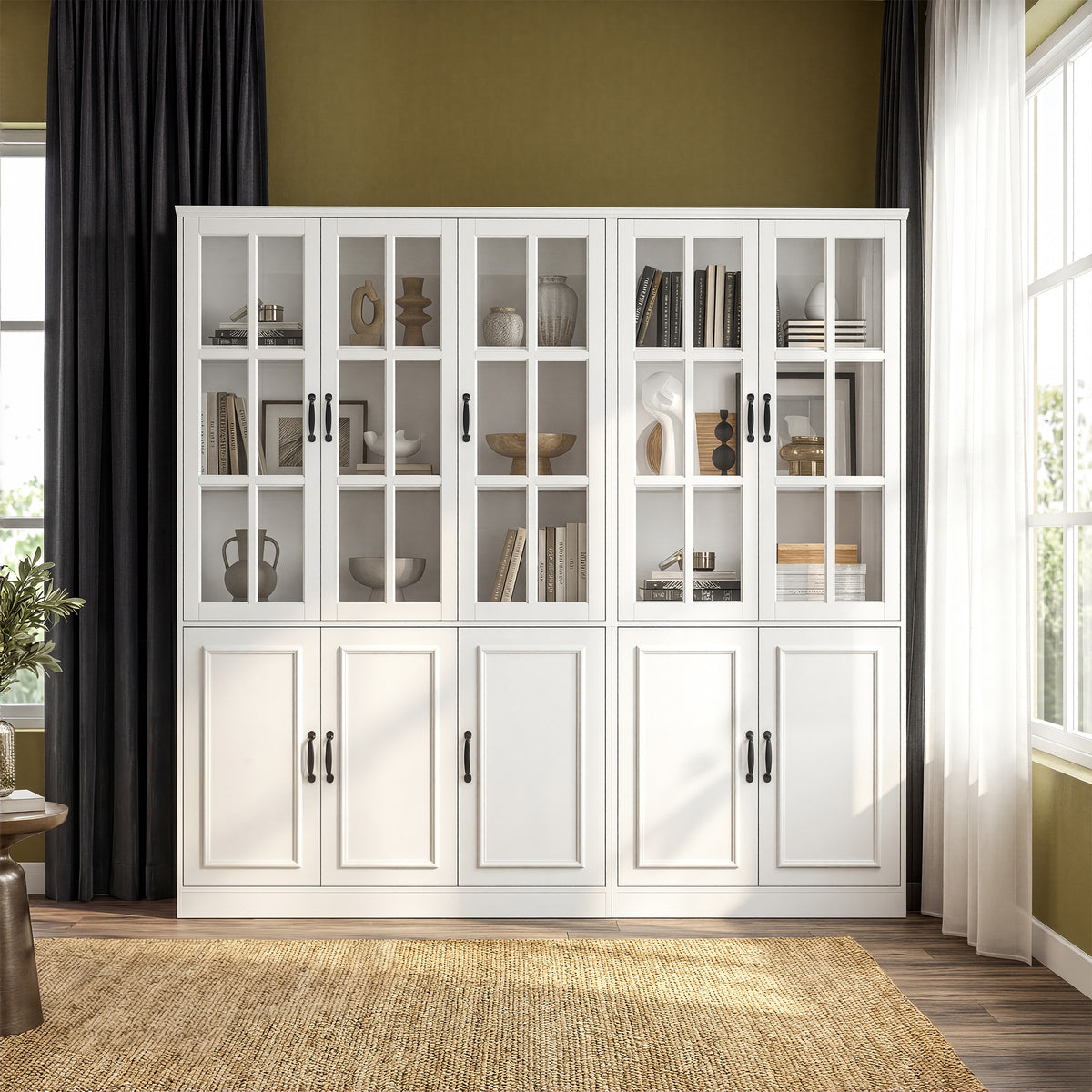
A true built-in has no visible gaps: cabinets run to the ceiling, side panels meet the walls, and trim hides every seam. Modular cabinets stop short of the ceiling and show small seams between units.
You can get close. Keep every unit in one series so heights, depths and finishes match. Join adjacent units so the fronts stay flush, center the run on the wall, and leave equal gaps at each end. Here are wide modular sets that line up as one wall:
- Sofna 141.7" white storage cabinet with 9 glass doors and 2 drawers, delivered as 3 cabinets
- Vila 141.7" white bookcases and display cabinets with 6 drawers
- Geyma 110.2" glass-door display case with LED lights and drawers
- Rena 79.3" white armoire with 8 doors and 3 drawers for a bedroom closet wall
- Sofna 31.5" glass-door bookcase to extend any Sofna run

Same Trade-Offs in a Kitchen Remodel
Most comparisons online are about kitchens, and the same logic holds there. Modular kitchen cabinets, also sold as prefab kitchen cabinets at home improvement stores, fit standard kitchen layouts and keep a kitchen remodel affordable. Custom kitchen cabinets earn their cost when the kitchen space is irregular or you want a specific door style, wood species or built-in appliance. You can also mix both: stock boxes where sizes are standard and a few custom pieces where they are not.
Which Should You Choose?
Choose modular cabinets if:
- You rent or expect to move within a few years.
- You want storage solutions this month, not next season.
- Your budget matters more than a floor-to-ceiling finish.
- You like to rearrange rooms or reuse furniture in other spaces.
Choose built-in cabinets if:
- You own the home and plan to stay.
- The wall is irregular: sloped ceiling, off-center window, unusual width.
- You want a specific material quality or finish that no standard unit offers.
For most living rooms, dining rooms and bedrooms, a run of matching freestanding units delivers the storage space and much of the look for a fraction of the price. Browse widths and finishes in our modular cabinets collection.
FAQ
Is it cheaper to buy cabinets or have them built?
Buying ready-made cabinets is almost always cheaper. Stock cabinets cost a fraction of custom work per linear foot, and you avoid design fees and most labor costs. Custom built cabinets cost more because each piece is made to order and installed by skilled trades.
What are prefab cabinets called?
Prefab cabinets are also called stock, prefabricated, ready-to-assemble (RTA) or modular cabinets. Semi-custom cabinets are a middle tier: factory-made in standard sizes with more finish and door options.
What are the disadvantages of modular furniture?
Standard sizes rarely fill a wall exactly, so you get small gaps at the ends and between the top and the ceiling. Seams between units stay visible, and design options are limited to what the series offers. Each tall unit also needs its own wall anchor.
Do built-in cabinets add value to a home?
They can appeal to some buyers, but there is no dependable return. Value depends on build quality, style and how well the cabinets suit the next owner. Built-ins are best justified by how much you will use them.

Leave a comment
This site is protected by hCaptcha and the hCaptcha Privacy Policy and Terms of Service apply.