










I spent three hours last Tuesday trying to peel a 'walnut' sticker off a corner of my media console that had started to bubble. It wasn't wood. It was compressed paper disguised as a forest. After five years of sagging shelves and wobbly legs, I decided I was done with the disposable stuff. I wanted something that wouldn't flinch when I put a 65-inch television on it.
The market is flooded with 'wood-look' furniture that looks great in a filtered Instagram photo but screams the second you try to move it. My hunt for the best solid wood entertainment center wasn't just about aesthetics; it was about buying something I wouldn't have to replace in 24 months. I wanted heirloom quality, not landfill fodder.
Quick Takeaways
- Hardwoods like oak and walnut are non-negotiable for heavy electronics.
- Avoid anything where 'engineered wood' is the primary material if you want longevity.
- Check for dovetail joinery and solid back panels to ensure structural integrity.
- Consider a mix of doors and shelves to balance display space with cord chaos.
The Veneer Epidemic (And Why I Finally Snapped)
We’ve all been there. You find a piece online that looks stunning, the price is suspiciously low, and the description says 'wood finish.' That’s code for a thin layer of plastic or paper glued over sawdust. The first time you spill a drop of water or your cat decides to use the corner as a scratching post, it’s game over. The veneer chips, the core swells, and you're left with a piece of furniture that looks like it was rescued from a curb.
I finally snapped when my last 'wood' unit started to bow in the middle under the weight of my soundbar. A large solid wood entertainment center is an investment, sure, but it's one you make once. Real wood has soul. It has grain that feels like something grew in the dirt, not something printed in a factory. I stopped looking for deals and started looking for density.
What is the Best Wood for Entertainment Center Builds?
When you're figuring out the best wood for entertainment center projects, you have to choose between softwoods and hardwoods. Pine is a popular softwood because it’s affordable, but it’s a magnet for dings. One dropped remote and you have a permanent crater. If you have kids or pets, pine is going to look 'distressed' whether you want it to or not within six months.
For solid wood entertainment centers for flat screen tvs, I always point people toward oak, maple, or walnut. Oak is the absolute workhorse—it’s incredibly dense and holds a screw like its life depends on it. Walnut is the splurge. It’s gorgeous, dark, and heavy. These woods handle the heat from your consoles and the weight of your screen without warping. You want a material that can actually support the 50+ pounds of glass and metal sitting on top of it.
The Visual Weight of a Large Solid Wood Entertainment Center
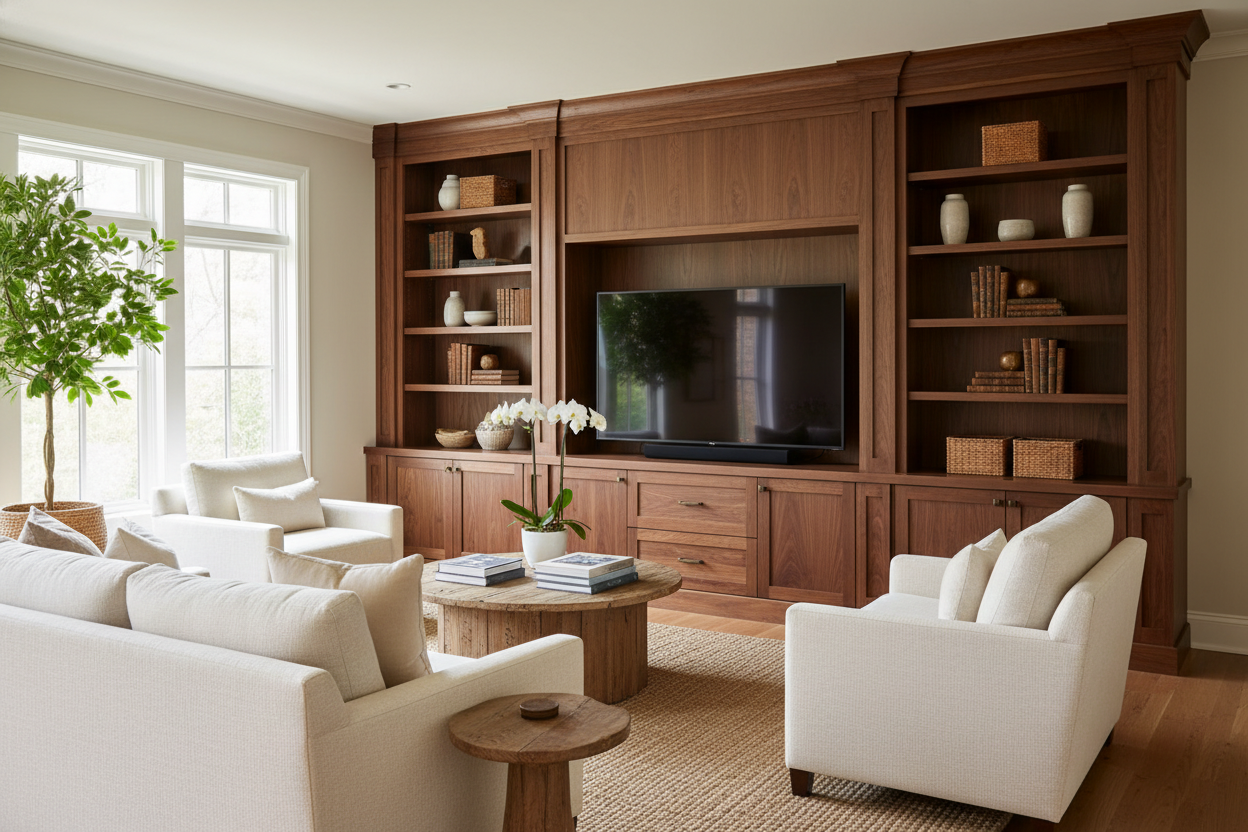
There is an architectural impact to these pieces that people often overlook. A flimsy metal rack makes a room feel temporary. A massive, heavy piece of entertainment center wood furniture anchors the entire living room. It stops being just a place to put the TV and starts being the focal point of the house.
I’ve spent weeks browsing every entertainment center I could find, and the ones that stick are the solid wood entertainment wall units that feel like they were built into the house. They have a presence. When you walk into the room, a solid unit says the space is finished. It’s the difference between a college dorm and a grown-up home. Plus, they don't wobble when you walk past them, which is a nice bonus for your expensive tech.
Hiding the Mess: Why You Need Real Wood Doors
Let's talk about the 'spaghetti' of cables behind your PlayStation. A wood entertainment center with shelves is great for showing off your vintage camera collection or some curated books, but it's a nightmare for hiding a router and a power strip. Open shelving is a trap for people who aren't obsessed with cable management.
I personally prefer a solid oak entertainment center with doors. There is nothing more satisfying than shoving all the controllers, remotes, and messy wires behind a heavy, solid door and clicking it shut. I’ve been looking at the four door wood grain color entertainment center because those pull-down doors are a genius way to keep things accessible but completely hidden. Solid doors also dampen the sound of whirring cooling fans from your consoles, which is a detail most people forget until they’re trying to watch a quiet movie.
Is Plywood Ever Okay? (A Quick Designer Confession)
I’m going to say something controversial: sometimes, 100% solid wood isn't the best choice for every single square inch. Real wood breathes. It expands in the summer and shrinks in the winter. If you live in a place with wild humidity swings, a massive solid wood back panel might eventually crack or warp. This is why many high-end designers use furniture-grade plywood for the backings or internal dividers.
This isn't the cheap stuff from the hardware store; it's high-stability material that prevents the whole unit from shifting. If you want the full breakdown on why this happens, check out Plywood for Entertainment Center — Why Designers Are Choosing It Over Solid Wood. But for the frame, the top surface, and the doors? I still demand solid timber. You want that tactile feel and the weight that only real wood provides.
Where I Would Actually Spend My Money Today
If I were buying today, I’d look for construction details that prove the piece was built by someone who cares. Look for dovetail joints in the drawers—if you see staples or glue, walk away. Look for a finished back panel. A lot of companies save money by putting a piece of cardboard on the back. A real solid wood unit will have a finished or at least a sturdy wood-composite back that adds to the lateral stability.
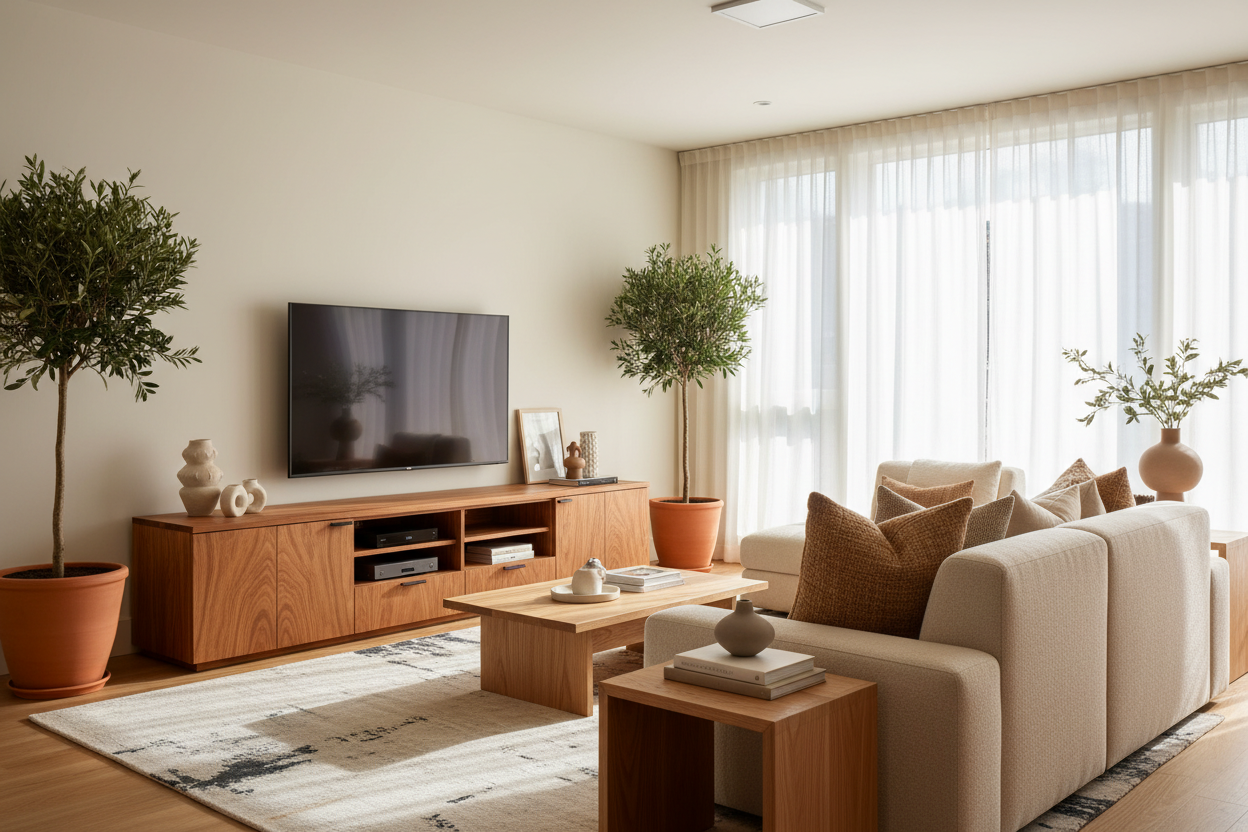
I’m currently leaning toward a modern 3 piece entertainment center style. It gives you that natural wood warmth but keeps the silhouette clean so it doesn't look like your grandmother’s heavy hutch. Whatever you choose, make sure it’s heavy. If you can lift it by yourself, it’s probably not the piece that’s going to last you twenty years. Real furniture should require a friend and a pizza to move.
FAQ
How do I know if it's actually solid wood?
Look at the end grain. If the grain pattern on the top of the board continues over the edge and down the side, it's solid. If the pattern changes or looks like a repeat, it's a veneer. Also, knock on it. Solid wood has a dull thud; MDF has a hollow, higher-pitched ring.
Does solid wood scratch easily?
It can, but that's the beauty of it. You can sand down and refinish solid wood. If you scratch a veneer, you're looking at the brown paper underneath forever. A little bit of furniture wax usually hides most minor scuffs on real wood.
Is a solid wood unit too heavy for my floor?
Unless you live in a very old house with structural issues, your floor can handle it. Just make sure to use felt pads on the bottom so the weight doesn't dent your hardwood or snag your carpet when you're positioning it.

Leave a comment
This site is protected by hCaptcha and the hCaptcha Privacy Policy and Terms of Service apply.