










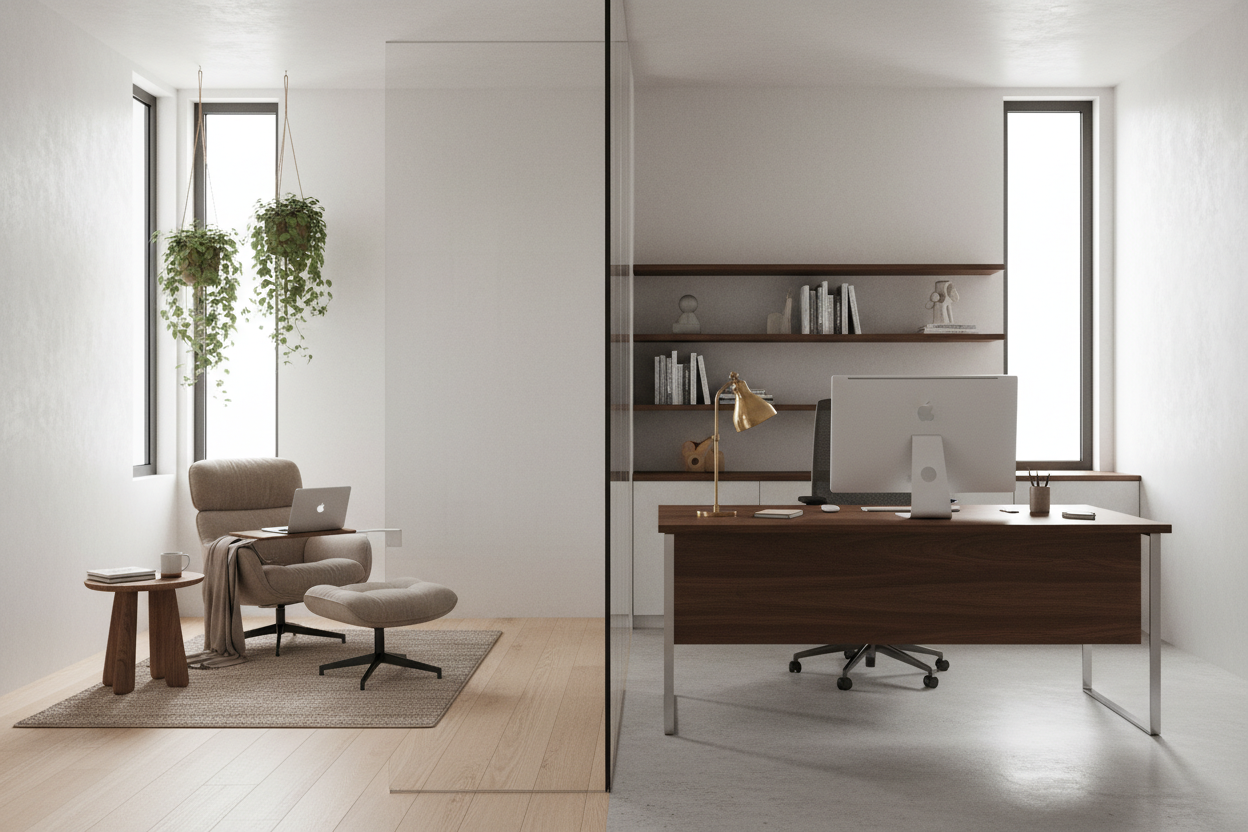
We have all been there: balancing a laptop on a kitchen island, wondering if the dining chair is permanently damaging our spine. When the sudden shift to remote work happened, many of us threw together an office working from home with whatever furniture we had on hand. Years later, that temporary fix is likely causing physical fatigue and mental burnout. If you are constantly weighing working from home vs working in an office simply because your corporate desk is more comfortable, it is time for a redesign.
By the end of this guide, you will know exactly how to structure a residential workspace that supports both your posture and your productivity, bridging the gap between residential comfort and commercial efficiency.
Quick Decision Guide: Optimizing Your Workspace
- Prioritize ergonomics over aesthetics: A beautiful chair is useless if it hurts. Prioritize an adjustable chair and a desk with a standard 28-to-30-inch height clearance.
- Establish visual boundaries: Separate work vs home visually, even in open-concept living rooms or small apartments, using rugs or strategic lighting.
- Control your lighting: Position your desk perpendicular to natural light sources to reduce screen glare while maintaining a connection to the outdoors.
- Balance visual weight: Pair a visually heavy, solid wood desk with a lighter, open-frame chair to keep the room from feeling cramped.
Navigating the Work From Home vs Work From Office Debate
The ongoing work from home vs work from office debate usually centers on commute times and collaboration. But from a design perspective, I see it as a battle of environments. The primary benefits of working in-office vs home usually come down to dedicated, distraction-free zones and commercial-grade ergonomics. Conversely, the benefits of working from home vs office include personalized climate control, better natural lighting, and total styling freedom.
Space Planning for the Hybrid Worker
Whether you work at home or in the office, your physical layout dictates your mental clarity. In a typical North American suburban home, dedicating a spare bedroom as a home office or work from home sanctuary is ideal. If you are in a smaller apartment, you have to zone carefully. Leave at least 36 inches of clearance behind your desk chair to allow for easy movement. Avoid pushing a bulky desk flat against a wall if you can help it; floating the desk facing the door gives you a commanding view of the room and instantly makes the space feel more intentional.
Bridging the Gap: Home Office vs Office Aesthetics
Corporate spaces lean heavily on engineered materials and sterile lighting. When designing an office for work from home, we want to soften that commercial edge without losing functionality. This is the distinct advantage of home working vs office environments: you control the texture and the mood.
Material Selection and Visual Weight
Mix a solid walnut desk with a textured, upholstered chair. If you are comparing work in office vs work from home setups, you will notice corporate desks often use melamine for sheer durability. At home, you can opt for solid wood or high-quality veneers, but be mindful of maintenance. I always recommend using a leather desk pad to protect wood surfaces from hot coffee mugs, heavy monitors, and daily friction.
Ergonomics: Why Work From Home Better Than Office Is Not Always True
Many clients tell me they prefer to work from office or home depending entirely on their current level of back pain. When looking at the work from home vs in office experience, the corporate world usually wins on seating. A dining chair is designed for 45 minutes of sitting, not eight hours.
Invest in a chair with proper seat depth. You should have about two inches of space between the back of your knees and the edge of the seat. If you are splitting time between work from home and office, your residential chair needs to match that commercial standard. The work from office vs work from home transition should not require a trip to the chiropractor.
Designer's Honest Take: Lessons from My Own Projects
Early in my career, I designed a stunning mid-century modern workspace for myself. I bought an authentic, vintage teak desk and a beautiful, sculptural wooden chair. It looked incredible in photos. The reality? After a month of wfh vs office days, I was miserable.
The chair offered zero lumbar support, and the vintage desk was a full two inches lower than standard modern height, forcing me to hunch over my keyboard. I learned the hard way that aesthetics can never override ergonomics in a room you occupy for 40 hours a week. I eventually swapped the vintage chair for a high-end ergonomic model upholstered in a custom textured fabric. It compromised the pure mid-century silhouette slightly, but I could finally finish a workday without reaching for a heating pad.
Frequently Asked Questions
What is the biggest difference between working from home v office setups?
The main difference is environmental control. A commercial setting is optimized for the masses, while a home setup can be tailored entirely to your specific body mechanics, lighting preferences, and acoustic needs.
How do I separate work in office or at home when I live in a studio?
Use area rugs to anchor the workspace and create a psychological boundary. A folding screen, a tall bookshelf, or even a different color temperature in your desk lamp can act as a divider, helping you mentally clock out at the end of the day.
Are the work from home vs work from office advantages and disadvantages purely about productivity?
Not at all. They heavily involve physical health and mental boundaries. A poorly designed home workspace can blur the lines between rest and labor, making it crucial to establish a dedicated focal point for your daily tasks.
Is a dedicated room for a home office vs a desk in the bedroom better?
If square footage allows, a separate room is always superior for acoustic privacy and mental separation. If a bedroom desk is your only option, ensure it matches the room's decor and use closed storage to hide your laptop and paperwork when you are off the clock.

Leave a comment
This site is protected by hCaptcha and the hCaptcha Privacy Policy and Terms of Service apply.