










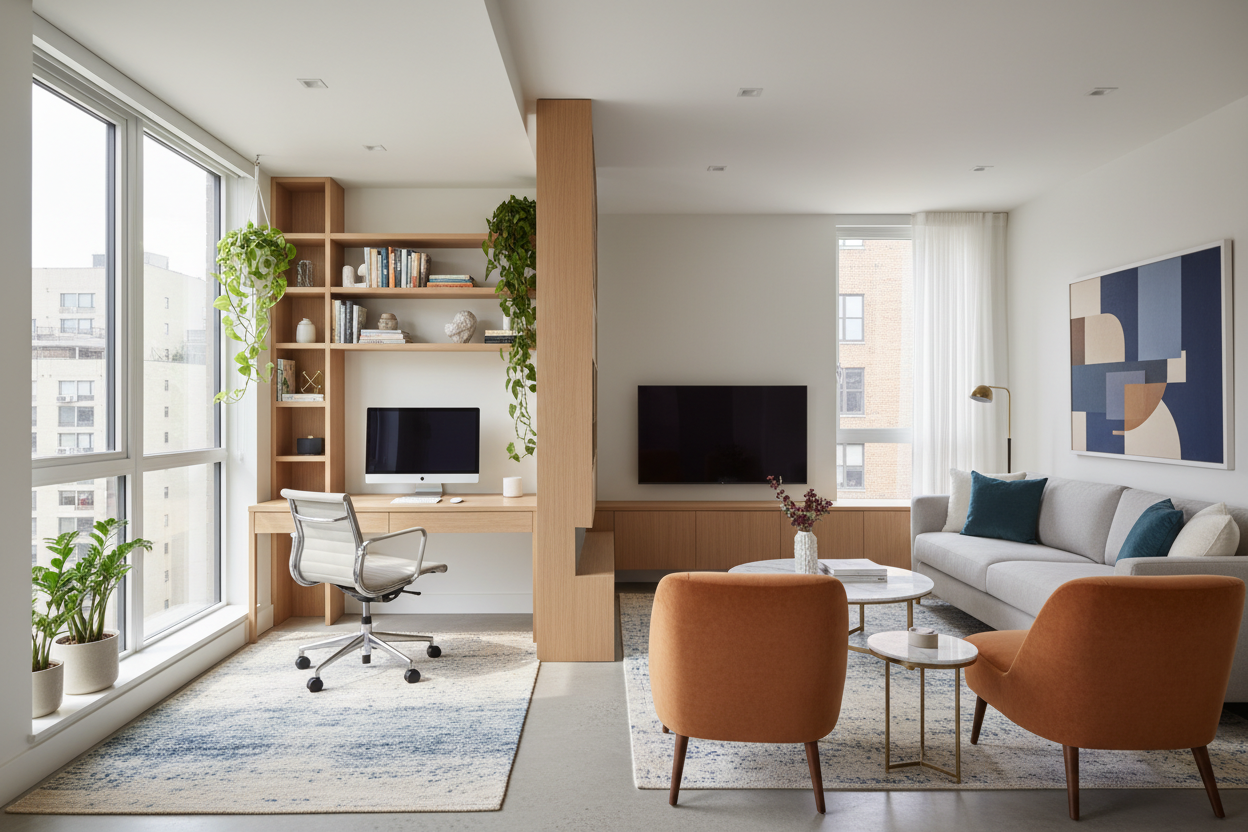
The era of the makeshift workspace is over. We have moved past the temporary laptop setup on the dining table and entered a phase where the office and living room must coexist permanently, often within a limited footprint. The design challenge here is not just functional—it is psychological. How do you create a zone for deep focus that doesn’t encroach on your sanctuary for relaxation? When these two functions collide, the risk is a space that feels like a cluttered cubicle rather than a curated home.
Key Features to Look For
Before purchasing furniture or rearranging your layout, consider these critical factors to ensure a successful integration of work and leisure zones.
- Visual Weight: Opt for desks with slender legs or floating designs to keep the living room office space feeling open and airy.
- Material Continuity: Select office furniture finishes (walnut, oak, brass) that match your existing media console or coffee table to create a cohesive living room office combo.
- Hidden Functionality: Prioritize a living room bureau or secretary desk that can close fully, hiding monitors and papers when the workday ends.
- Lighting Layering: Ensure you have dedicated task lighting (2700K-3000K) that creates a separate mood from your ambient living room lighting.
- Ergonomics vs. Aesthetics: Choose a chair that offers lumbar support but is upholstered in residential fabrics like velvet or boucle, rather than standard office mesh.
Mastering the Layout: Zoning Without Walls
The success of an office in living room design hinges entirely on the floor plan. In a formal living room office combo, the instinct is often to push the desk into a dark corner. However, this often disrupts the room's energy.
The Floating Desk Technique
If you have the square footage, floating your desk behind the sofa is a sophisticated living room office layout. This creates a natural partition. The sofa acts as a visual barrier, separating the lounge room office area from the television or conversation pit. This setup allows you to face the room (and the view) rather than staring at a blank wall, making the office living space feel executive rather than restrictive.
The Alcove and Nook Approach
For a small living room office combo, utilize verticality. A home office nook in living room alcoves can be fitted with custom shelving and a drop-down surface. This is the ultimate space saver. By painting the inside of the nook a deeper shade than the rest of the room, you create a distinct workspace in living room environments that feels intentional, not accidental.
Furniture Selection: Blending Form and Function
When curating a living room office combination, avoid industrial-looking file cabinets. Instead, look for pieces that mimic high-end residential furniture.
The Desk as a Console
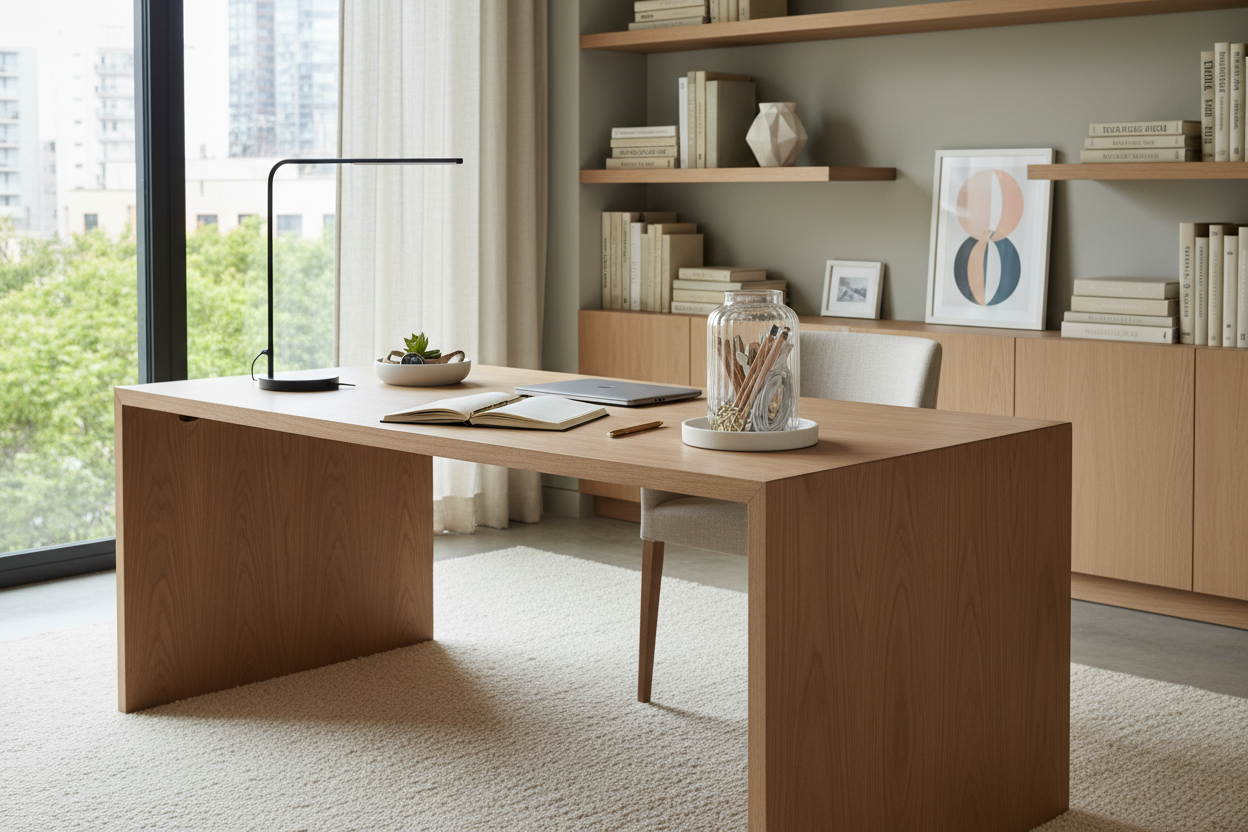
For a modern office in living room aesthetic, consider a console table that is deep enough (at least 20 inches) to work on. When not in use, a laptop can be tucked into a drawer, and the surface can be styled with a lamp and books, effectively camouflaging the office area in living room layouts.
Seating Dynamics
The chair is often the giveaway in a living room home office. A massive, black ergonomic chair will dominate a family room office. Instead, look for mid-century modern swivel chairs. They offer the rotation and height adjustment needed for an office sitting room but maintain a silhouette that complements your lounge chairs.
Lessons from My Own Projects
I recently designed a living room and office combo for a client in a pre-war apartment where space was incredibly tight. We initially thought a glass desk would be the answer to keep the room feeling open. It was a mistake.
Within a week, the client called to say the workspace living room felt chaotic. Why? Because glass hides nothing. Every cable, every dropped pen, and the clunky hard drive were visible from the sofa. It ruined the evening relaxation vibe. We swapped it for a vintage timber desk with a solid modesty panel and deep drawers. The visual weight actually helped anchor the room, and the ability to sweep the clutter into a drawer at 5:00 PM was psychologically priceless. It taught me that in a living room office set up, concealment is often more valuable than transparency.
Conclusion
Creating a harmonious office and living room combined is about respecting the duality of your lifestyle. It requires a refusal to compromise on aesthetics for the sake of utility. By choosing furniture that speaks the language of your home and planning a layout that separates rest from rigor, you can build a living space office that enhances your productivity without sacrificing your peace.
Frequently Asked Questions
How do I hide my computer monitor in a living room office?
In a living room office design, large monitors can be an eyesore. Consider a secretary desk with a closing hutch, or install a "TV lift" mechanism inside a custom cabinet that lowers the screen when not in use. Alternatively, use a monitor arm to swing the screen flat against the wall and cover it with a piece of art or a fabric slipcover.
What is the best layout for a narrow living room office?
For a narrow living room office space, avoid placing furniture in the center. Use a wall-mounted ladder desk or shelving unit. This utilizes vertical space without eating up floor area, keeping the traffic flow open for the living room and home office combination.
Can I use a dining chair for my living room desk?
While aesthetically pleasing for a living room bureau, dining chairs generally lack the ergonomic support needed for 8-hour workdays. If you must use one, ensure it has an upholstered seat and back, and add a small lumbar pillow. However, a specialized task chair upholstered in residential fabric is a better investment for your health.


Leave a comment
This site is protected by hCaptcha and the hCaptcha Privacy Policy and Terms of Service apply.