










We all have those sentimental pieces. The vintage pottery from a trip to Oaxaca, the inherited crystal, the oversized hardcover art books. But when left on standard open shelving, they often just look like everyday clutter. This is exactly where a well-designed showcase cabinet steps in. It frames your favorite items, protects them from dust, and gives your room a deliberate focal point. By the end of this guide, you will know exactly how to choose, place, and style these pieces so your home feels curated rather than chaotic.
Quick Decision Guide
- Mix concealed and visible areas: A storage display cabinet with solid lower doors hides the messy essentials while highlighting the beautiful ones.
- Mind the lighting: Integrated lighting is crucial. Even the most expensive display and storage cabinets look dull in a dark corner without proper illumination.
- Scale matters: Wide display cabinets require substantial wall space and high ceilings to avoid overwhelming a room's proportions.
- Leave negative space: Fill only 70 percent of a shelf display cabinet. Your pieces need breathing room to actually stand out.
Space Planning and Proportion
When placing a standing display cabinet, the biggest mistake people make is ignoring the swing radius of the doors. If you are placing a glass-front piece near a dining table or a living room sofa, leave at least 36 inches of clearance so you can comfortably open the doors without hitting adjacent furniture.
Managing Visual Weight
Tall, solid-wood pieces carry immense visual weight. If your living room already features a bulky sectional and a heavy coffee table, an open display cabinet might be a better choice to keep the room feeling airy. Conversely, if your room feels a bit floating and sparse, a substantial piece anchors the space beautifully.
Balancing Aesthetics and Function
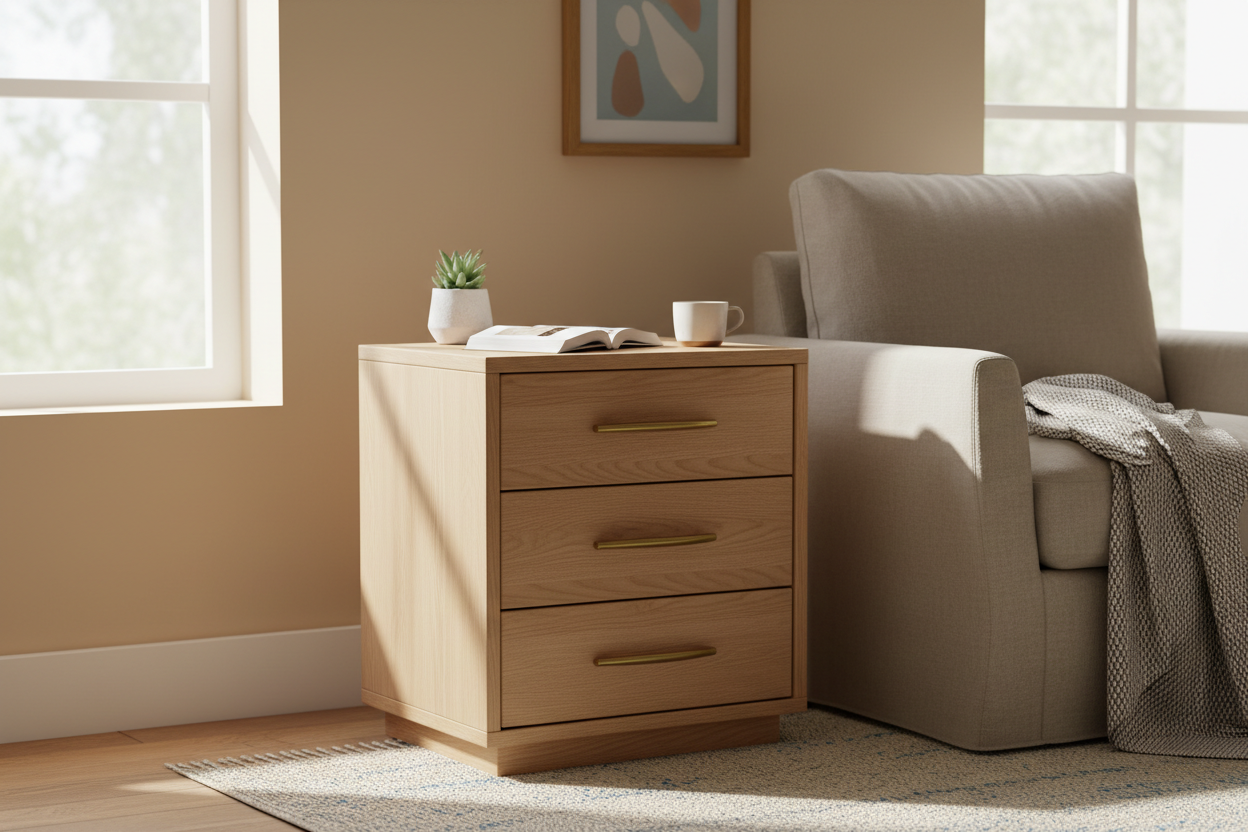
Not everything we own is pretty. We all have board games, router cables, and random paperwork. This is why I almost always recommend a display cabinet with drawers or solid wood doors on the bottom half. It gives you the best of both worlds, hiding the mundane while framing the exceptional.
The 60/40 Rule for Styling
When arranging display shelves and cabinets, I use the 60/40 rule. Keep 60 percent of the items decorative, like vases, sculptures, or neatly stacked books. Keep the remaining 40 percent functional, such as attractive bowls holding keys, or woven baskets hiding remotes. This keeps your display storage looking intentional rather than staged.
Unexpected Placements
Who says these pieces only belong in the dining room? A well-placed bedroom display cabinet can hold folded sweaters, designer shoes, or a collection of perfumes, acting as a high-end boutique fixture right in your own home. It is an excellent way to utilize awkward alcoves or empty corners in private spaces.
Designer's Honest Take
Early in my career, I sourced a breathtaking, fully glass-enclosed cabinet for a client's living room. It looked stunning in the showroom. But once we installed it, I realized a harsh truth: the client simply didn't have enough beautiful objects to fill it. Within a month, the bottom shelves were stuffed with dog toys and stacks of mail, completely visible through the glass. It looked incredibly messy.
I learned the hard way that fully transparent pieces demand rigorous, daily tidying. Unless you are highly disciplined, always opt for a piece that offers at least some hidden storage at the base. It saves you from the pressure of living in a museum.
Frequently Asked Questions
What should I look for when browsing display cabinets for sale?
Pay close attention to the shelving material and weight capacity. Tempered glass shelves are beautiful but can bow under the weight of heavy books. If you plan to store heavy items, look for solid wood shelves with a grooved plate rail.
How do I keep my display shelf cabinet from looking messy?
Group items in odd numbers, usually threes and fives, and vary the heights. Use books horizontally as pedestals to lift smaller items. Above all, embrace negative space—do not fill every inch of the shelf.
Are wide display cabinets good for small spaces?
Generally, no. In smaller apartments, vertical storage is your best friend. Choose a tall, narrow silhouette rather than a wide one to draw the eye upward and save precious floor space.


Leave a comment
This site is protected by hCaptcha and the hCaptcha Privacy Policy and Terms of Service apply.