










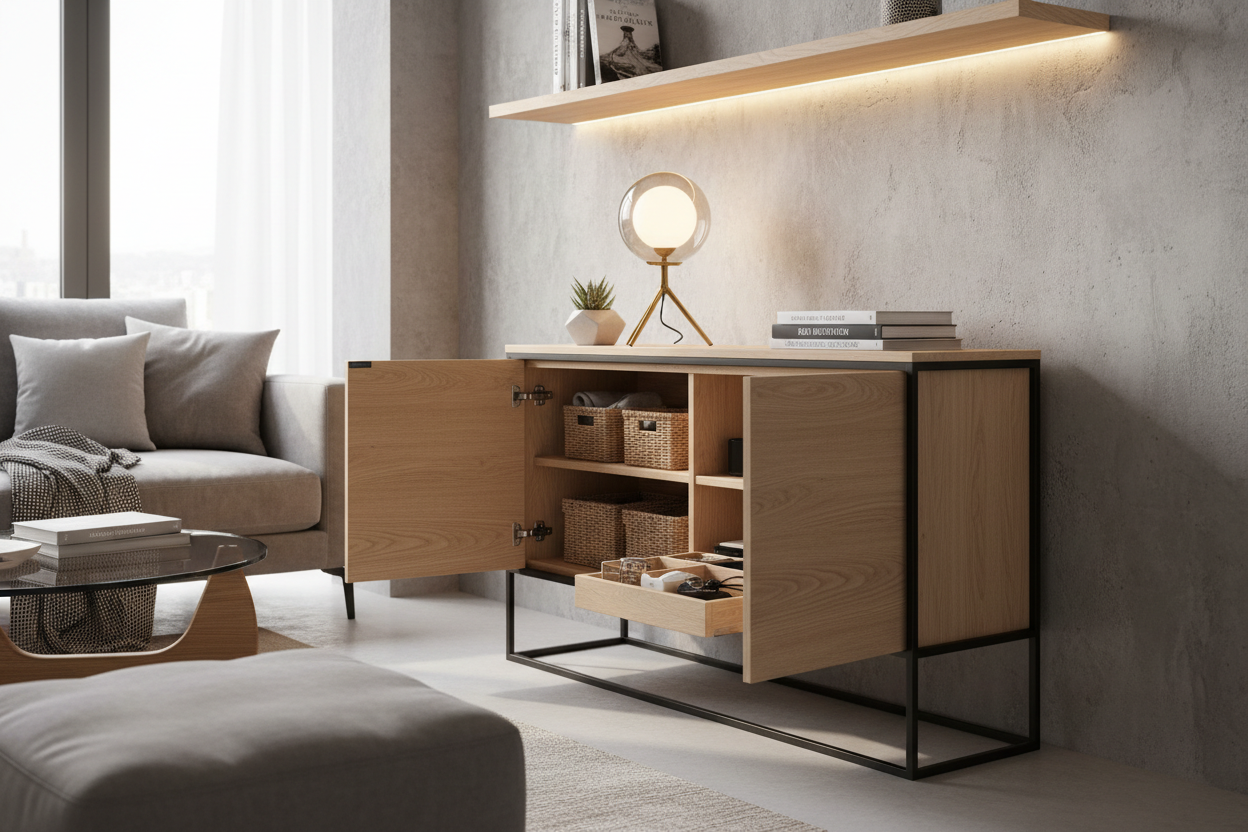
Finding the right balance between storage capacity and floor space is one of the hardest challenges in interior design, especially for entryways and narrow living areas. The 2-door console table is the specific answer to this problem. It provides a slim profile that hugs the wall while offering enclosed storage to hide clutter that open shelving would otherwise expose. Unlike a bulky dresser or a flimsy side table, this piece of furniture anchors a room, providing a functional surface for decor and a hidden compartment for life's messy necessities.
The Hidden Utility of the Two Door Console
Most homeowners default to open console tables because they look airy, but they often regret the decision once daily life takes over. A table with open legs requires you to be neat constantly. If you toss your mail, dog leashes, or spare chargers underneath, the room immediately looks chaotic. A two door console changes the dynamic entirely.
By enclosing the lower section, you gain visual calmness. The doors create a solid block of color or texture—be it wood grain, painted finish, or metal accents—that grounds the space. Behind those doors, you usually find adjustable shelving, which is critical for versatility. You might need to store tall vases, stacks of board games, or seasonal linens. The ability to close the doors on the mess allows your home to look curated even when the insides are disorganized.
My Experience: The Narrow Hallway Dilemma
I learned the value of this specific furniture piece the hard way. In my previous apartment, the entryway was essentially a long, dark corridor. I initially bought a sleek, open-frame table. Within a week, the floor underneath was a graveyard of shoes and reusable grocery bags. It looked terrible. I swapped it out for a vintage-inspired 2 door console table with a shallow depth of about 12 inches.
The transformation was immediate. The visual weight of the cabinet made the hallway feel like a deliberate room rather than just a pass-through. I used one side for outgoing mail and keys, and the other side held the ugly internet router and modem, which I routed through a hole I drilled in the back panel. That experience taught me that enclosed storage in a narrow footprint is worth its weight in gold. It wasn't just furniture; it was a sanity saver.
Where to Place a Two Door Console Table
While the entryway is the most obvious location, these pieces are surprisingly versatile throughout the home. Their shallow depth allows them to fit where standard cabinets cannot.
The Living Room Media Stand
In smaller living rooms, a massive entertainment center can overwhelm the space. A two door console table often works perfectly as a media stand for wall-mounted TVs. Because these consoles are typically taller than standard media units (usually around 30 to 32 inches high), they align better with TVs mounted at eye level. The cabinet space is perfect for gaming consoles or cable boxes, provided there is ventilation.
The Dining Room Buffet
If you lack the space for a massive sideboard, a 2-door console serves as an excellent "petit buffet." It provides a surface for serving drinks or appetizers during a dinner party. Inside, the shelves can hold stackable plates, glassware, or table linens. It delivers the functionality of a dining server without protruding three feet into the room and blocking chair movement.
The Bedroom Vanity Alternative
For bedrooms that are tight on square footage, swapping a bulky dresser for a two door console can open up walkways. While it won't hold a full wardrobe, it is ideal for accessories, handbags, or folded sweaters. Placing a mirror above it creates a dedicated grooming station that feels less heavy than traditional bedroom furniture.
Choosing the Right Style and Material
The market is flooded with options, but quality varies significantly. When shopping for a 2 door console table, pay close attention to the joinery and the hardware. Since the doors are the primary moving parts, flimsy hinges will sag over time, causing the doors to scrape the bottom frame or fail to latch properly.
Solid wood is always preferable for longevity, but high-quality MDF with a wood veneer is a standard and durable option for this type of accent furniture. If you are aiming for a farmhouse or rustic aesthetic, look for distressed wood finishes or wire-mesh door inserts. These allow remote control signals to pass through if you are using the unit for electronics.
For modern or industrial spaces, a metal 2-door console offers durability and a distinct look. Metal cabinets are often thinner, maximizing the interior storage space, and they are impervious to the dings and scratches that might damage soft wood in a high-traffic zone like a mudroom.
Dimensions Matter: The Depth Factor
The defining feature that separates a console from a standard cabinet is depth. A standard cabinet is often 18 to 24 inches deep. A console is typically 12 to 16 inches deep. Before purchasing, measure your walkway. You generally need at least 36 inches of clearance in front of the furniture to walk comfortably. If you have a tight squeeze, look specifically for a "shallow" two door console table, which can be found in depths as slim as 10 inches.
Don't forget to account for the door swing. Unlike sliding doors, swinging doors require clearance. If you place the unit directly behind a sofa or in a narrow corridor, ensure you can fully open the doors without hitting the opposing wall or furniture. If space is truly at a premium, you might need to look for sliding door variants, though these are less common in the console category.
Styling Your Console
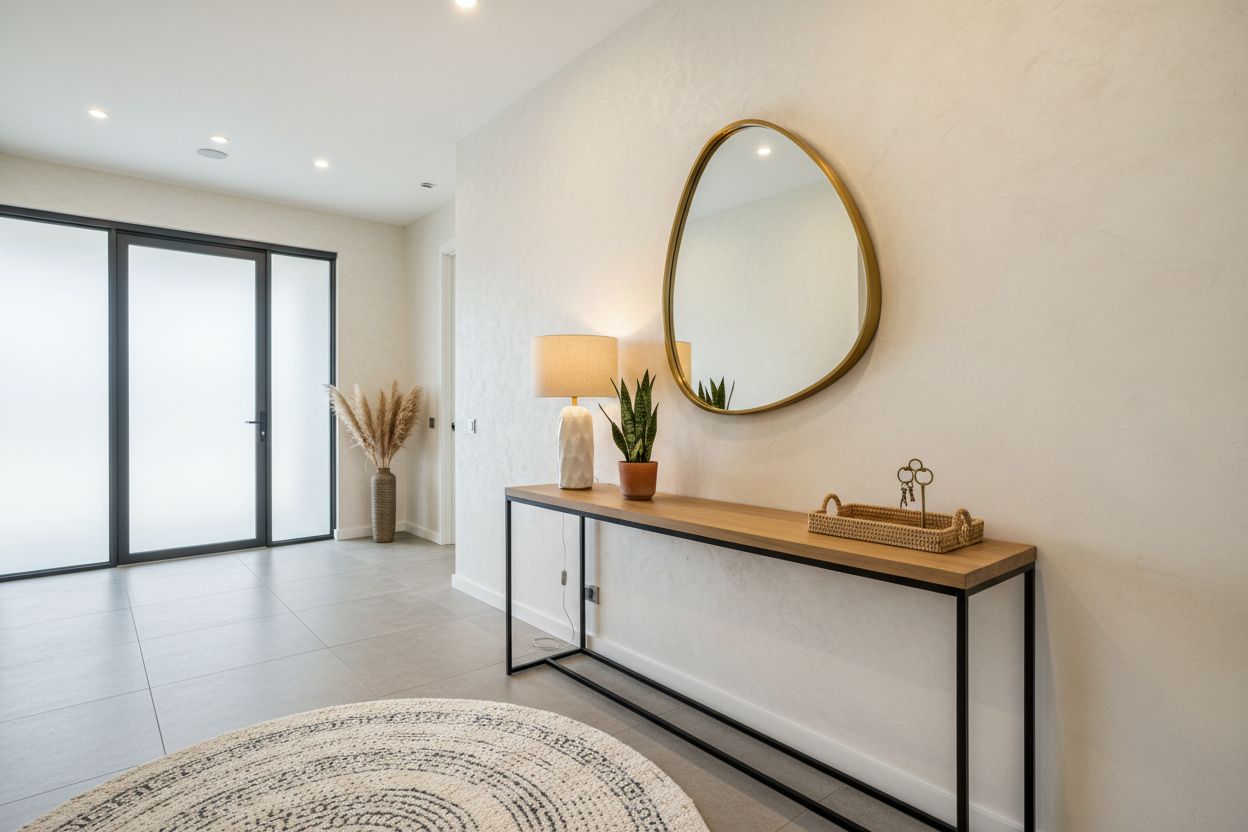
Once you have your furniture in place, styling is what integrates it into the room. Treat the surface as a vignette. Start with a large anchor piece, such as a round mirror or a large piece of art centered above the table. This draws the eye up and increases the perceived height of the room.
On the surface, use the rule of three. A tall lamp on one side, a tray for keys or small items in the middle, and a stack of books or a plant on the other side creates balance. Since the storage is hidden inside the 2 door console, you don't need to worry about the bottom looking cluttered. This gives you the freedom to be minimalist on top, keeping the area feeling clean and organized.
Frequently Asked Questions
How much weight can a typical 2-door console table hold?
Most standard console tables are designed to hold between 50 to 100 pounds on the top surface. However, the internal shelves usually have a lower weight limit, often around 20 to 30 pounds per shelf. Always check the manufacturer's specifications if you plan to place heavy items like a large TV or stacks of heavy books on it.
Can I use a console table as a bathroom vanity?
Yes, many people repurpose these tables as vanities, but it requires modification. You will need to cut holes in the top and back for plumbing and seal the wood to protect it from moisture. Ensure the height is comfortable for a sink (standard vanity height is 30-32 inches) before cutting.
What is the difference between a console table and a sideboard?
The main difference is usually height and depth. A console table is typically taller and shallower (slimmer) to fit in hallways, whereas a sideboard (or buffet) is lower, deeper, and designed primarily for dining rooms to hold large serving platters.

Leave a comment
This site is protected by hCaptcha and the hCaptcha Privacy Policy and Terms of Service apply.