










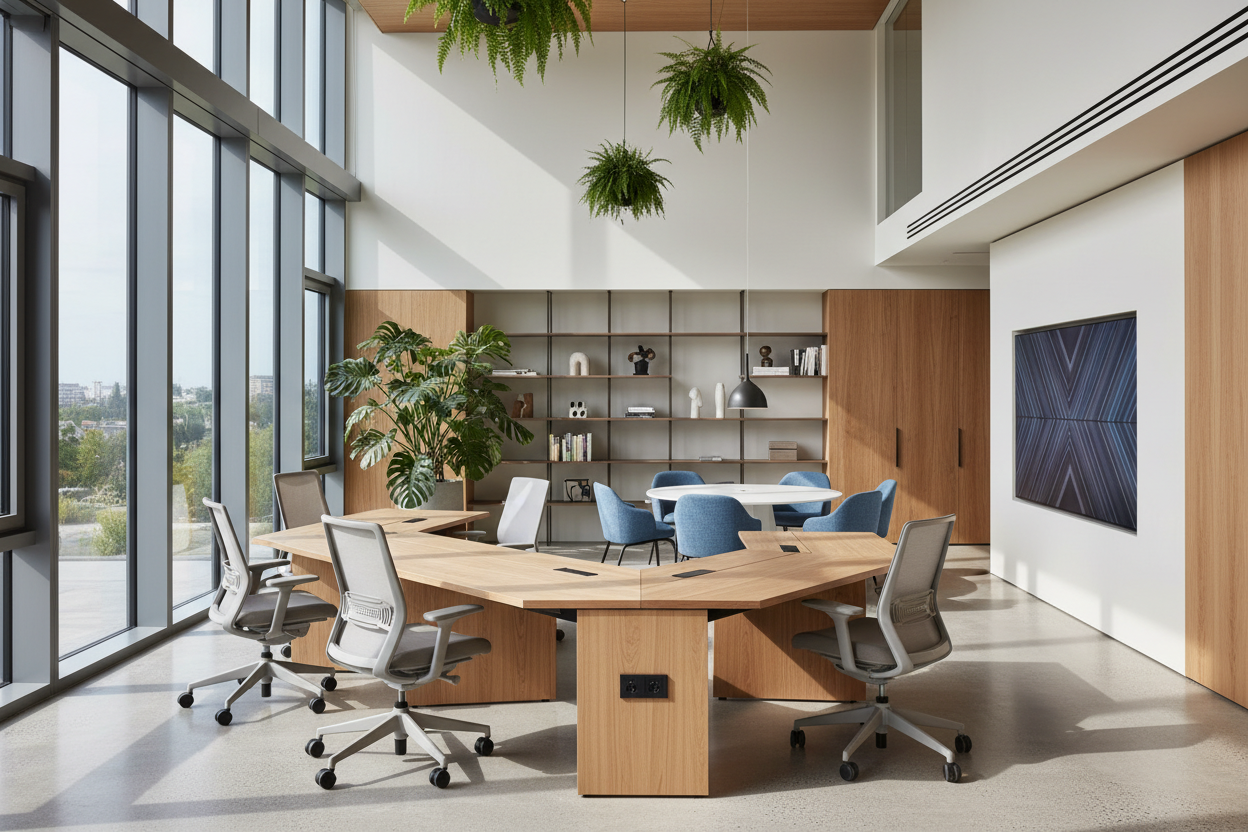
There is a distinct difference between filling a room with desks and curating a workspace that actually works. One of the most frequent dilemmas I encounter with clients is the disconnect between the furniture they desire and the physical footprint available. They often purchase heavy, executive-style pieces that choke the room's circulation, resulting in a claustrophobic environment rather than a productive one. The solution lies in selecting intelligent space office furniture that prioritizes verticality, modularity, and visual lightness.
Key Features to Look For
Before committing to a purchase, use this checklist to ensure the pieces will function harmoniously within your floor plan. These are the non-negotiables I use when sourcing for commercial and residential projects:
- Visual Weight: Opt for legs over solid bases to expose more floor, making the room feel larger.
- Modularity: Look for space office solutions that can be reconfigured as your team or needs grow.
- Integrated Wire Management: Essential for maintaining a clean aesthetic; look for hidden channels in legs or modesty panels.
- Surface Durability: High-pressure laminate (HPL) or sealed wood veneer offers the best balance of longevity and cost.
Mastering the Layout and Flow
When planning your office, the furniture dictates the flow. We aren't just placing objects; we are directing traffic. A common error is pushing everything against the walls. While this clears the center, it often creates a "dead zone" in the middle of the room and forces you to face a blank wall.
Creating Zones with Furniture
Use your desk to anchor the room. Floating a desk perpendicular to a window or in the center of the room commands authority and improves your line of sight. When selecting storage, consider credenzas that are lower than eye level. This maintains the horizon line of the room, keeping the space feeling open while providing necessary utility.
Material Selection: Durability Meets Aesthetics
The finish of your furniture plays a massive role in the "temperature" of the office. For a modern, clinical look, glass and chrome are standard, but they can feel cold and amplify sound. In my designs, I prefer introducing texture to dampen acoustics.
Wood vs. Synthetics
Solid wood is beautiful but reacts to humidity and heat—risky for coffee spills or direct sunlight. High-quality veneers or thermal-fused laminates are often superior space office solutions because they resist scratching and don't warp. If you want a luxury aesthetic, look for "open-pore" finishes that mimic the texture of real grain without the maintenance of solid timber.
Ergonomics and Scale
Scale is the silent killer of good design. A chair that looks plush in a showroom may physically fit in your office, but if it blocks a walkway or hits a filing cabinet when swiveled, it fails. Ensure you have at least 36 to 48 inches of clearance behind your desk chair. Ergonomically, the furniture must support neutral body positioning. I always advise against buying a chair based solely on looks; the lumbar support must be adjustable, and the seat depth must match your femur length.
My Personal Take on Space Office Furniture
I need to be honest about a specific trend I see everywhere: the matte black "soft touch" finish. About two years ago, I specified an entire suite of matte black laminate furniture for a boutique agency. On installation day, it looked stunning—architectural, sleek, and serious.
However, three months later, I visited for a follow-up. The surfaces were a disaster of fingerprints and natural skin oils. No matter how much they cleaned it, the finish looked greasy. It’s a detail you don't see in catalogs. Now, when I recommend dark furniture, I insist on a textured wood grain or a charcoal grey with a slight sheen. It hides the reality of daily use much better. Also, always check the underside of the desk. I once bought a budget-friendly "space saving" desk that had raw, unfinished particle board underneath. It snagged every pair of tights and scratched the knees of anyone who sat there. The polish of the underside tells you everything about the manufacturing quality.
Conclusion
Designing a workspace is about balancing the rigidity of function with the fluidity of comfort. By choosing furniture that respects the scale of your room and the reality of your daily habits, you create an environment that supports your work rather than hindering it. Measure twice, buy once, and prioritize flow over filler.
Frequently Asked Questions
How do I choose furniture for a narrow office?
Focus on vertical storage and shallow-depth desks (under 24 inches). Wall-mounted shelving units remove the footprint from the floor, and glass or acrylic elements reduce visual clutter, making the narrow room feel wider.
Is solid wood furniture better for a home office?
Not necessarily. While solid wood has heritage appeal, it is heavy and susceptible to ring marks and humidity changes. For a working desk, a high-grade veneer or commercial laminate often provides better durability and stability at a lower price point.
What is the most important investment piece?
Always the chair. You spend more time in contact with your chair than any other element. Invest in a high-performance task chair with adjustable lumbar support and seat depth before spending your budget on a premium desk.


Leave a comment
This site is protected by hCaptcha and the hCaptcha Privacy Policy and Terms of Service apply.