










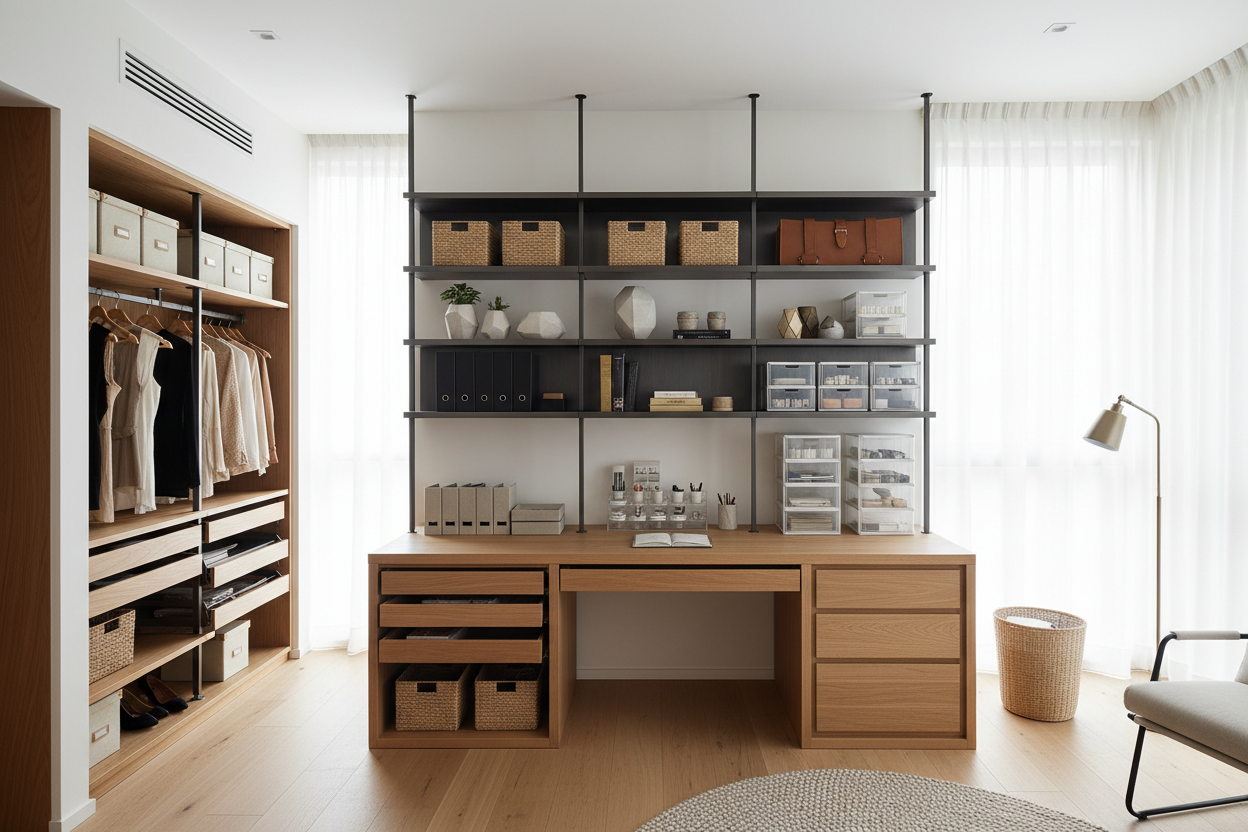
We've all been there. You buy a highly-rated home and office organizer hoping it will magically solve your messy desk syndrome, but three weeks later, it's just another container filled with loose receipts and dead pens. When our living spaces double as our workspaces, bad storage doesn't just look messy—it creates visual noise that disrupts the aesthetic of your entire room. A dedicated home office organizer should do more than just hold paper; it should blend seamlessly with your interior architecture. Today, I'm walking you through exactly how to choose workspace storage that looks intentional, hides the ugly stuff, and actually fits your daily habits.
Quick Decision Guide
- Prioritize closed storage: Open trays look great in catalogs, but closed drawers hide real-world clutter.
- Measure your vertical clearance: Don't buy home office desk storage without measuring the distance between your desk surface and overhead shelves or monitors.
- Match your room's materials: Avoid cheap plastic if your living room features solid wood and natural textiles; opt for leather, wood, or matte metal instead.
- Leave negative space: An organizer should take up no more than 15% of your total desktop surface area to avoid feeling cramped.
Space Planning & Layout
The biggest mistake I see clients make is buying storage without analyzing their actual desk real estate. A massive filing system might hold everything, but if it pushes your keyboard to the edge of the desk, your ergonomics will suffer.
Maximizing Vertical Space
If you are working with a standard 24-inch deep desk, your desktop footprint is precious. Instead of wide, sprawling trays, look for tall organizers for home office setups that utilize vertical space. Wall-mounted pockets or tiered shelving keep your immediate work zone clear while keeping essential files within arm's reach.
Material & Build Quality
Workspace storage often defaults to flimsy acrylic or wire mesh, which instantly drags down the look of a thoughtfully designed room. If your desk sits in your bedroom or living room, your storage needs to look like furniture, not cheap office supplies.
Upgrading Your Finishes
When selecting home office organization products, pay attention to visual weight. Solid walnut or white oak trays bring warmth and blend seamlessly with mid-century or transitional decor. If you prefer a minimalist look, powder-coated steel offers durability and a sleek silhouette. Leather-wrapped boxes are excellent for hiding charging cables and odd-shaped tech accessories while adding a layer of rich texture.
Style & Coordination
Integrating an organizer home office setup into a shared living space requires a delicate balance. You want the functionality of a corporate office without the sterile, fluorescent-lit vibe.
The 'Hide in Plain Sight' Strategy
I always recommend matching the color of your work from home desk organizer to your wall or desk finish. A white organizer on a white desk visually disappears, reducing clutter. Conversely, you can use storage as an accent piece—a deep navy or brass organizer can serve as a stylish focal point if the rest of your desk is understated.
Designer's Honest Take
Early in my career, I designed a stunning, open-concept workspace for a client in a downtown loft. I sourced a beautiful, tiered glass and brass organizer. It looked incredible on installation day. But a month later? Every unpaid bill, bright neon sticky note, and tangled charging cord was on full display. The gorgeous glass organizer just framed their mess.
That project taught me a hard lesson: open storage is only for naturally tidy people. Now, when I consult as one of the local professional home office organizers, I almost exclusively specify closed storage for at least 70% of a client's items. The downside to closed drawers is that you occasionally forget what's inside them, but the trade-off for a calm, visually quiet room is always worth it.
Frequently Asked Questions
How do I know what size organizer I need?
Start by gathering all the items you need daily access to. Group them by size, then measure the pile. Add 20% for future overflow. Never buy the storage first and try to force your items into it.
Are expensive desk organizers actually better?
It depends on the material. Paying a premium for solid wood, heavy-gauge steel, or genuine leather is worth it for longevity and aesthetics. However, expensive acrylic or plastic is still plastic—save your money there.
How can I organize a desk with no drawers?
If your desk lacks built-in storage, rely on a freestanding monitor stand with integrated drawers underneath. You can also utilize a rolling file cabinet tucked underneath, or decorative lidded boxes stacked neatly on one back corner of the desk.

Leave a comment
This site is protected by hCaptcha and the hCaptcha Privacy Policy and Terms of Service apply.